
Binocular Logic
Choose the View, Not the Hype.
Research-led guidance for understanding binocular specifications, comparing real trade-offs, choosing the right configuration, and knowing when a feature, upgrade, or premium price actually changes the view.

Start With the Decision
Eight routes into a better binocular choice
Start with the question in front of you. Learn the numbers, compare product types, match the viewing job, build a shortlist, examine brand families, use the binocular correctly, solve an accessory problem, or calculate what a specification means.

Binocular Basics
Understand the Specs
Turn magnification, objective size, field of view, eye relief, close focus, and weight into useful decision variables.
Read the specification guide →
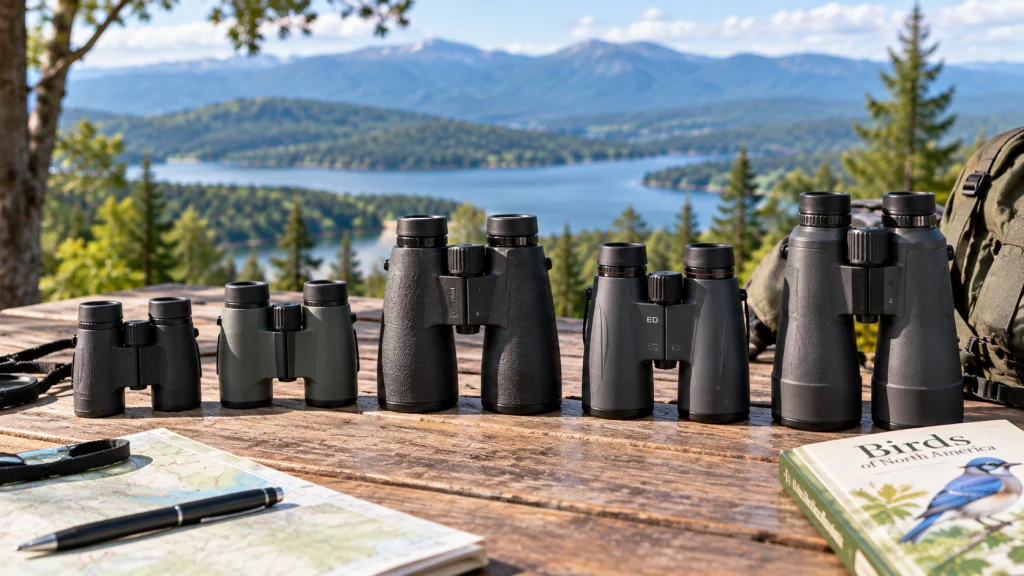
Binocular Types
Compare Binocular Types
Compare compact, roof, Porro, image-stabilized, marine, digital, rangefinding, zoom, and high-power designs by their real trade-offs.
Compare binocular types →

Binoculars by Use
Choose by Viewing Use
Let distance, movement, light, viewing duration, carry burden, and physical fit decide which characteristics deserve priority.
Choose by viewing situation →

Buying Binoculars
Build Your Shortlist
Move from viewing needs to fit, architecture, specifications, budget, warranty, and a disciplined shortlist.
Build a binocular shortlist →
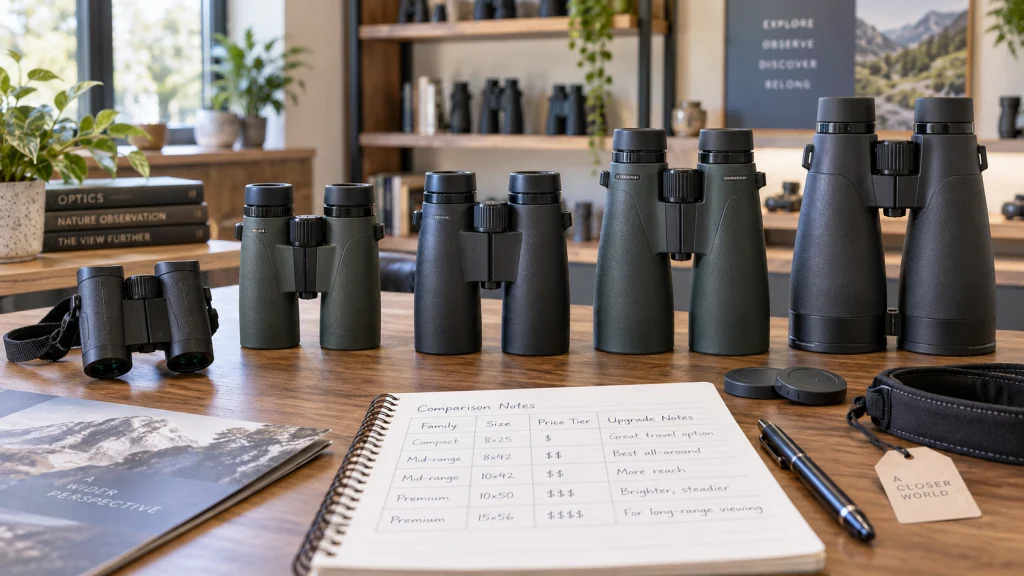
Binocular Brands
Compare Brand Lineups
Look past logo prestige and compare current product families, price roles, stopping points, and meaningful upgrades.
Compare brand lineups →
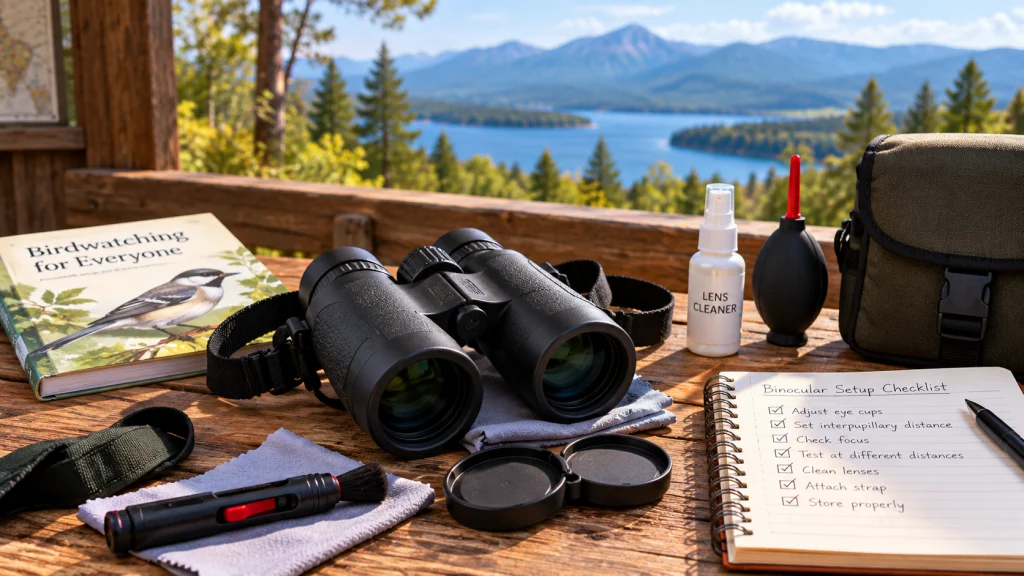
Using Binoculars
Set Up & Use Binoculars
Work through fit, focus, diopter, steadiness, cleaning, storage, and owner-level troubleshooting.
Set up and use binoculars →
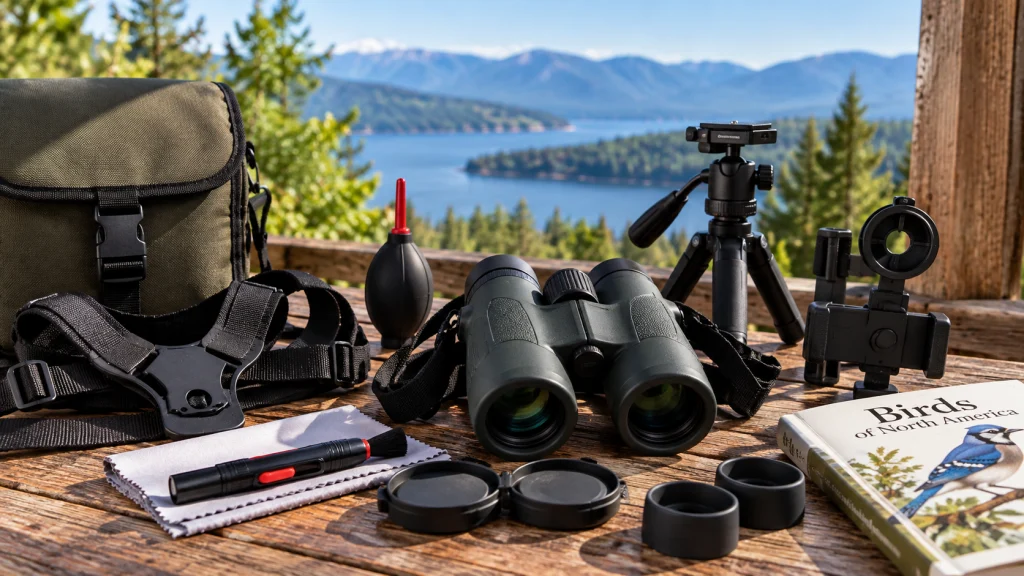
Binocular Accessories
Choose Useful Accessories
Choose harnesses, cases, lens caps, eyecups, tripod adapters, and phone adapters by the carry, protection, support, replacement, or compatibility problem they actually solve.
Choose accessories by problem →
Binocular Tools & Calculators
Calculate the Specs
Convert field-of-view figures and calculate field width, exit pupil, relative brightness, or apparent field of view from the numbers you enter.
Browse binocular calculators →
Tools & Calculators
Turn a spec sheet into a useful number.
Five free calculators, built for the questions behind binocular specifications. Enter your numbers, see the result, and understand what the calculation can and cannot tell you.
5 free tools
Binocular FOV Converter
Convert field of view between degrees, feet at 1,000 yards, and meters at 1,000 meters.
Convert FOV
Binocular Field Width Calculator
Calculate how wide the observable field is at the viewing distance you enter.
Calculate field width
Binocular Exit Pupil Calculator
Calculate exit pupil diameter from magnification and objective lens size.
Calculate exit pupil
Binocular Relative Brightness Calculator
Calculate the geometric relative brightness index, not actual image brightness.
Calculate the index
Binocular Apparent FOV Calculator
Calculate apparent field of view from magnification and true field of view.
Calculate apparent FOV
Browse the Site
Nine categories, each with a different job
The site separates specifications, binocular types, viewing use, buying decisions, brands, ownership, accessories, editorial work, and interactive calculators, each with a different role.
01
Binocular Basics
Specifications, optical characteristics, fit variables, low-light decisions, waterproofing, and price versus quality logic.
02
Binocular Types
Product architectures and technologies, from compact and prism design to stabilization, digital, rangefinding, zoom, and high power.
03
Binoculars by Use
Viewing requirements for bird watching, wildlife, stargazing, travel, concerts, sports, hunting, and kids.
04
Buying Binoculars
Budget, first-pair decisions, buying channels, used binoculars, upgrades, warranties, and shortlist discipline.
05
Binocular Brands
Current brand lineups, model-family maps, product roles, stopping points, and matched cross-brand comparisons.
06
Using Binoculars
Setup, focusing, steadiness, cleaning, storage, and owner-level troubleshooting with clear stop conditions.
07
Binocular Accessories
Carry, protection, replacement, support, and phone compatibility without turning every add-on into a must-have.
08
Blog
Market audits, specification audits, current lineup observations, original datasets, and documented testing when it truly exists.
09
Binocular Tools & Calculators
Interactive FOV, field width, exit pupil, relative brightness, and apparent field-of-view calculations based on your input.
The Logic Behind the Site
A better number is not always a better binocular.
Binocular Logic looks at the relationship between the specification, the viewing condition, the person using the binocular, and the compromise created by every upgrade. The useful question is not whether one number is larger. It is whether the change solves the problem in front of you.
Distance, movement, light, duration, carry, and fit define the problem before brands and models enter the shortlist.
Magnification, objective size, field of view, eye relief, and weight become useful only when connected to a decision.
More power, more glass, more electronics, or more money can solve one constraint while creating another.
A higher tier earns its place only when the extra cost removes a limitation the reader actually has.
Start with the trade-off you are least willing to accept.
Too much weight, too narrow a field, weak low-light capability, poor fit with glasses, extra complexity, or unnecessary cost can matter more than a headline specification. Pick the route above that matches the decision in front of you and work from there.