Western hunting binoculars demand a carry plan as much as a magnification plan
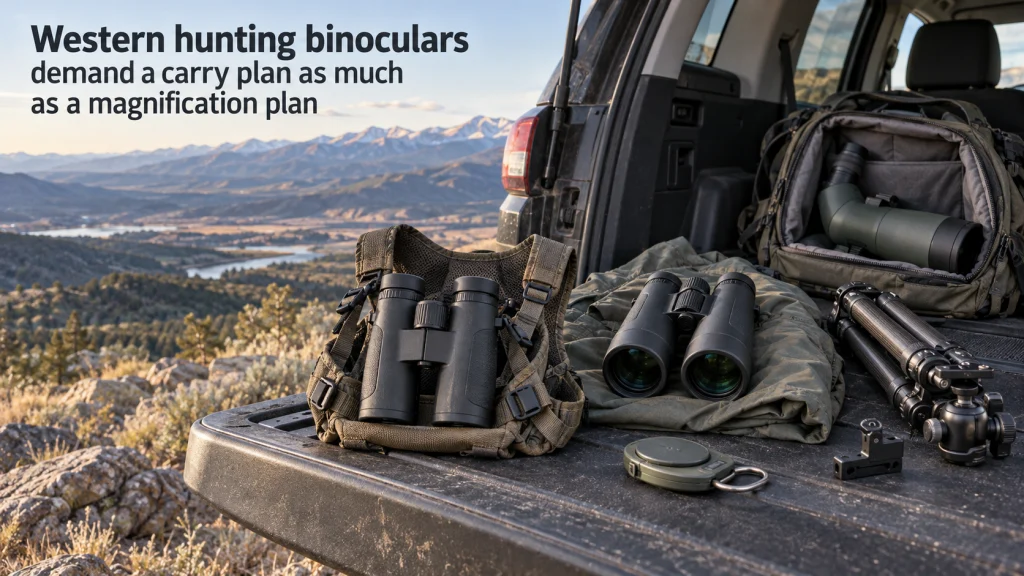
Western Hunting Binoculars

Western hunting binoculars make more sense when you treat them as one part of a carried viewing system instead of chasing the highest useful magnification. A primary chest binocular has to balance image scale, field of view, low-light behavior, physical fit, weight, and how often you will actually support it. Moving from 8×42 or 10×42
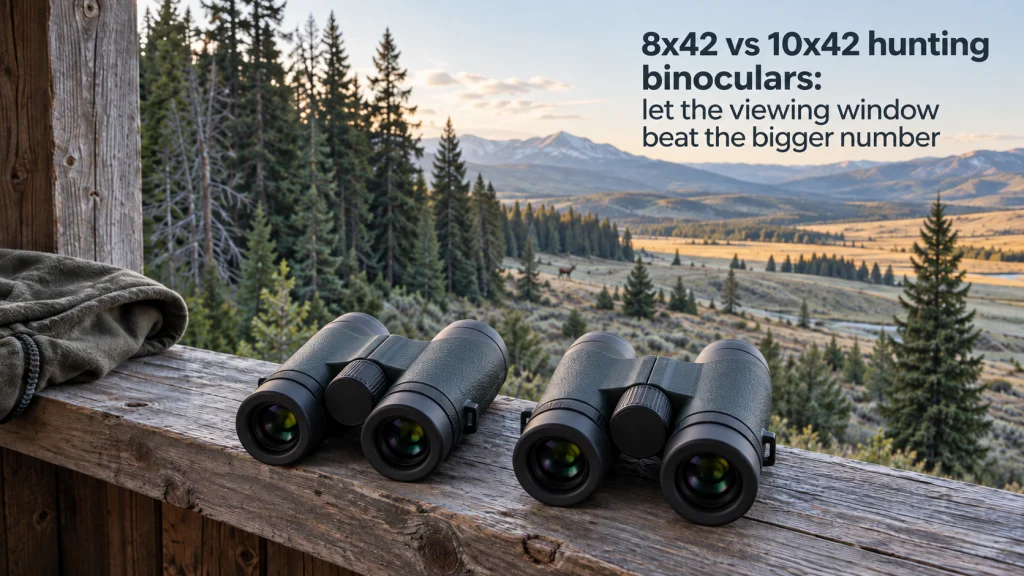
8×42 vs 10×42 hunting binoculars: let the viewing window beat the bigger number

8X42 Vs 10X42 Binoculars For Hunting

An 8×42 versus 10×42 hunting choice is not a contest between a weak option and a strong one. With the same 42 mm objective, 10x gives more image scale, while 8x often gives a wider viewing window and a larger geometric exit pupil. A current ZEISS comparison within one product family shows why exact specifications

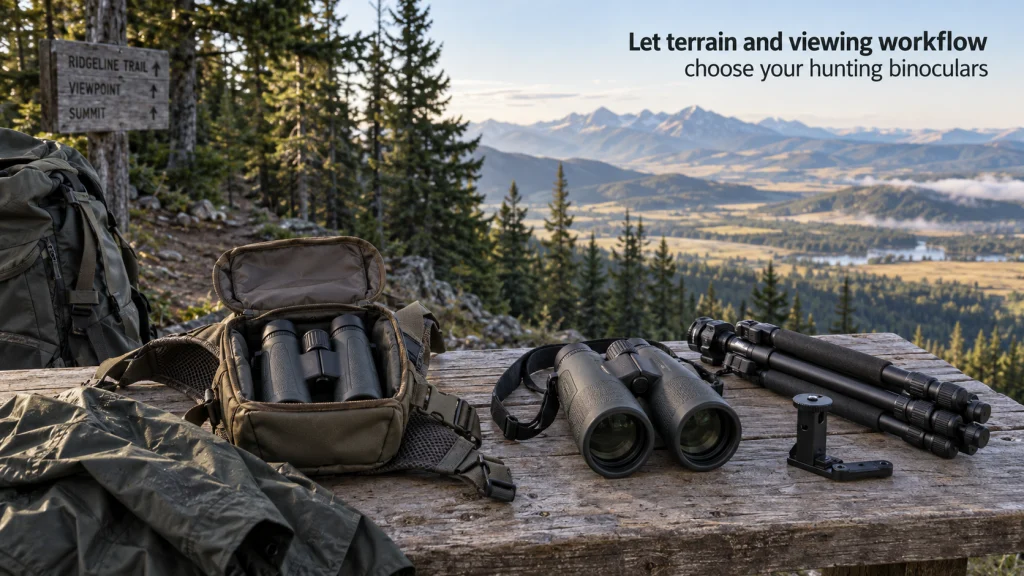
Let terrain and viewing workflow choose your hunting binoculars

Hunting Binoculars

Hunting binoculars make more sense when terrain and viewing workflow come before magnification. Dense cover can reward easier subject acquisition and a wider field, while open country can increase the value of image scale, sustained viewing, and support. Objective size matters, but it cannot prove low-light performance by itself because transmission, optical design, exit pupil,

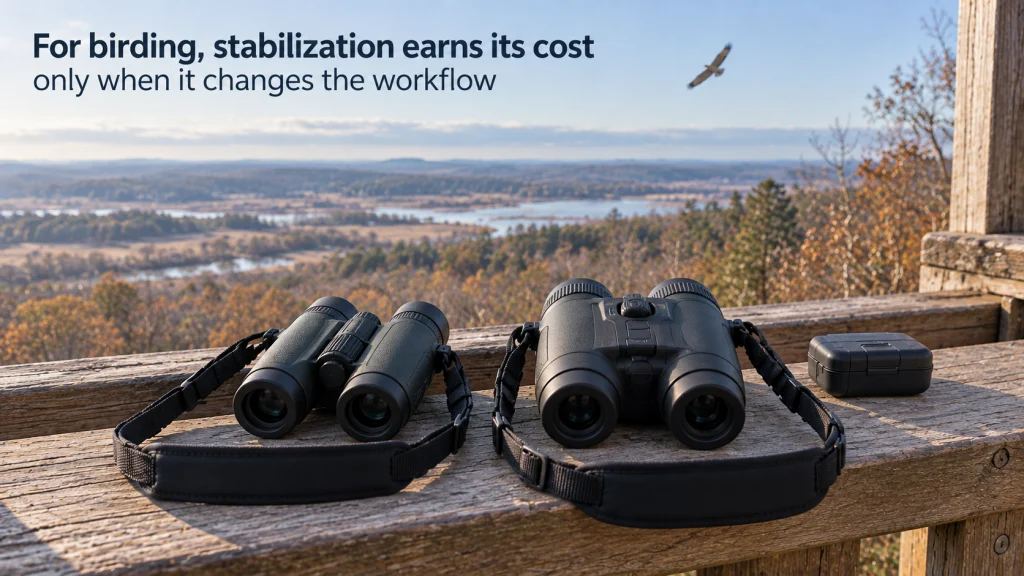
For birding, stabilization earns its cost only when it changes the workflow

Image Stabilized Binoculars For Birding

Image stabilized binoculars for birding are worth considering only when stabilization changes a real part of the birding workflow, such as holding a distant bird steady long enough to inspect detail. The feature does not erase the usual trade-offs in field of view, target acquisition, weight, weather protection, or carrying comfort. Higher magnification can become

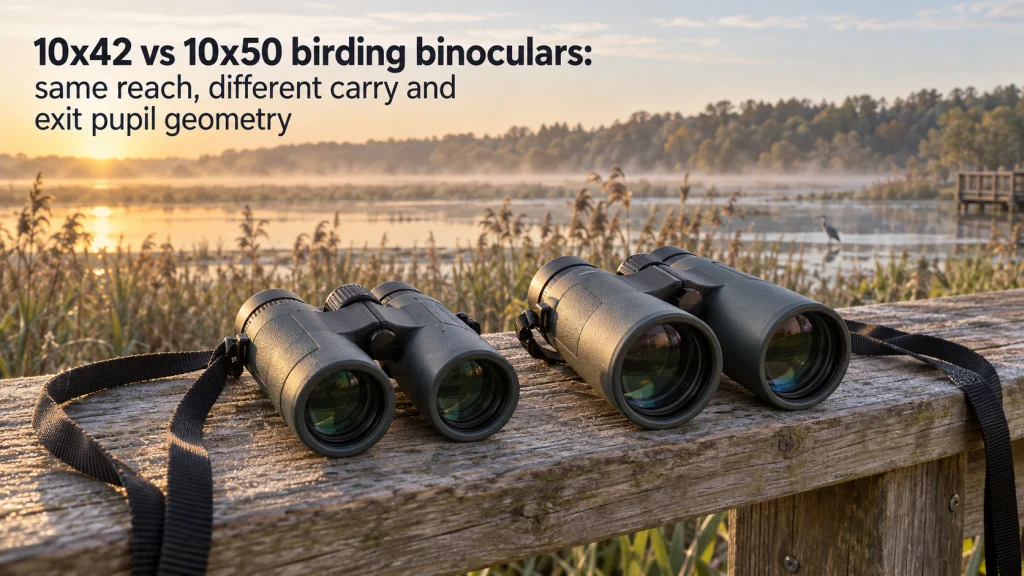
10×42 vs 10×50 birding binoculars: same reach, different carry and exit pupil geometry

10X42 Vs 10X50 Binoculars For Birding

10×42 vs 10×50 binoculars for birding is a same-magnification decision, so both configurations give the same nominal 10x reach. The useful difference starts with the objectives: 42 mm produces a 4.2 mm geometric exit pupil, while 50 mm produces 5.0 mm, but that arithmetic alone does not prove that every 10×50 will look brighter than

Find the hawk first, then magnify it: choosing binoculars for raptor watching

Hawk Watching Binoculars

Binoculars for hawk watching should make it easier to find a moving raptor in a large sky before they help you study finer detail. That puts field of view, fast reacquisition, weight, eye relief, and weather protection ahead of a simple higher magnification equals better rule. An 8x or 10x configuration can both make sense,

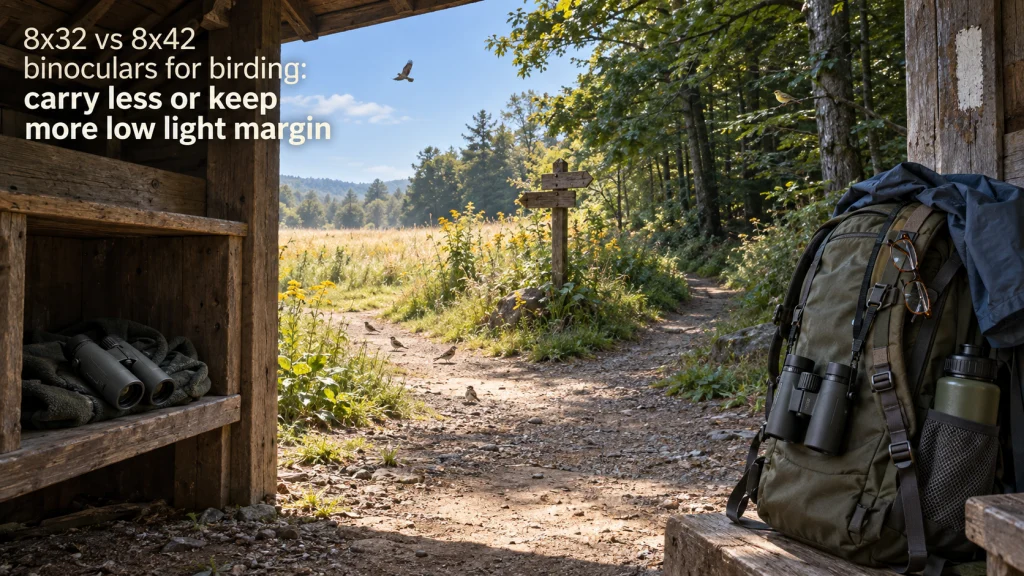
8×32 vs 8×42 binoculars for birding: carry less or keep more low light margin

8X32 Vs 8X42 Binoculars For Birding

Choosing between 8×32 vs 8×42 binoculars for birding is mostly a choice between carrying less binocular and keeping more optical margin when light or eye placement gets demanding. Both formats give the same 8x image scale, so the useful comparison is not reach but the physical envelope, field of view, exit pupil, close focus, and

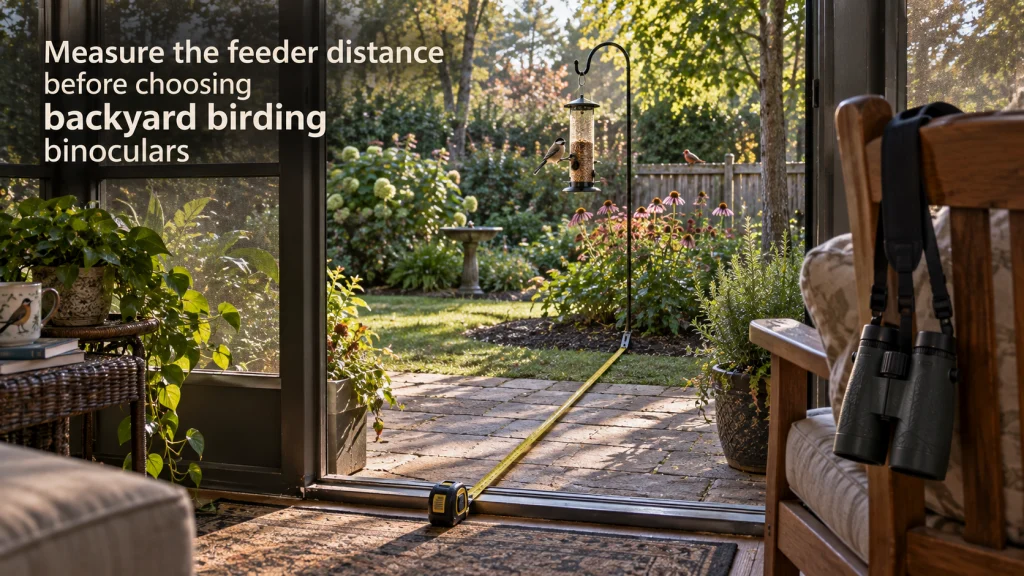
Measure the feeder distance before choosing backyard birding binoculars

Backyard Birding Binoculars

Backyard birding binoculars should be chosen around the shortest bird distance you actually use, not around a generic magnification rule. Measure from your normal viewing position to the nearest feeder, fence, branch, or perch, then reject any binocular whose published close-focus limit is farther away than that distance. After that first pass, field of view,

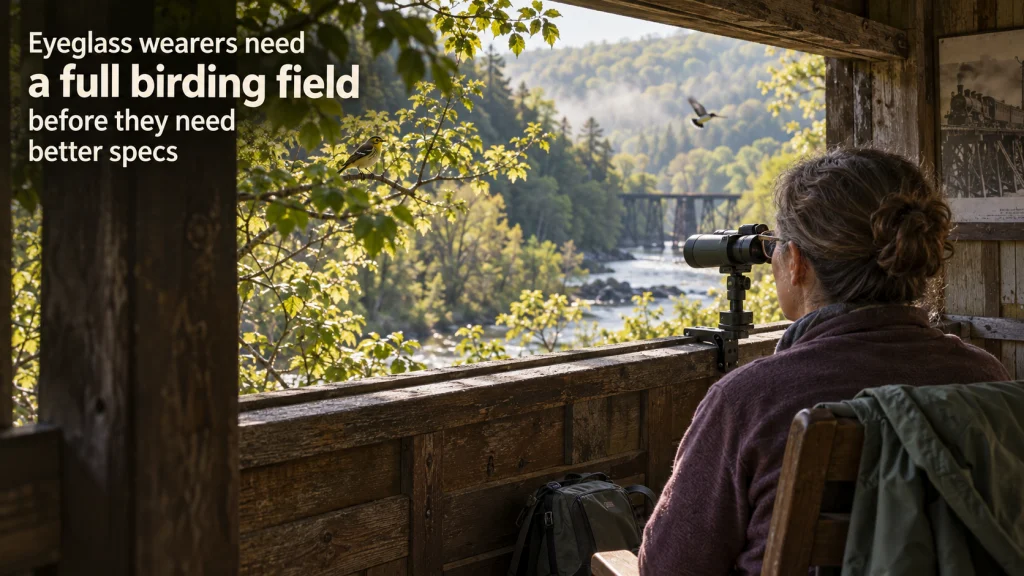
Eyeglass wearers need a full birding field before they need better specs

Birding Binoculars For Eyeglass Wearers

Birding binoculars for eyeglass wearers should pass one test before optical prestige, price, or magnification gets much attention: you should be able to see the complete usable field while wearing the glasses you actually bird in. Published eye relief helps narrow the field, but it cannot guarantee that a particular eyecup, frame shape, lens position,

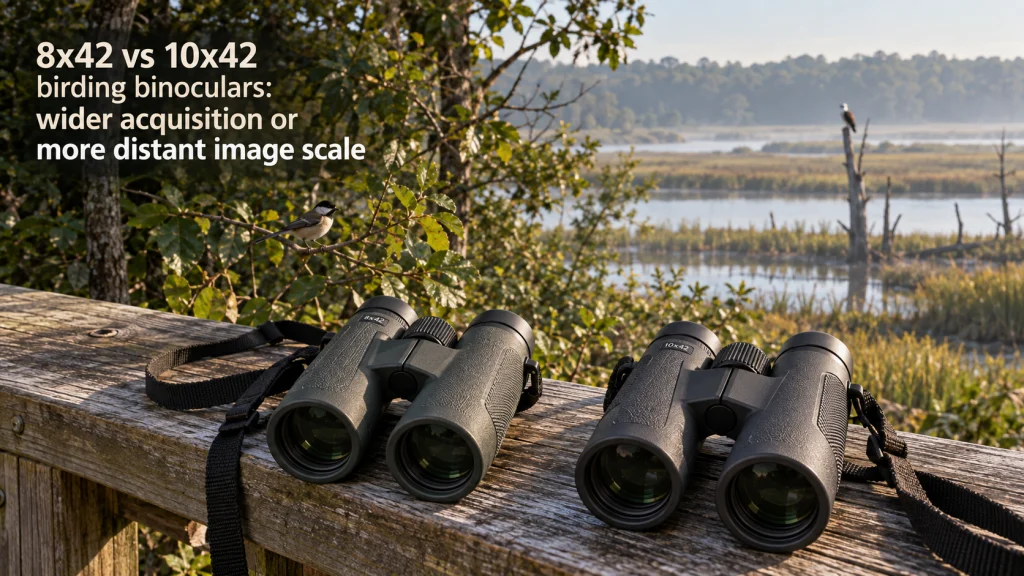
8×42 vs 10×42 birding binoculars: wider acquisition or more distant image scale

8X42 Vs 10X42 Binoculars For Birding

Choosing between 8×42 and 10×42 binoculars for birding is not a free upgrade from less magnification to more. Holding the 42 mm objective size constant, 10x gives more image scale while 8x often gives a wider viewing window and makes hand movement less conspicuous. Exact field of view, eye relief, close focus, weight, and fit

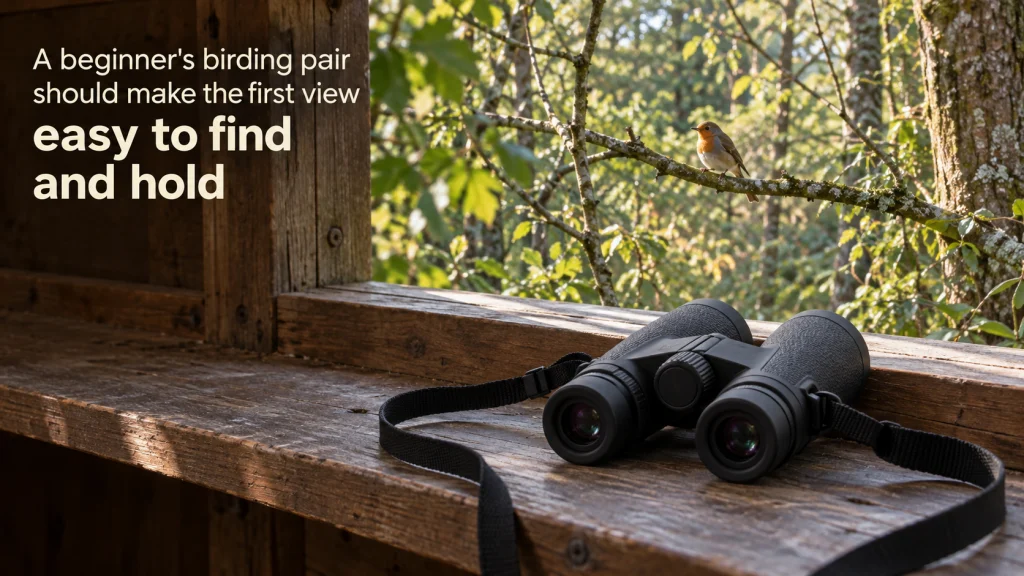
A beginner’s birding pair should make the first view easy to find and hold

Best Binoculars For Birding Beginners

A first birding binocular should make a brief sighting easier to acquire, focus, and hold before adding magnification. For many beginners, 8x is a forgiving starting point, but 8×42 is not a universal rule. Field of view, focus control, close focus, eyeglass fit, carrying burden, weather protection, and viewing distance still decide fit. The goal

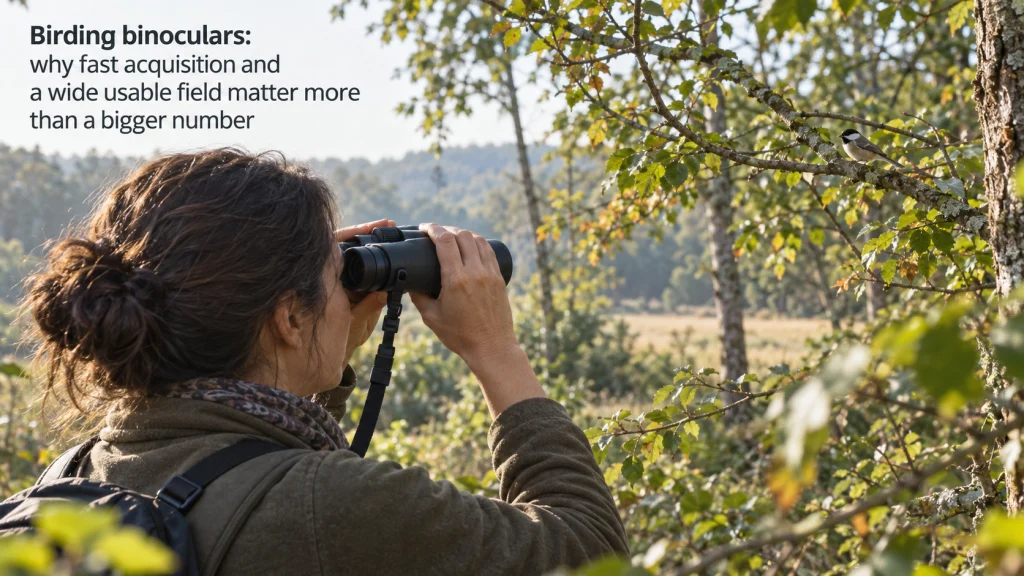
Birding binoculars: why fast acquisition and a wide usable field matter more than a bigger number

Birding Binoculars

Birding binoculars work best when they help you acquire a bird quickly, bring it into focus without fuss, and keep it visible as it moves. Magnification matters, but field of view, close focus, focus control, eye relief, weight, and fit can change the experience just as much. The right configuration depends on where you watch,