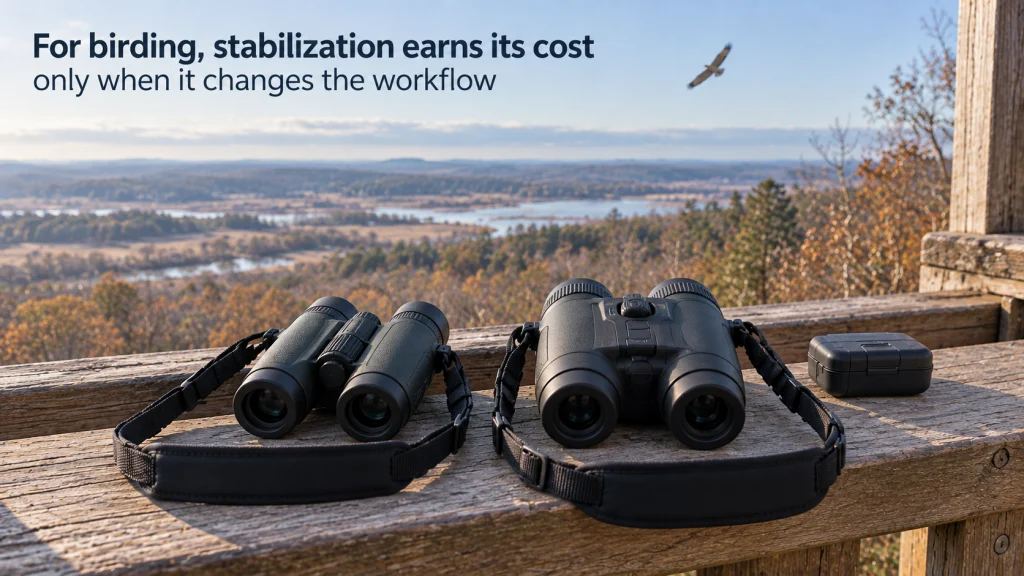
When are image stabilized binoculars worth the extra complexity?
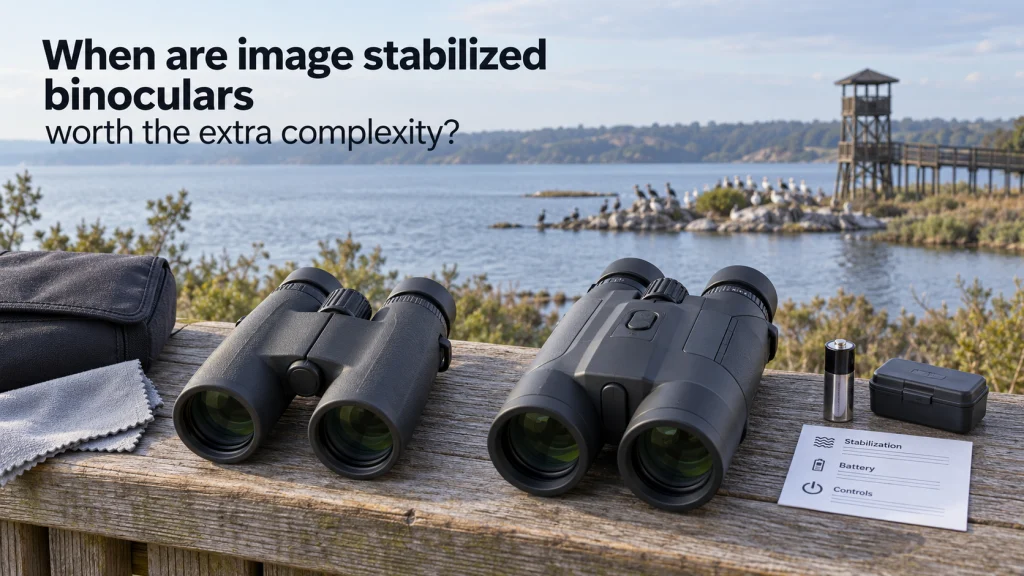
Are Image Stabilized Binoculars Worth It

Image stabilization is worth paying for when it fixes a repeated handheld limitation that a conventional binocular does not solve. Its main benefit is steadiness, not automatically better glass, more brightness, or better fit. Compare field of view, exit pupil, eye relief, weight, sealing, controls, and power requirements on the exact models involved. If a
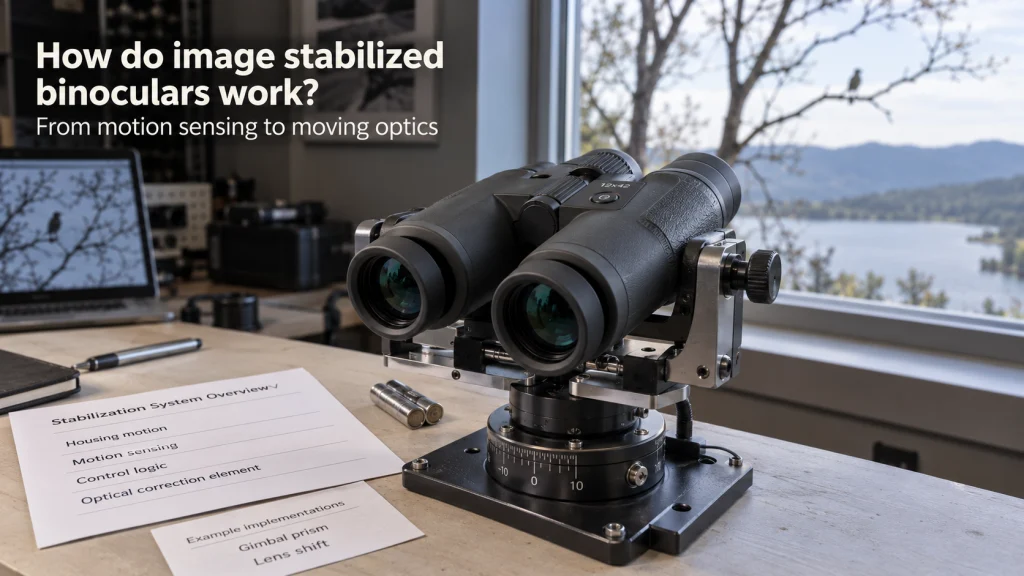
How do image stabilized binoculars work? From motion sensing to moving optics

How Do Image Stabilized Binoculars Work

Image stabilized binoculars reduce visible shake by detecting motion, calculating a correction, and changing the optical path with a controlled moving element. The important detail is that the moving element is not universal: current systems include gimbal-mounted prisms and lens-shift designs, while some manufacturers describe control behavior without publicly identifying the internal moving component. Stabilization

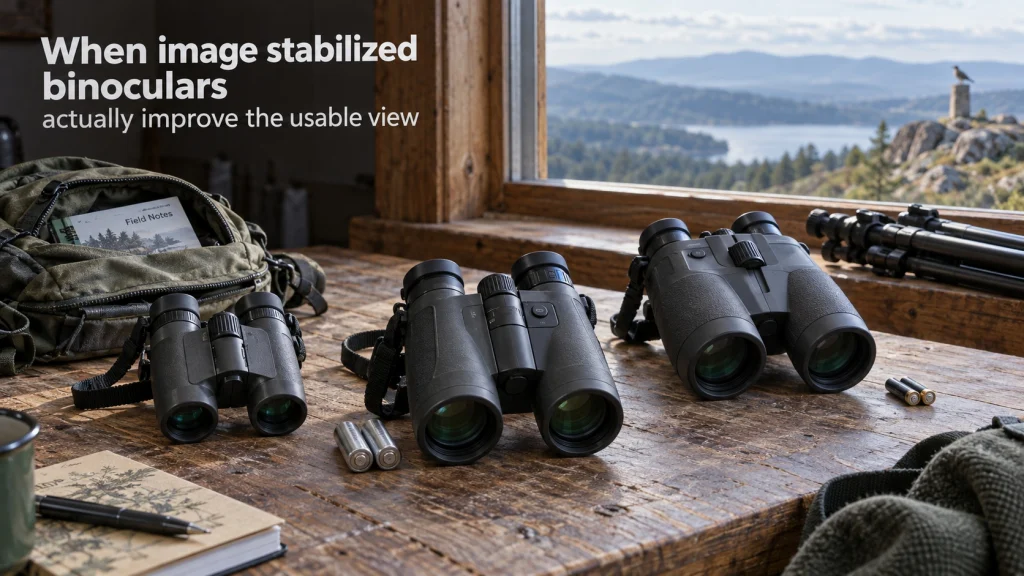
When image stabilized binoculars actually improve the usable view

Image Stabilized Binoculars

Image stabilized binoculars can make handheld motion less limiting, but the label does not tell you how a specific model will behave. Current designs differ in stabilization architecture, correction range, magnification, power, sealing, eye relief, weight, and support options. The useful question is whether a particular system removes enough motion from your viewing problem to

For birding, stabilization earns its cost only when it changes the workflow

Image Stabilized Binoculars For Birding

Image stabilized binoculars for birding are worth considering only when stabilization changes a real part of the birding workflow, such as holding a distant bird steady long enough to inspect detail. The feature does not erase the usual trade-offs in field of view, target acquisition, weight, weather protection, or carrying comfort. Higher magnification can become