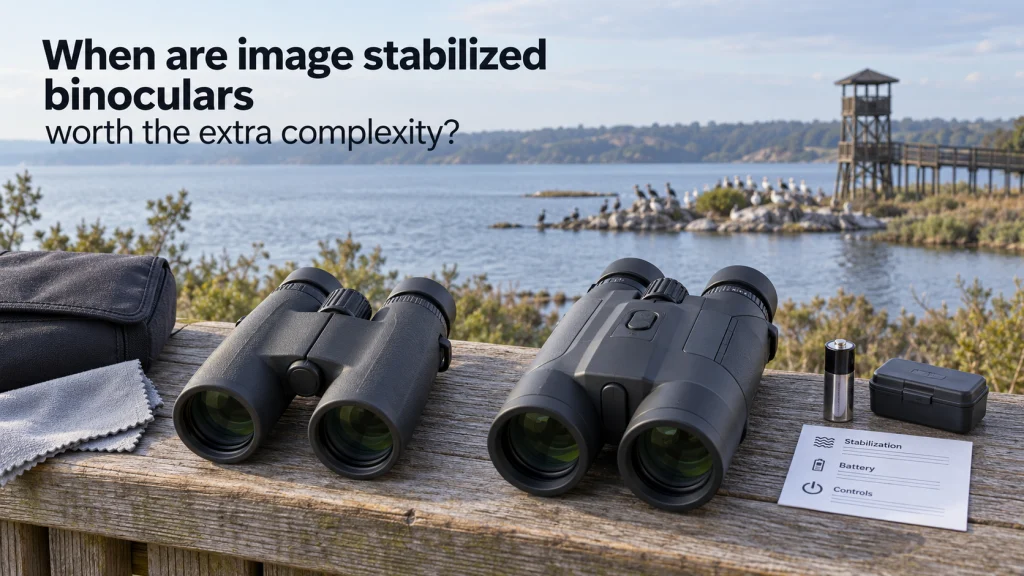
When are image stabilized binoculars worth the extra complexity?
Are Image Stabilized Binoculars Worth It

Image stabilization is worth paying for when it fixes a repeated handheld limitation that a conventional binocular does not solve. Its main benefit is steadiness, not automatically better glass, more brightness, or better fit. Compare field of view, exit pupil, eye relief, weight, sealing, controls, and power requirements on the exact models involved. If a
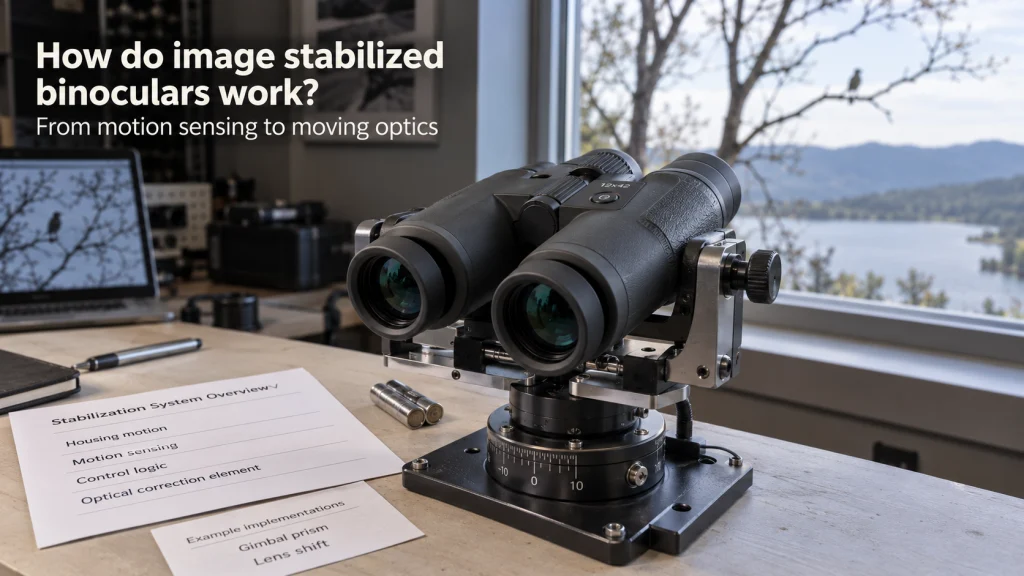
How do image stabilized binoculars work? From motion sensing to moving optics

How Do Image Stabilized Binoculars Work

Image stabilized binoculars reduce visible shake by detecting motion, calculating a correction, and changing the optical path with a controlled moving element. The important detail is that the moving element is not universal: current systems include gimbal-mounted prisms and lens-shift designs, while some manufacturers describe control behavior without publicly identifying the internal moving component. Stabilization

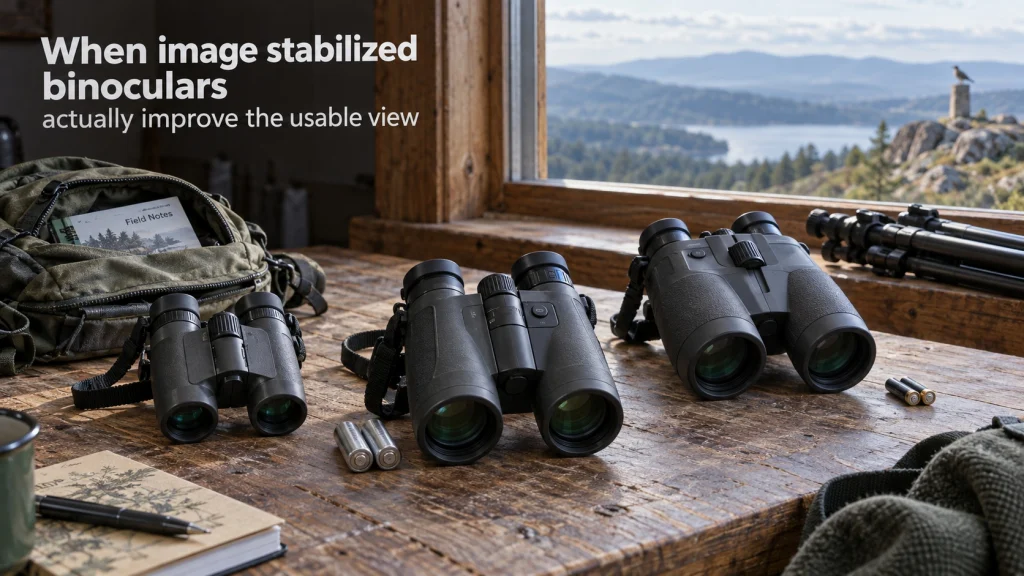
When image stabilized binoculars actually improve the usable view

Image Stabilized Binoculars

Image stabilized binoculars can make handheld motion less limiting, but the label does not tell you how a specific model will behave. Current designs differ in stabilization architecture, correction range, magnification, power, sealing, eye relief, weight, and support options. The useful question is whether a particular system removes enough motion from your viewing problem to

Are Porro prism binoculars outdated? Current models show the architecture is still alive

Are Porro Prism Binoculars Outdated

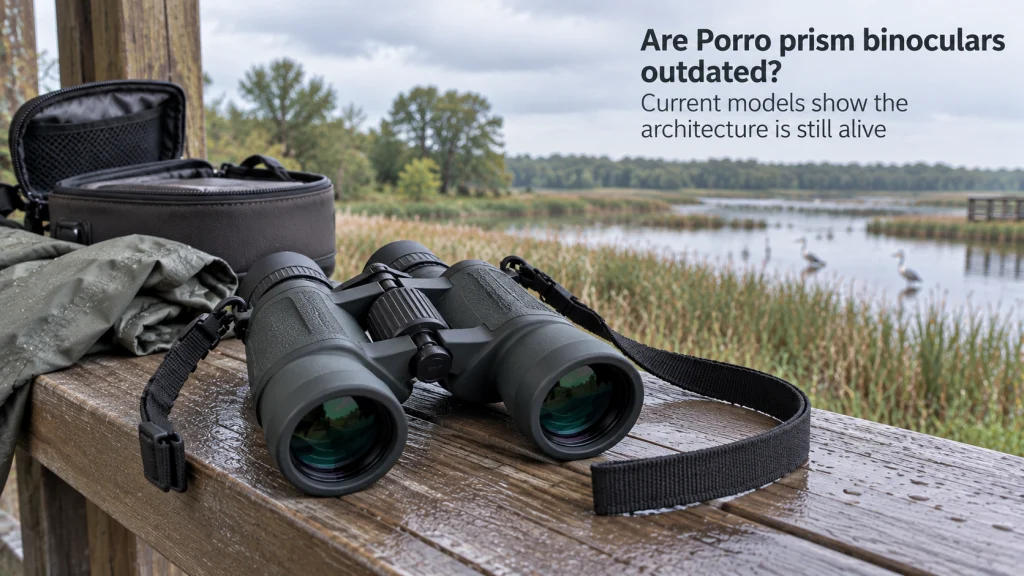
Porro prism binoculars are not obsolete simply because roof-prism models now occupy more of the premium and compact shelf space. Current manufacturer lineups still use the architecture in newly developed general-purpose models, waterproof designs, and specialized large binoculars. The practical question is not whether the prism layout looks old, but whether the finished binocular fits

Schmidt Pechan vs Abbe Koenig binoculars: start with the prism trade, not the name

Schmidt Pechan Vs Abbe Koenig Binoculars

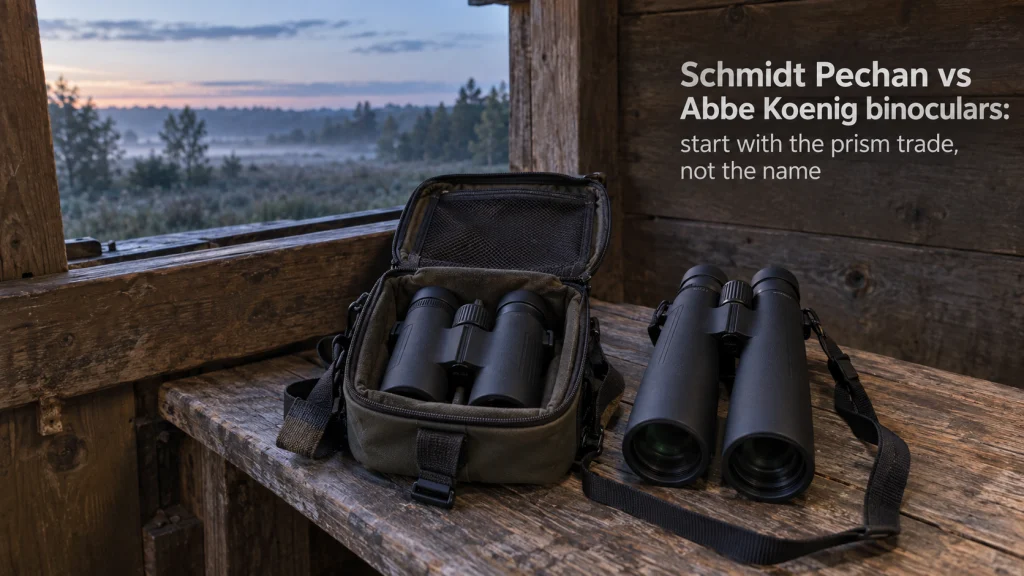
Schmidt-Pechan and Abbe-Koenig are both roof-prism systems, but they solve the packaging problem differently. Schmidt-Pechan supports a shorter body and requires a reflective treatment on one prism surface, while Abbe-Koenig uses a longer optical path and can rely on total internal reflection instead of that mirror surface. That difference matters when you compare size, weight,

Reverse Porro prism binoculars: compact by moving the objectives inward

Reverse Porro Prism Binoculars

Reverse Porro prism binoculars keep the folded Porro optical path but move the objective lenses closer together than the eyepieces, which can make the body notably compact without giving it the straight barrel shape of a roof prism model. That geometry changes the silhouette and the packing problem, but it does not tell you whether

Roof vs Porro binoculars and the architecture trade behind the shape

Roof Vs Porro Binoculars

Roof vs Porro binoculars are not a simple contest between a modern design and an old one. Prism architecture changes the light path and strongly influences body layout, but field of view, eye relief, sealing, weight, coatings, transmission, and durability still belong to the finished binocular. A roof design usually favors a straighter, narrower form,

Compact vs full size binoculars: when a smaller pair can replace 8×42

Compact Vs Full Size Binoculars

Compact binoculars can replace a full-size pair when the saved bulk changes what you are willing to carry and your normal viewing conditions do not demand the larger format’s extra operating margin. The trade is not simply small versus large: objective size changes exit-pupil geometry, while body size can also change eye relief, eyecup room,

8×25 vs 8×32 binoculars when pocket size stops being the best trade

8X25 Vs 8X32 Binoculars

At the same 8x magnification, the useful difference between 8×25 and 8×32 binoculars is not reach. It is the trade between a genuinely pocketable body and a larger viewing interface with a wider geometric exit pupil, more room for controls, and usually more packed bulk. A 32 mm objective does not guarantee a brighter or

Choosing 8×25 or 10×25 comes down to reach and viewing margin

8X25 Vs 10X25 Binoculars

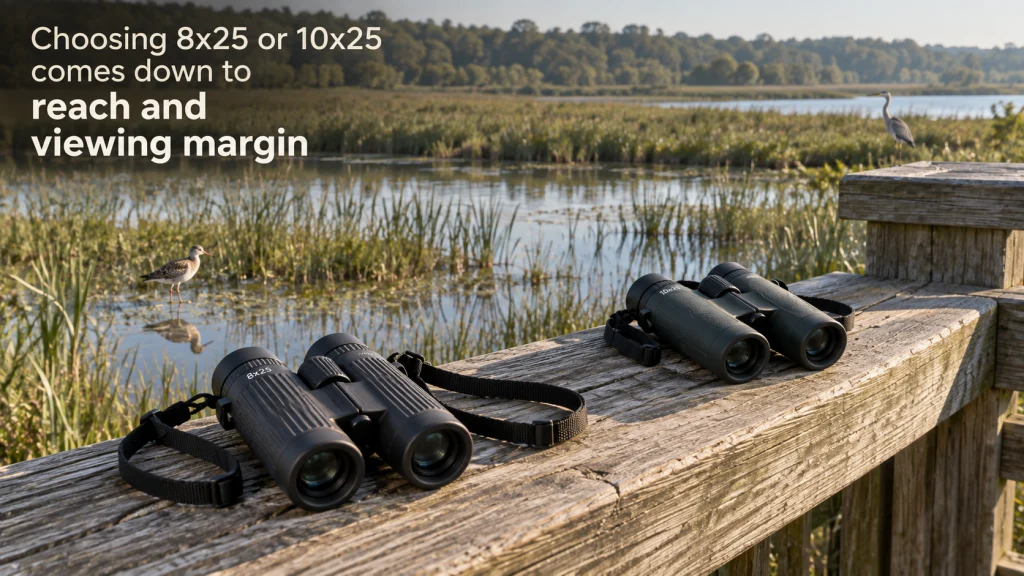
Choosing between 8×25 and 10×25 binoculars is not a choice between a basic option and a free upgrade. When the objective diameter and body stay compact, 10x gives more image scale, while 8x usually preserves more viewing margin through a wider field and a larger exit pupil. A current same-family comparison makes that trade easier

Pocket binoculars that fold small without becoming awkward to use

Pocket Binoculars

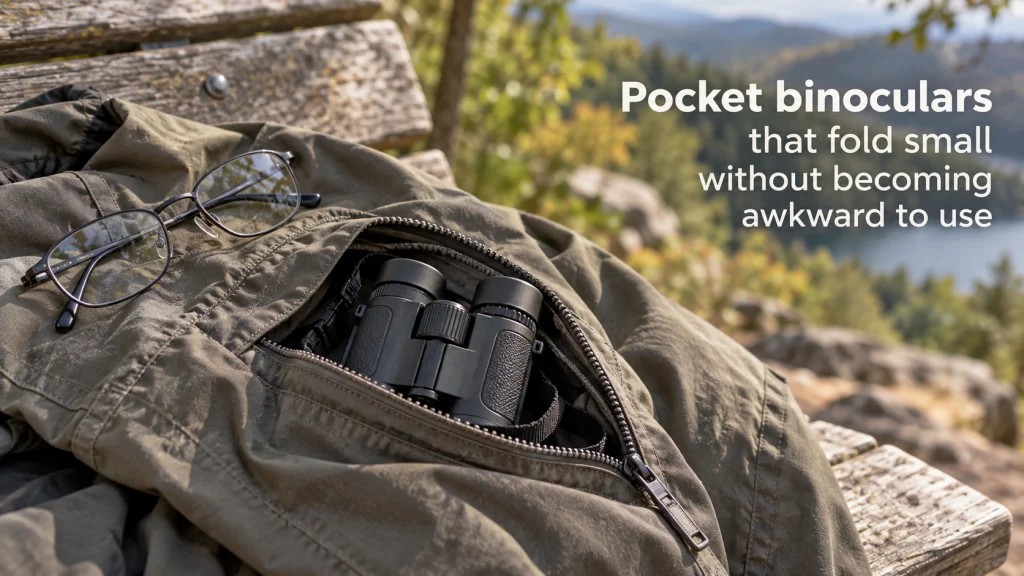
Pocket binoculars are genuinely useful only when their folded shape fits the space you plan to carry them in and their controls still work for your face and hands. Two 8×25 binoculars can share the same objective size while folding to different shapes, using different hinge layouts, and demanding different setup steps before the view

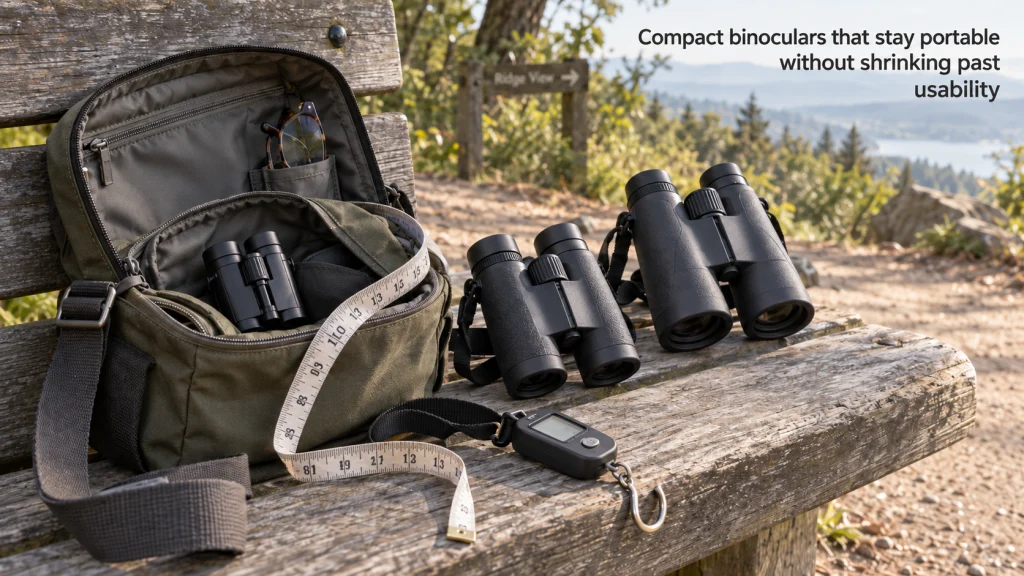
Compact binoculars that stay portable without shrinking past usability

Compact Binoculars

Compact binoculars are useful only when the smaller body solves a real carrying problem without making viewing difficult. Compact is not a universal size standard, so objective diameter alone cannot tell you whether a model is truly portable for your bag, pocket, hands, or viewing conditions. A better choice comes from checking packed dimensions, weight,