The binocular rabbit hole starts when every spec looks like an upgrade
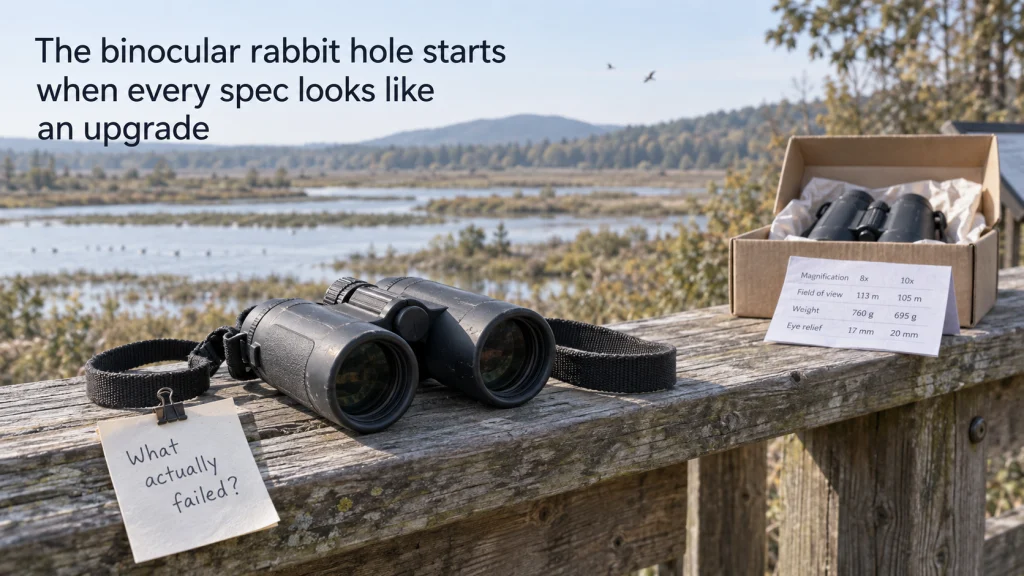
Binocular Rabbit Hole

A binocular rabbit hole often starts when a pair that was doing its job gets compared against a specification that sounds better. The binocular has not changed, but the comparison can make its normal trade-offs feel like new defects. Curiosity is useful, but it becomes a poor reason to buy when there is no viewing
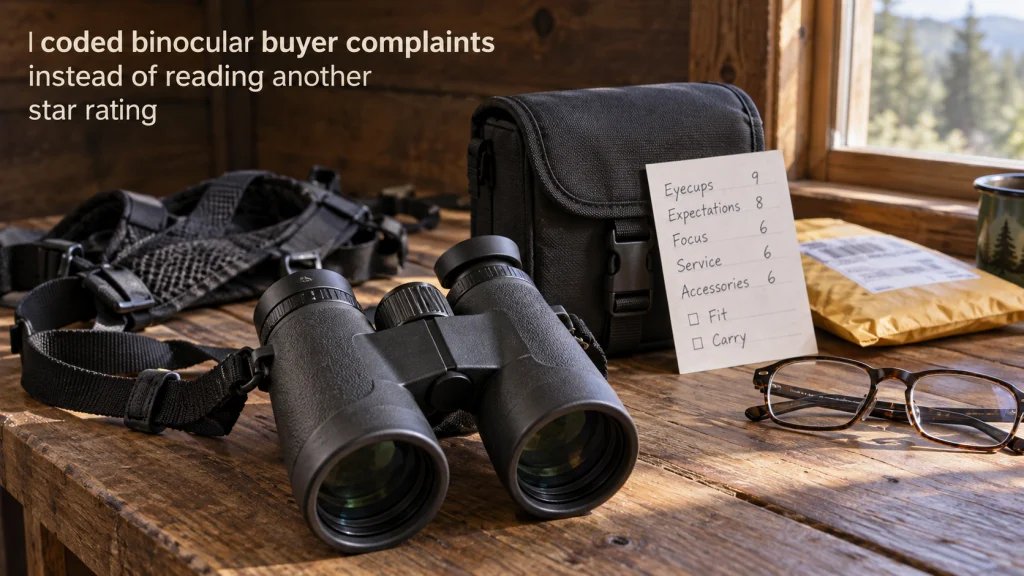
I coded binocular buyer complaints instead of reading another star rating

Binocular Buyer Complaints

I coded a frozen set of public binocular ownership complaints instead of treating star ratings as a shortcut to ownership quality. The method separates fit, eyecup behavior, focus, carrying, stability, service, accessories, and expectation mismatch before any category is ranked. The counts are useful for identifying what a buyer should verify, not for estimating defect

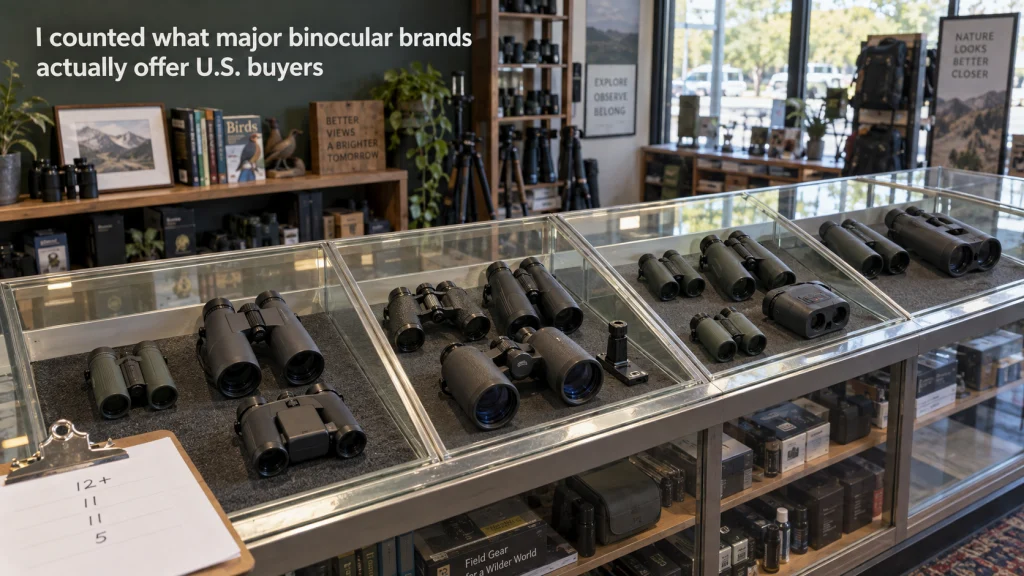
I counted what major binocular brands actually offer U.S. buyers

Binocular Brand Lineup

A binocular brand lineup looks much less uniform once I stop counting individual magnifications and start counting product families. In this U.S. sample, Vortex and Celestron each expose 11 clearly named families or series, while Bushnell presents a much tighter current set and Nikon requires a lower-bound count because its active family pages are not

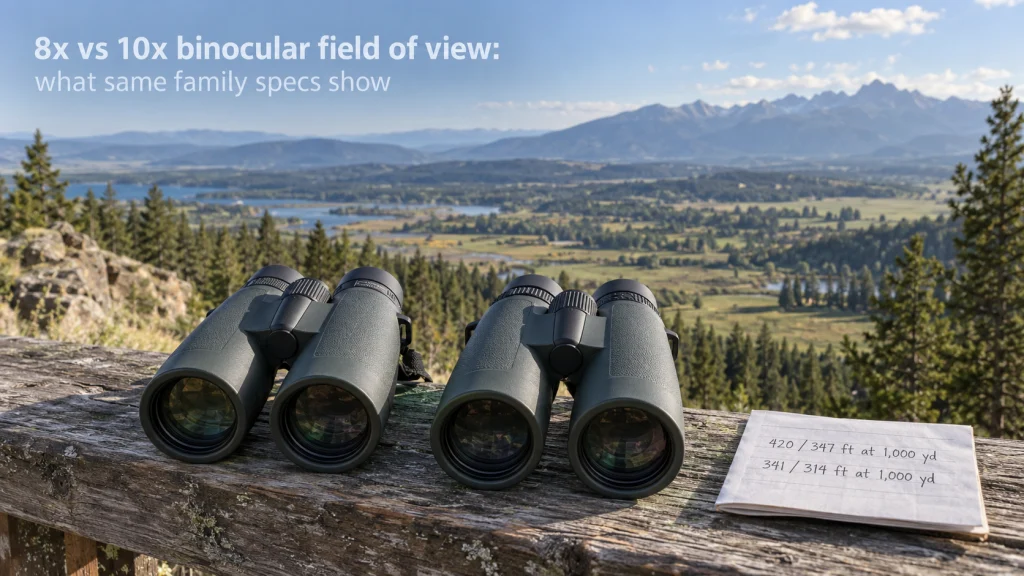
8x vs 10x binocular field of view: what same family specs show

8X Vs 10X Binocular Field Of View

In this 8x vs 10x binocular field of view dataset, four current 8×42 and 10×42 pairs from the same product families show that the narrower 10x view is real but not uniform. The observed loss ranges from about 7.9% to 17.4% when each 10x model is compared with its 8x family mate using manufacturer-published linear

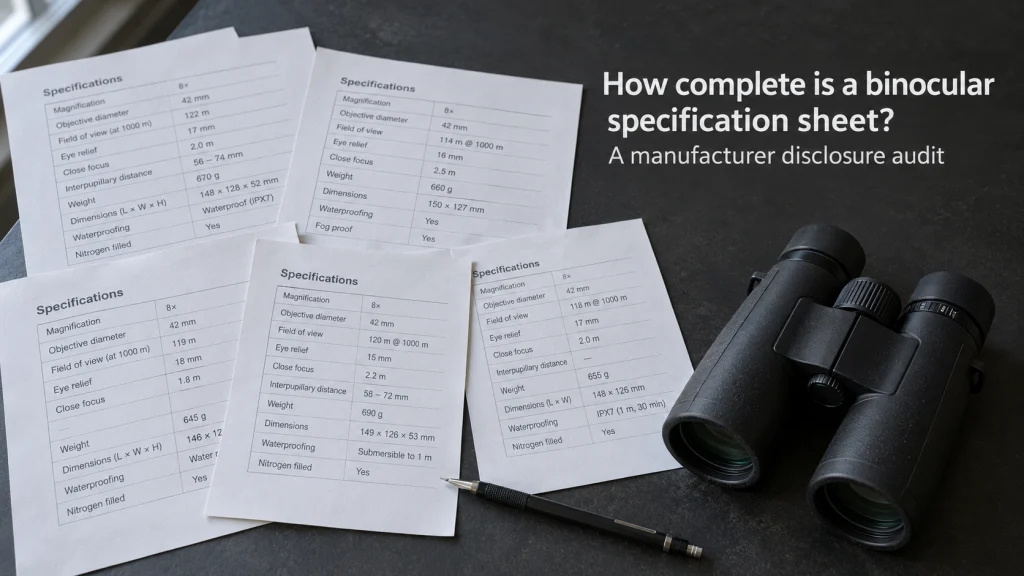
How complete is a binocular specification sheet? A manufacturer disclosure audit

Binocular Specification Sheet

A binocular specification sheet can look detailed while still leaving important comparison work to the buyer. In this five-page audit of current official manufacturer product pages, eight of nine predefined fields appeared on every page, while interpupillary distance appeared on only three. The bigger problem was not simple absence: dimensions and waterproofing were often disclosed

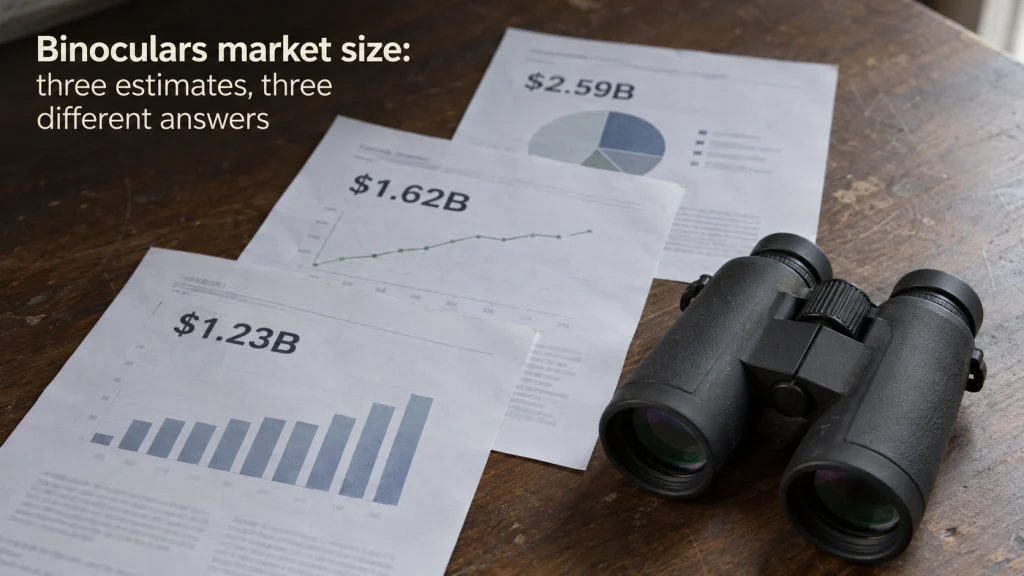
Binoculars market size: three estimates, three different answers

Binoculars Market Size

Current binocular market reports disagree by more than a factor of two, and the gap cannot be explained by rounding alone. The public pages use different product boundaries, application segments, revenue definitions, forecast assumptions, and levels of methodology disclosure. The useful answer is therefore a source-labeled range, not a synthetic market value. Readers should match

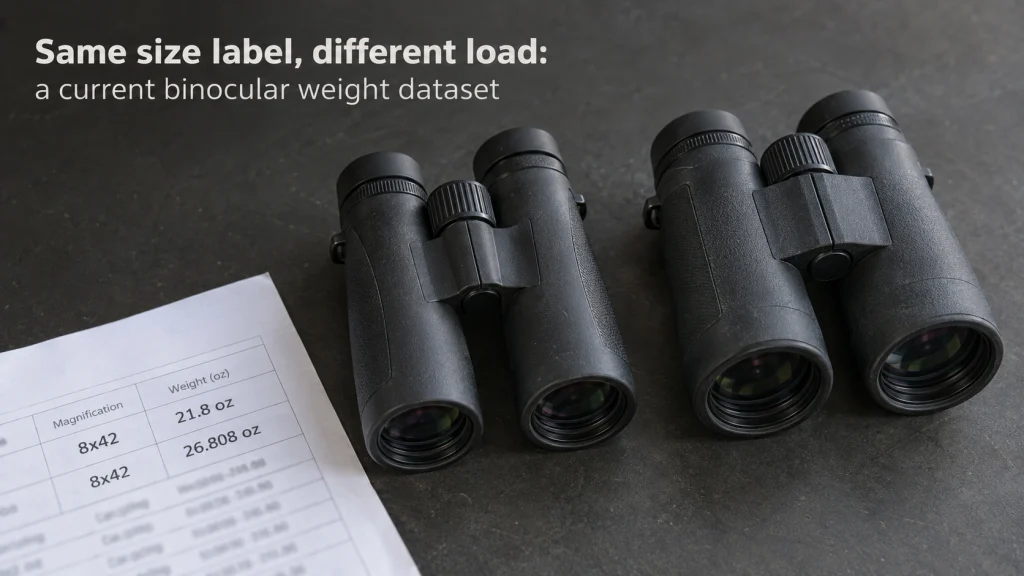
Same size label, different load: a current binocular weight dataset

Binocular Size And Weight Comparison

A binocular size and weight comparison becomes more useful when the configuration label is treated as a starting point, not a weight class. In this current official-spec sample, models with the same 8×42 or 10×42 label differ by several ounces, while selected 10×50 models overlap parts of the 42mm range. The dataset keeps manufacturer weight