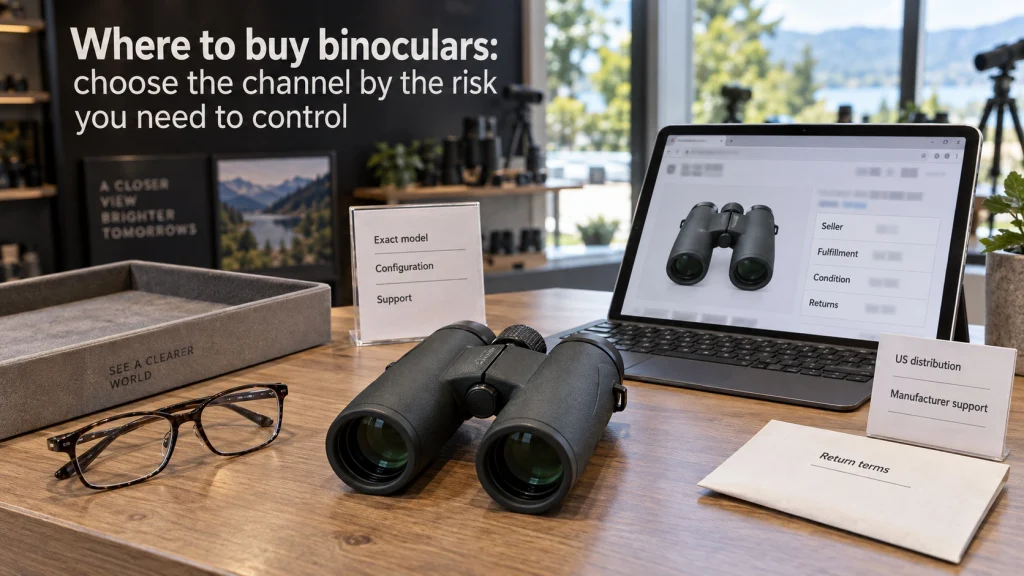
Where to buy binoculars: choose the channel by the risk you need to control
Where To Buy Binoculars

The safest purchase channel is the one that resolves the uncertainty you still have after choosing a binocular. If fit is still unknown, physical access or a real trial path matters more than a small price difference; if fit is already settled, seller identity, returns, region, and support become easier to verify remotely. Marketplaces deserve


How to test binoculars before buying: fit, controls and sample condition

How To Test Binoculars Before Buying

Two binoculars can look equally suitable on a spec sheet and still produce different buying decisions once you hold them to your face. A useful pre-purchase test checks personal fit, access to the full field, control reach, handling and obvious sample problems without pretending to measure laboratory optical quality. The same basic workflow works in

Best binoculars under 200 dollars: avoid the wrong compromise

Best Binoculars Under 200 Dollars

A budget of 200 dollars opens enough credible binocular choices that the bigger risk is choosing the wrong compromise for how you actually observe. Configuration, field of view, eye relief, weather sealing, weight, warranty support, and current pricing all matter more than simply spending as close to the ceiling as possible. Retail pricing can also

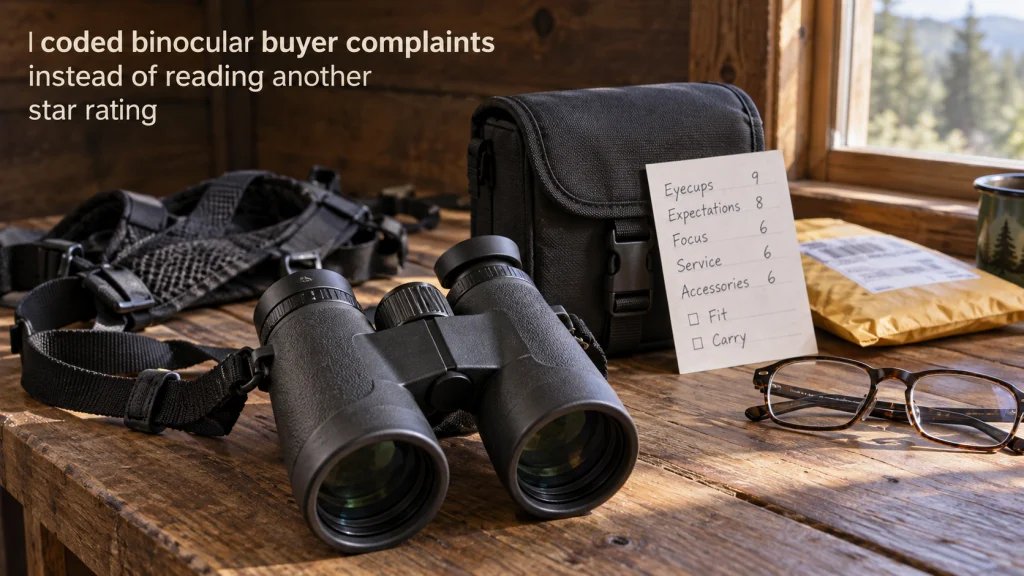
I coded binocular buyer complaints instead of reading another star rating

Binocular Buyer Complaints

I coded a frozen set of public binocular ownership complaints instead of treating star ratings as a shortcut to ownership quality. The method separates fit, eyecup behavior, focus, carrying, stability, service, accessories, and expectation mismatch before any category is ranked. The counts are useful for identifying what a buyer should verify, not for estimating defect

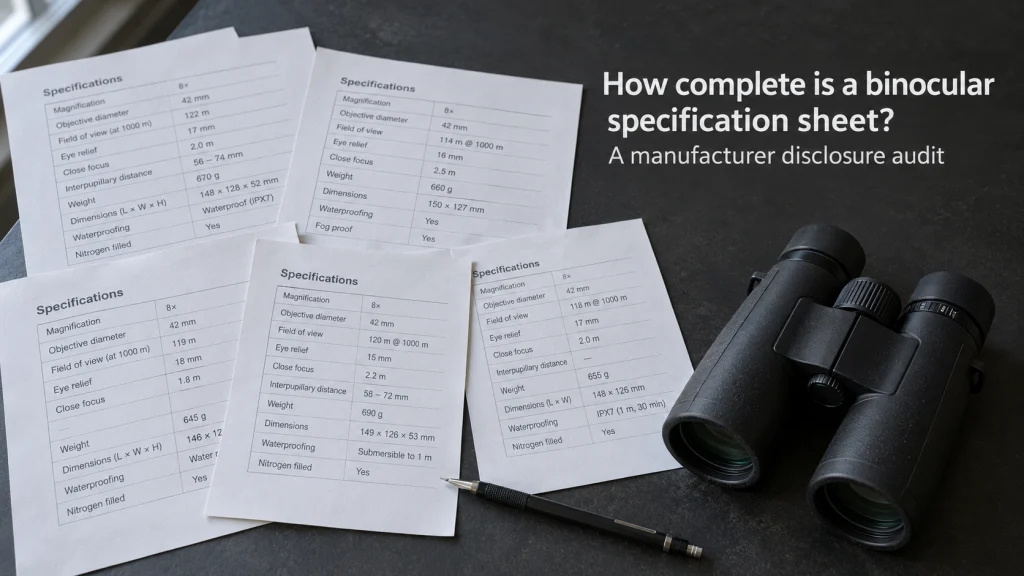
How complete is a binocular specification sheet? A manufacturer disclosure audit

Binocular Specification Sheet

A binocular specification sheet can look detailed while still leaving important comparison work to the buyer. In this five-page audit of current official manufacturer product pages, eight of nine predefined fields appeared on every page, while interpupillary distance appeared on only three. The bigger problem was not simple absence: dimensions and waterproofing were often disclosed