Choosing BaK4 vs BK7 binoculars is more complicated than good glass vs bad glass
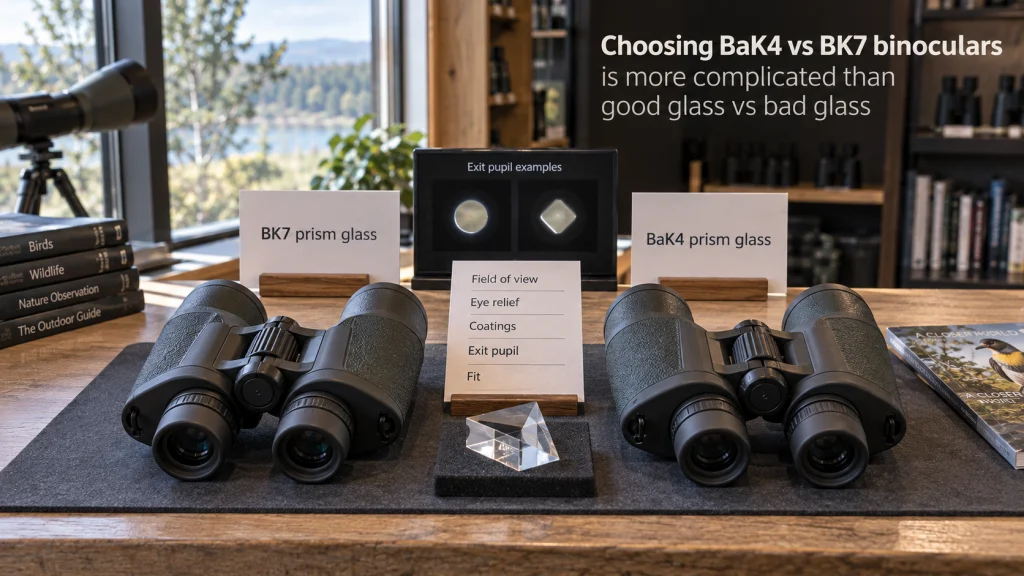
Bak4 Vs Bk7 Binoculars

BaK4 and BK7 are prism-glass labels, not complete quality grades for a finished binocular. BaK4 can make total internal reflection easier to maintain in demanding prism geometry because a representative BaK4 formulation has a higher refractive index than a representative BK7 formulation. A diamond-edged exit pupil can be a useful clue that part of the
Binocular Apparent FOV Calculator

BINOCULAR TOOLS / APPARENT FIELD OF VIEW Estimate how wide the view appears through binoculars. Enter binocular magnification and real angular field of view. Calculate apparent field of view with the ISO-described method, and see how it differs from the older multiplication shortcut. TWO NUMBERS FROM THE SPECS Enter magnification and real FOV For an

Binocular Relative Brightness Calculator

BINOCULAR TOOLS / RELATIVE BRIGHTNESS Compare two brightness indexes, not two promises. Enter the magnification and objective size for two binocular configurations. Compare the traditional squared-exit-pupil indexes side by side, with the limits of that calculation kept visible. COMPARE TWO CONFIGURATIONS Enter the four specification numbers Read an 8×42 label as 8× magnification and a

Binocular Exit Pupil Calculator

BINOCULAR TOOLS / EXIT PUPIL Find the exit pupil behind the numbers. Enter the two numbers on a binocular specification, such as 8×42. The calculator divides objective diameter by magnification to give the theoretical exit pupil in millimeters. YOUR BINOCULAR SPECIFICATION Enter magnification and lens size For an 8×42 binocular, enter 8 for magnification and

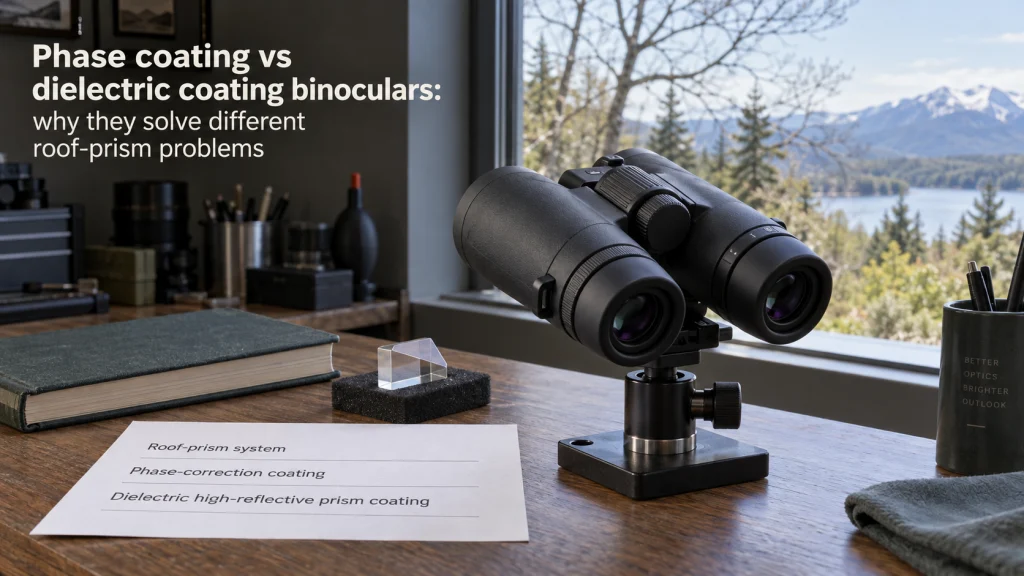
Phase coating vs dielectric coating binoculars: why they solve different roof-prism problems

Phase Coating Vs Dielectric Coating Binoculars

Phase correction and dielectric high-reflective prism coatings solve different optical problems inside roof-prism binoculars. Phase correction is concerned with phase shift at the roof surfaces and its effect on resolution and contrast, while a dielectric mirror coating is used to preserve reflectivity where a prism design needs a mirrored surface. A binocular can legitimately list

Binocular Field Width Calculator

BINOCULAR TOOLS / FIELD WIDTH AT A DISTANCE See how much of the scene fits at your viewing distance. Enter a real field-of-view specification and the distance to what you are viewing. This calculator estimates the visible scene width there, rather than only converting the standard 1,000-yard or 1,000-meter label. YOUR VIEWING SETUP Enter the

Binocular FOV Converter

BINOCULAR TOOLS / REAL FIELD OF VIEW Convert binocular field of view, without mixing up the units. Enter one real field-of-view specification from your binoculars. Get the equivalent angle and both standard width formats using the same geometric field of view. YOUR SPECIFICATION Start with the number on the label Select how the manufacturer expresses

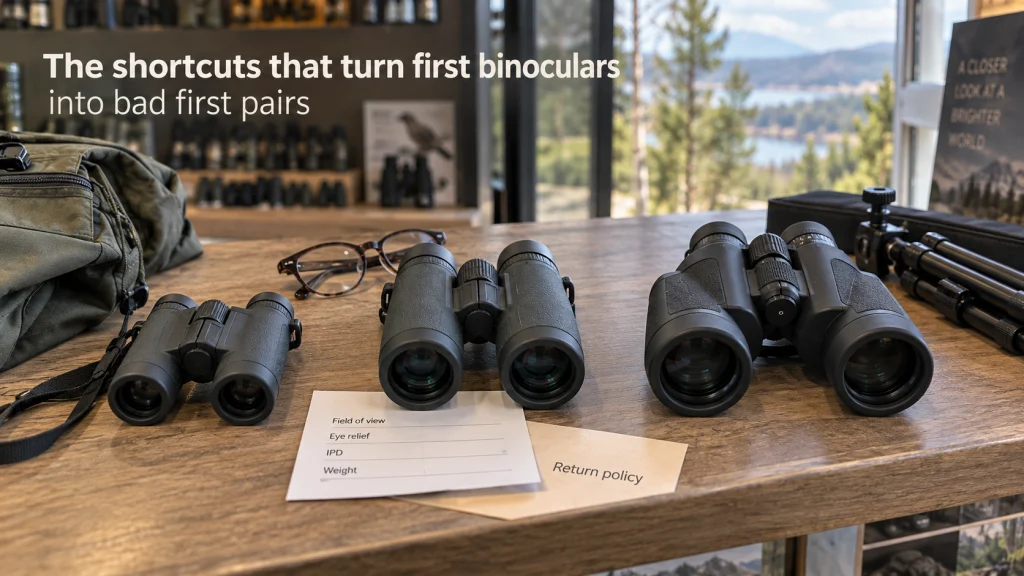
The shortcuts that turn first binoculars into bad first pairs

First Binocular Buying Mistakes

The most damaging first-binocular mistakes usually happen before a buyer compares brands or prices. A pair can look impressive and still be wrong because the buyer optimized magnification, compactness, labels, or budget before defining the viewing job. The safer approach is to turn every attractive claim into a check involving field of view, eye relief,

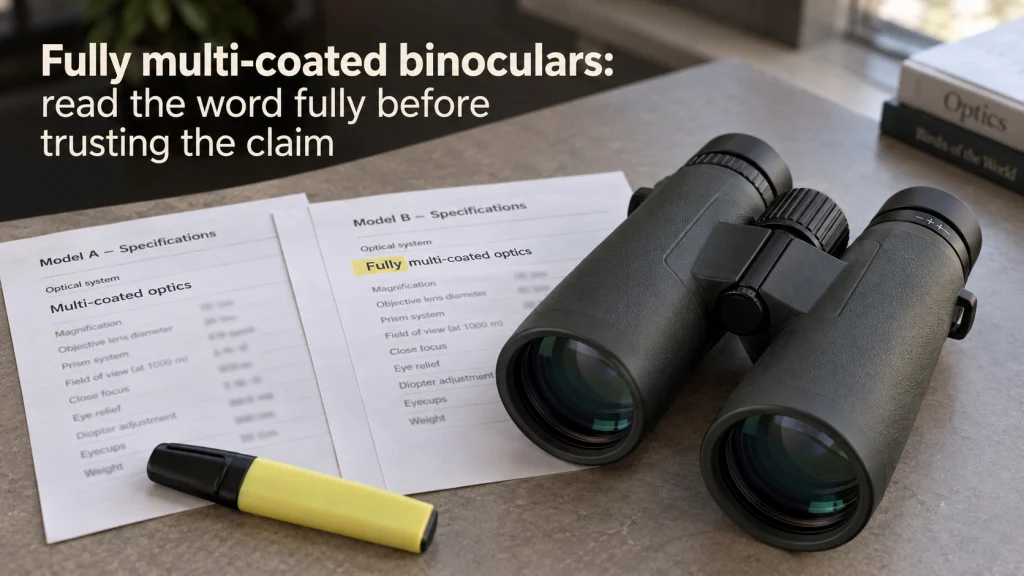
Fully multi-coated binoculars: read the word fully before trusting the claim

Fully Multi Coated Binoculars

Fully multi-coated binoculars claim broader multilayer anti-reflection treatment than wording such as coated, fully coated, or multi-coated. The word fully matters because it changes the claimed coverage, but the label still does not tell you the coating recipe, application quality, prism treatment, or measured transmission of the complete binocular. Read the exact phrase first, then

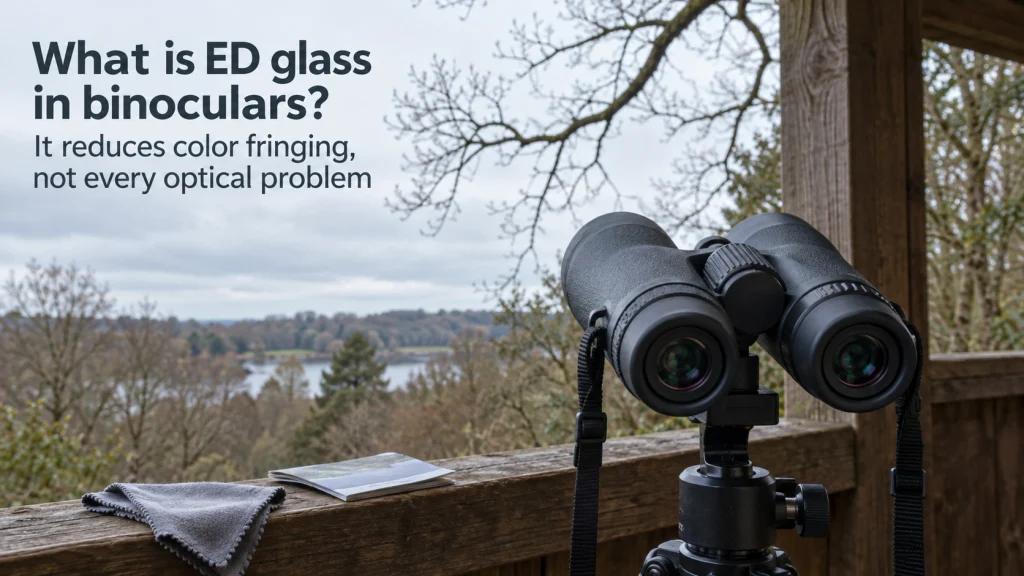
What is ED glass in binoculars? It reduces color fringing, not every optical problem

What Is Ed Glass In Binoculars

ED glass in binoculars is primarily a tool for reducing chromatic aberration, the purple or green color fringing that can appear around high-contrast edges. That correction can matter when the defect is visible, but the ED label alone does not prove that a binocular is brighter, sharper across the whole field, or better built. A

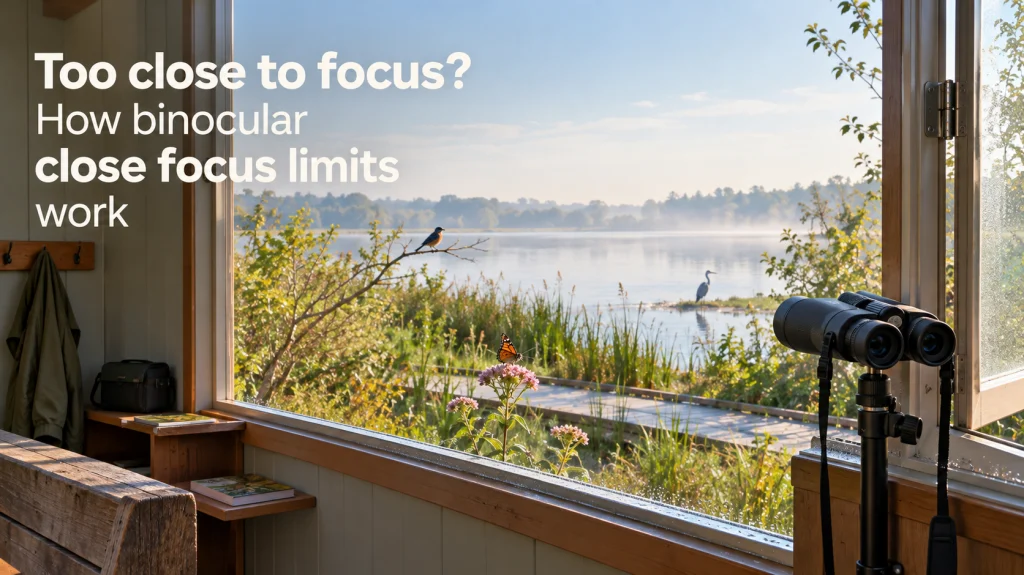
Too close to focus? How binocular close focus limits work

What Is Close Focus In Binoculars

Close focus is the nearest distance at which a binocular can bring a subject into a clear focus, and a subject inside that boundary can stay blurred even when the binocular works normally farther away. The published value belongs to the exact model, not to a label such as 8×42 by itself. A shorter minimum

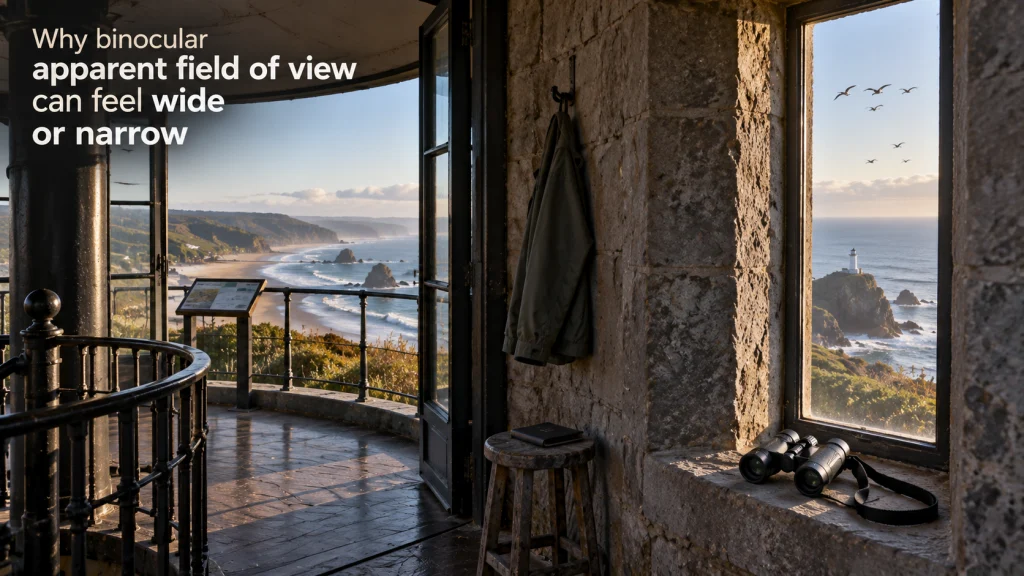
Why binocular apparent field of view can feel wide or narrow

Binocular Apparent Field Of View

Binocular apparent field of view describes how broad the magnified viewing window appears at the eyepiece, not how much landscape fits inside it. A binocular can show adequate real scene width and still present a view that feels visually confined. The useful comparison is to read real FOV and AFOV as separate measurements, then check