What is ED glass in binoculars? It reduces color fringing, not every optical problem
What Is Ed Glass In Binoculars

ED glass in binoculars is primarily a tool for reducing chromatic aberration, the purple or green color fringing that can appear around high-contrast edges. That correction can matter when the defect is visible, but the ED label alone does not prove that a binocular is brighter, sharper across the whole field, or better built. A
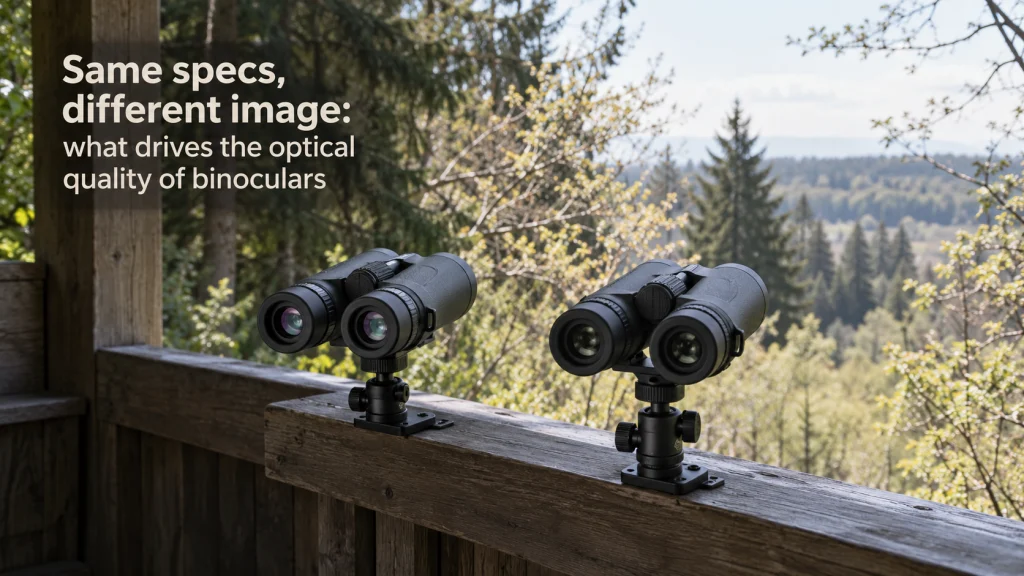

Same specs, different image: what drives the optical quality of binoculars

Optical Quality Of Binoculars

Two binoculars can share the same 8×42 label and still deliver noticeably different color control, contrast, glare resistance, and edge behavior. The optical quality of binoculars comes from how the whole optical train handles several separate image problems, not from one premium term on the box. ED glass, anti-reflection coatings, roof-prism coatings, prism-glass labels, and

Roof vs Porro binoculars and the architecture trade behind the shape

Roof Vs Porro Binoculars

Roof vs Porro binoculars are not a simple contest between a modern design and an old one. Prism architecture changes the light path and strongly influences body layout, but field of view, eye relief, sealing, weight, coatings, transmission, and durability still belong to the finished binocular. A roof design usually favors a straighter, narrower form,

What is exit pupil in binoculars? Use the ratio without treating it as a brightness score

What Is Exit Pupil In Binoculars

Exit pupil is a geometric specification calculated by dividing objective diameter by magnification. The result tells you the diameter of the light beam leaving the eyepiece, but it does not measure every loss that occurs inside the optical system. Relative brightness carries the same geometry one step farther by squaring the exit pupil, so it