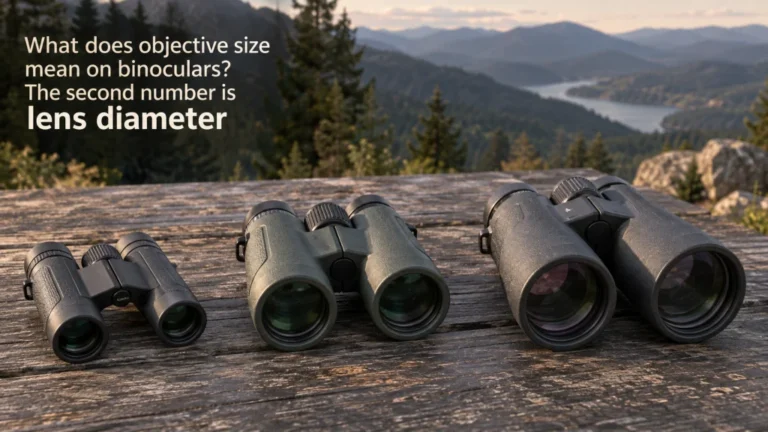
Exit pupil is a geometric specification calculated by dividing objective diameter by magnification. The result tells you the diameter of the light beam leaving the eyepiece, but it does not measure every loss that occurs inside the optical system. Relative brightness carries the same geometry one step farther by squaring the exit pupil, so it is still a theoretical comparison rather than a complete brightness score. Use both numbers as screening tools, then consider lighting, your eye’s pupil at that moment, and evidence about optical transmission before drawing a real-world conclusion.
Calculate exit pupil before deciding what the number means
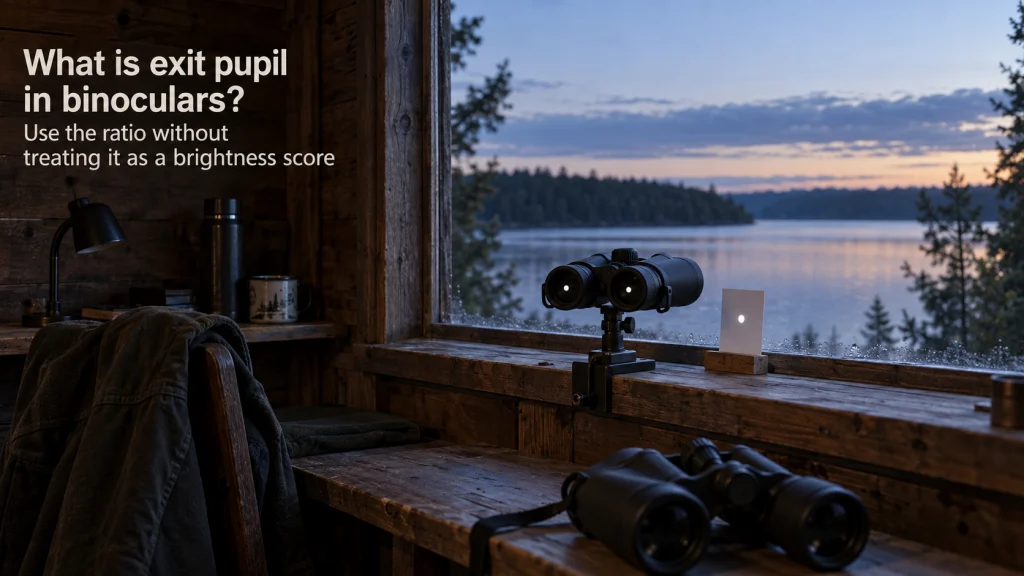
Exit pupil in binoculars starts with a simple equation: objective diameter in millimeters divided by magnification. An 8×40 configuration has a 5 mm exit pupil because 40 divided by 8 equals 5, while a 10×50 configuration also has a 5 mm exit pupil because 50 divided by 10 equals 5. The bright disk you can see when you hold the eyepieces away from your eyes is the exit pupil, the bundle of light delivered by each optical channel. That clean calculation is useful, but it describes geometry before it describes the quality of the view.
For a fixed-power binocular, exit pupil is therefore a derived specification rather than a user adjustment like center focus, diopter, or interpupillary distance. This is one reason the numbers printed on a binocular matter together instead of separately, and the broader relationship is explained in how binocular numbers work together. The same principle also fits into the wider set of binocular specifications that affect real use, because a ratio can describe one property without settling the entire buying decision. I would calculate exit pupil, then refuse to stop there.
Key point: Exit pupil = objective diameter ÷ magnification. The answer is a beam diameter in millimeters. It does not directly measure transmission, contrast, sharpness, or complete low-light performance. Use the number to describe geometry first, then bring other evidence into the decision.

Its 8x magnification and 42mm objectives provide a real configuration for applying exit-pupil math. Multilayer-coated lenses and a silver-alloy prism coating address optical factors the ratio itself does not measure. Turn-and-slide eyecups and 20.2mm eye relief support comfortable viewing.
Check on AmazonIf you click this link and buy, we earn a commission at no additional cost to you.
Relative brightness is the same geometry carried one step farther
Relative brightness is calculated by squaring the exit pupil diameter. A 5 mm exit pupil produces a relative-brightness value of 25, while a 4 mm exit pupil produces a value of 16. That makes the figure convenient for comparing how different magnification and objective combinations change the calculated exit beam. It does not turn the result into a laboratory measurement of the brightness a viewer will actually see.
Squaring the diameter also makes numerical differences look more dramatic than the underlying change in beam diameter. Moving from a 4 mm exit pupil to a 5 mm exit pupil increases the diameter by 25 percent, while the traditional relative-brightness figure rises from 16 to 25. The larger squared number is mathematically correct, but it still contains no new information about coatings, prism losses, glass, or measured transmission. Relative brightness is therefore best read as a geometric index derived from exit pupil, not as an independent test result.
| Configuration | Exit pupil | Relative brightness | What the math proves |
|---|---|---|---|
| 8×40 | 5 mm | 25 | The exit beam is 5 mm by the objective-to-magnification ratio. |
| 10×50 | 5 mm | 25 | The geometry matches 8×40 even though the full viewing behavior need not match. |
| 8×32 | 4 mm | 16 | The exit beam is smaller than the two 5 mm examples. |
| 10×40 | 4 mm | 16 | The squared value comes from the same 4 mm exit-pupil calculation. |
The useful takeaway is narrow: relative brightness can rank the calculated geometry without adding a second optical measurement. A higher value means the exit pupil used in the calculation is larger, and a lower value means it is smaller. That can be useful when comparing configurations on paper, especially before lighting and physical size enter the decision. The next question is different, however: whether two optical systems that produce the same geometry also deliver the same amount of light.

The 10x42 configuration provides a useful real-world example for comparing exit-pupil geometry and derived relative-brightness values. Fully multi-coated lenses add an optical factor that the squared ratio cannot capture. The binocular is also waterproof, fogproof, and tripod adaptable.
Check on AmazonIf you click this link and buy, we earn a commission at no additional cost to you.
Viewer pupil and lighting determine how much of a large exit pupil can be used
The pupil of the eye changes with lighting and varies among individuals, so there is no single pupil diameter that should be treated as universal. In brighter conditions the eye’s pupil generally becomes smaller, while dimmer conditions generally allow it to enlarge. If the binocular’s exit pupil is larger than the viewer’s pupil at that moment, the eye cannot use the full diameter of the outgoing light bundle. A larger calculated exit pupil therefore does not automatically create a proportionally brighter view in every lighting condition.
The reverse relationship also matters at a general level. When the viewer’s pupil is larger than the binocular’s exit pupil, the binocular becomes the geometric limit on the diameter of the light bundle entering the eye. That can make exit pupil more relevant as ambient light falls, but it still does not erase the effects of transmission, optical design, contrast, or the observer’s exact viewing conditions. This article stops at that optical relationship rather than trying to diagnose anyone’s pupil response or prescribe a universal exit-pupil target.
A larger exit pupil can also provide more tolerance for small changes in eye position because the outgoing beam gives the eye more room to remain within the usable light bundle. ZEISS describes this as increased freedom of movement during viewing, which is a viewing-behavior point rather than proof that a larger exit pupil is always the better configuration. That distinction is useful when a moving subject or imperfectly steady hand makes precise alignment harder. It is still only one part of fit, since eyecup position, eye relief, interpupillary distance, and facial geometry can change how easy a binocular is to use.

The 7x50 configuration produces a large 7.1mm exit pupil, making it directly relevant to discussions of viewer pupil size and lighting. Multi-coated optics are designed to improve light transmission and contrast. Fold-down eyecups and a wide field of view support relaxed sky and landscape viewing.
Check on AmazonIf you click this link and buy, we earn a commission at no additional cost to you.
Equal exit pupil can still produce different transmitted brightness
Consider two binoculars that both calculate to a 5 mm exit pupil. The equation establishes that both optical systems present the same nominal exit-beam diameter, but it says nothing about how much light was lost before reaching that point. Different numbers of optical elements, different prism systems, anti-reflection treatments, internal baffling, glass choices, and manufacturing execution can all affect the final transmitted light. The exit-pupil figure cannot separate those factors because none of them appears in the equation.
This is the central reason to resist treating exit pupil as a brightness score. A theoretical value is strongest when used for the specific question it actually answers, which here is the relationship between objective diameter and magnification. If a manufacturer publishes a measured or clearly defined transmission figure, that is a different kind of evidence and should not be replaced by an exit-pupil calculation. If no credible transmission evidence exists, the cautious conclusion is simply that equal exit pupil does not prove equal real-world brightness.
Note: Same exit pupil means the same objective-to-magnification ratio. It does not mean the binoculars use the same glass, coatings, or prism design. It also does not establish equal transmission, contrast behavior, or manufacturing tolerances. Treat the matching value as a geometric match, not proof of identical optical performance.

This 8x42 model shares common exit-pupil geometry with other 8x42 binoculars while using its own optical design. Fully multi-coated lenses and phase-coated BaK-4 prisms are separate design features that a simple exit-pupil ratio does not describe. It also provides 17.5mm eye relief and a 7.4-degree field of view.
Check on AmazonIf you click this link and buy, we earn a commission at no additional cost to you.
Keep transmission evidence and low-light selection separate from exit-pupil math
Exit pupil can tell you whether a configuration delivers a relatively small or large beam for its magnification, but it cannot finish a low-light buying decision by itself. The moment you ask which binocular will show more useful detail near the edge of available light, you have moved beyond simple geometry into transmission, contrast, optical quality, stability, and the specific viewing situation. A larger objective may increase the available light-gathering area, yet it can also add size and weight, while higher magnification can make hand movement more visible. Those trade-offs belong in a full low-light or configuration comparison rather than being hidden inside one ratio.
The same boundary applies to coatings and premium optical claims. If one binocular advertises advanced anti-reflection coatings or high transmission, verify those claims with model-specific evidence instead of assuming the exit pupil captures the benefit. Conversely, a smaller or less expensive configuration should not be dismissed simply because its relative-brightness number is lower when the intended use is mostly bright daylight and portability matters more. Exit pupil informs the decision, but the viewing condition decides how much weight that information deserves.
This separation also prevents a common first-time buyer mistake: choosing the largest exit pupil available without asking what else changed to get there. Lower magnification or a larger objective can enlarge the exit pupil, but either change can alter field of view, image scale, weight, bulk, handling, or the need for steadier support. The practical question is not which ratio wins in isolation. It is whether that ratio solves a real constraint without creating a more important one somewhere else.
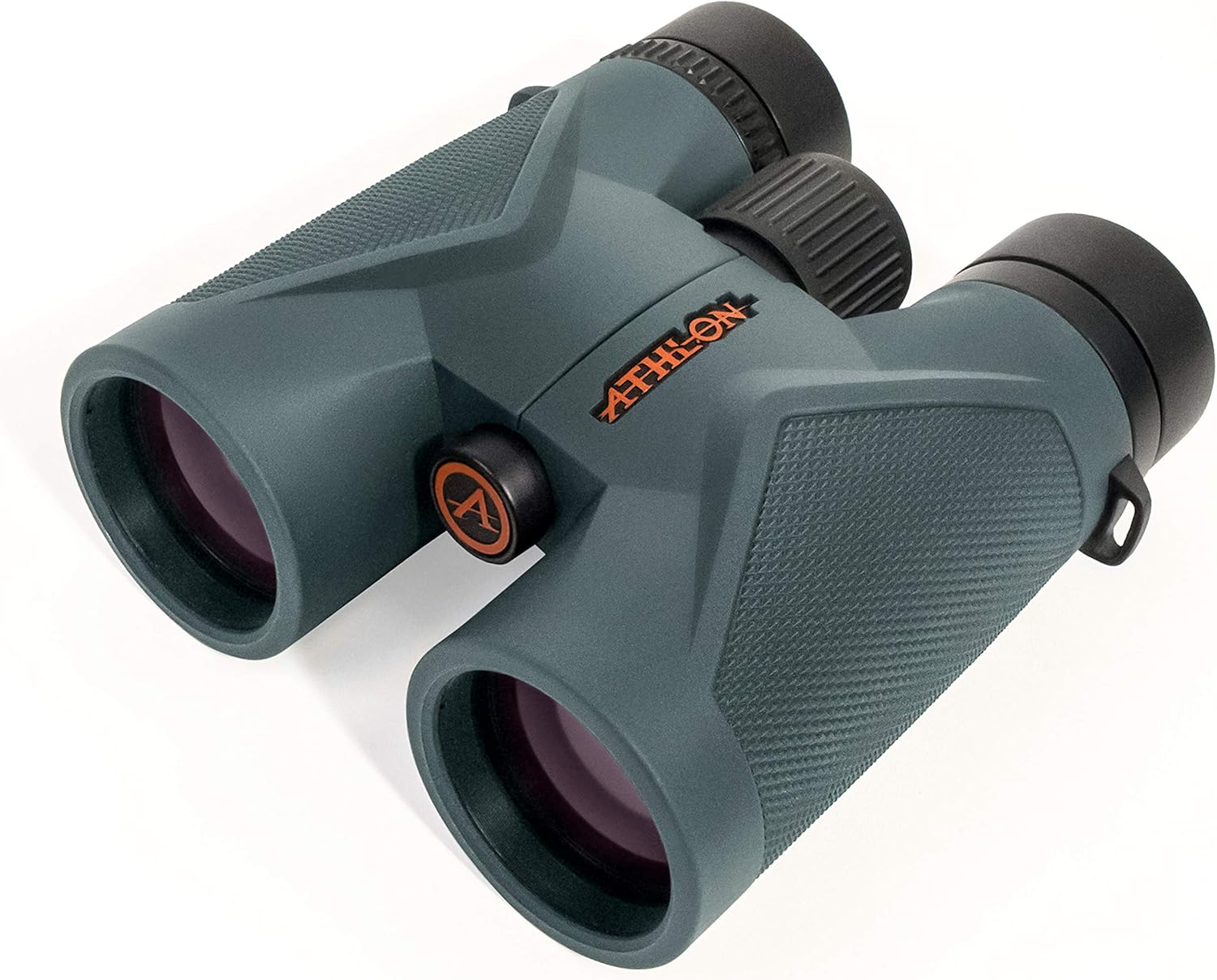
The Midas UHD 8x42 combines ED glass with fully multi-coated optics and dielectric prism coatings. Those design details make it useful when separating optical-efficiency evidence from exit-pupil geometry alone. Its 8.1-degree field of view and 17.2mm eye relief also keep handling and viewing comfort in the comparison.
Check on AmazonIf you click this link and buy, we earn a commission at no additional cost to you.
Use a three-step check before drawing a brightness conclusion
A useful exit-pupil check should move from math to conditions and then to evidence. Starting with the equation keeps the calculation clean, while the next two steps prevent the ratio from becoming a substitute for the rest of the optical system. This is especially helpful when two spec sheets seem to imply a simple winner because one shows a larger objective or a larger relative-brightness value. The following sequence keeps the conclusion inside the evidence boundary.
- Calculate: divide objective diameter by magnification, then square the result only if you need the traditional relative-brightness value.
- Identify the light condition: ask whether the binocular will be used mainly in bright daylight, mixed light, or genuinely dim conditions, because the viewer’s pupil does not stay the same size across those situations.
- Verify optical-efficiency evidence: look for model-specific transmission information, optical design details, or carefully controlled independent testing before claiming that one binocular is actually brighter.
After those three steps, bring the decision back to the rest of the binocular rather than continuing to optimize one number. Magnification affects image scale and hand stability, objective diameter affects bulk and weight, and field of view can matter when the subject moves or appears quickly. Eye relief and eyecup behavior can also determine whether the user can actually see the full field comfortably, even though those factors are not part of exit-pupil math. A configuration that looks weaker on one theoretical brightness metric can still be the more sensible choice for the conditions that dominate actual use.
There is also value in knowing when to stop calculating. If two binoculars have the same exit pupil and neither provides credible transmission data, the ratio has already told you everything it can prove about that comparison. Do not invent a brightness ranking from price, coating names, or objective size alone. Mark the brightness question as unresolved and compare the specifications that are actually documented.

The Triumph HD 10x42 gives you a clear specification set for moving from calculation to viewing conditions and optical evidence. Its fully multi-coated lenses, 4.2mm exit pupil, and 17mm eye relief provide multiple documented factors to compare. The binocular is waterproof, fogproof, and tripod adaptable.
Check on AmazonIf you click this link and buy, we earn a commission at no additional cost to you.
Final thoughts: use the ratio, then keep checking
Exit pupil is useful because it turns magnification and objective diameter into one easy geometric relationship. Relative brightness is useful for the same reason, but squaring the ratio does not transform it into a measured optical-performance score. Calculate the number, consider whether the current lighting lets your eye use that beam, and then look for evidence about transmission or optical design before making a brightness claim. That approach keeps a simple specification useful without asking it to prove more than it can.
If the ratio is helping you compare two configurations, keep the rest of the use case visible at the same time. Weight, field of view, stability, eye relief, portability, and the actual light level can all matter more than squeezing out a larger theoretical value. The goal is not to maximize exit pupil in isolation. The goal is to understand what the number changes, what it leaves unanswered, and which unanswered factors matter for the way the binocular will really be used.

The Diamondback HD 8x42 pairs a 5.25mm exit pupil with a wider set of practical viewing specifications. It provides a 393-foot field of view at 1,000 yards, 17mm eye relief, and fully multi-coated optics. Those documented traits reinforce why one geometric ratio should stay inside a broader use-case comparison.
Check on AmazonIf you click this link and buy, we earn a commission at no additional cost to you.
Frequently asked questions
🔭 Is exit pupil adjustable on fixed-power binoculars?
No. On a fixed-power binocular, exit pupil is derived from objective diameter divided by magnification, so it is set by that optical configuration. Focus, diopter, eyecups, and interpupillary distance are separate adjustments.
💡 Does a larger exit pupil always look brighter?
No. A larger exit pupil can provide a larger outgoing light bundle, but the viewer may not use all of it in brighter conditions, and actual transmitted brightness also depends on the optical system. Treat the ratio as one input rather than a final brightness verdict.
🧮 What is relative brightness in binoculars?
Relative brightness is the exit pupil diameter squared. It is a theoretical value based on the same geometry as exit pupil, so it does not include actual transmission losses or other optical-quality differences.
🌤️ Why can two binoculars with the same exit pupil look different?
The matching ratio only proves that their nominal exit-beam diameters are the same. Optical design, coatings, prisms, internal light losses, contrast, and manufacturing quality can differ, so equal exit pupil does not guarantee equal perceived brightness or image quality.
👁️ Should I match exit pupil to one exact human pupil size?
No. Human pupil size changes with lighting and varies among individuals, so one fixed diameter is not a universal target. Use lighting and viewing conditions as context instead of relying on a single human-pupil number.
📐 Is a 5 mm exit pupil automatically better than a 4 mm exit pupil?
Not automatically. The 5 mm configuration provides a larger geometric exit beam, but it may also come with different magnification, objective size, weight, bulk, field of view, or handling. Decide whether the larger beam solves a real viewing constraint before treating it as an upgrade.
References and sources
- Nikon exit pupil guide: Supports the exit-pupil formula and the relationship between the binocular exit beam, the viewer’s pupil, and lighting conditions.
- Nikon relative brightness guide: Supports the squared relative-brightness calculation and states that equal exit pupil does not guarantee equal brightness.
- Fujifilm binocular basic knowledge: Confirms that exit pupil and relative brightness do not account for actual transmittance and reflectance.
- ZEISS viewing behavior overview: Supports the bounded point that a larger exit pupil can allow more freedom in eye positioning during observation.