Binoculars under 500 dollars: stop paying for features your viewing job does not need

Binoculars Under 500 Dollars

Shopping for binoculars under 500 dollars gives you enough budget to choose among many genuinely different designs, but that does not make the highest eligible price the smartest target. The useful question is which configuration fits your viewing distance, light, movement, carrying needs, eyeglasses, and time behind the eyepieces. Optical refinements such as ED glass


How wide is the view? Reading binocular field of view correctly

What Is Field Of View In Binoculars

A specification of 7.2 degrees and one of 435 feet at 1,000 yards cannot be compared directly, even though both may describe binocular field of view. That is the practical starting point for understanding what field of view in binoculars means: it is the width of the real scene visible without moving the binoculars. Manufacturers

At $300, spend the extra money on a limitation you can actually notice

Best Binoculars Under 300 Dollars

The best binoculars under 300 dollars are not automatically the ones closest to the spending ceiling. Current U.S. inventory includes credible full-size, compact, and higher-power choices, so the useful upgrade is the one that fixes a limitation you can actually notice in field of view, eye relief, weight, sealing, or optical design. Treat price as

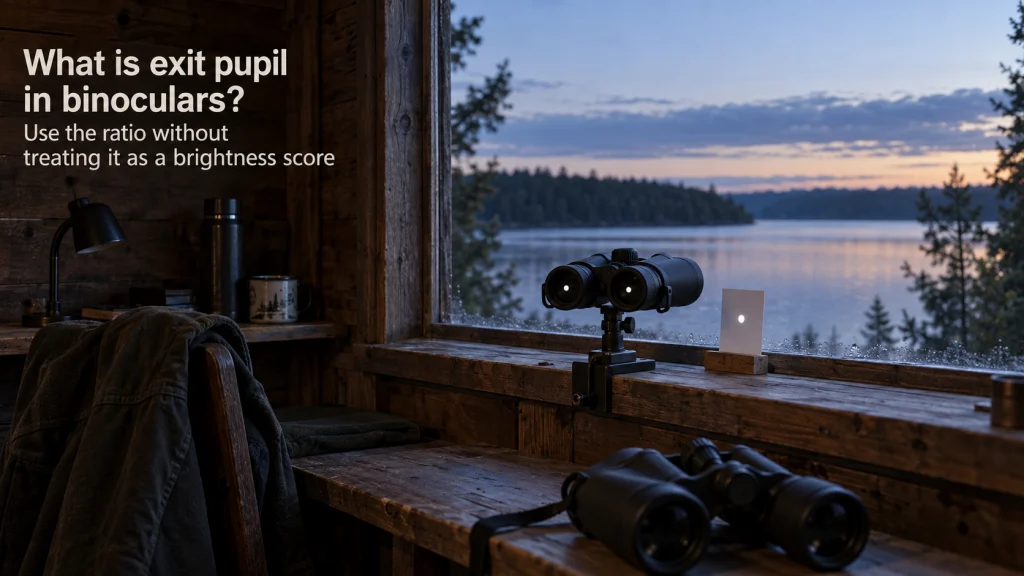
What is exit pupil in binoculars? Use the ratio without treating it as a brightness score

What Is Exit Pupil In Binoculars

Exit pupil is a geometric specification calculated by dividing objective diameter by magnification. The result tells you the diameter of the light beam leaving the eyepiece, but it does not measure every loss that occurs inside the optical system. Relative brightness carries the same geometry one step farther by squaring the exit pupil, so it

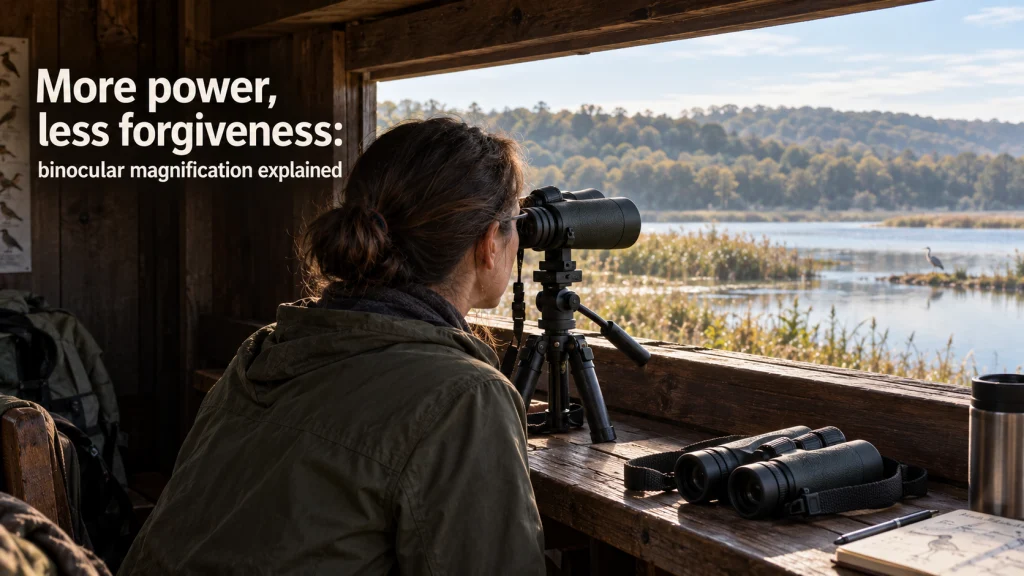
More power, less forgiveness: binocular magnification explained

Binocular Magnification Explained

Magnification tells you how large or apparently close a distant subject looks through binoculars, but the larger number is not automatically the more useful view. Moving from 8x to 10x or 12x increases image scale while also changing how visible hand movement becomes and, in many designs, how much scene fits inside the view. At

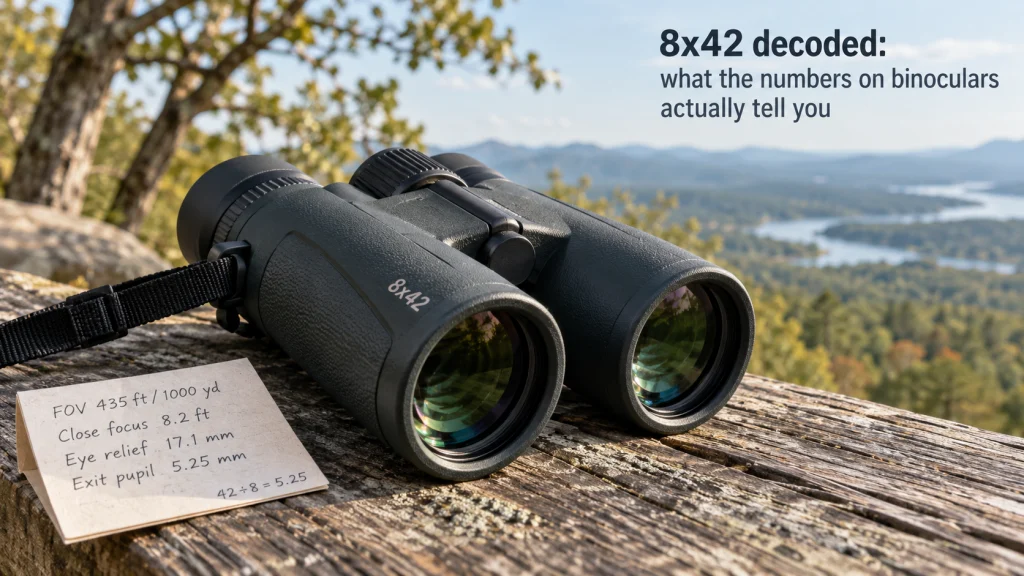
8×42 decoded: what the numbers on binoculars actually tell you

What Do The Numbers On Binoculars Mean

The numbers printed on binoculars tell you less than a full specification sheet does. In 8×42, the first number is magnification and the second is the objective lens diameter in millimeters, while field of view, close focus, eye relief, and physical fit still need separate checks. Exit pupil is one useful value you can calculate

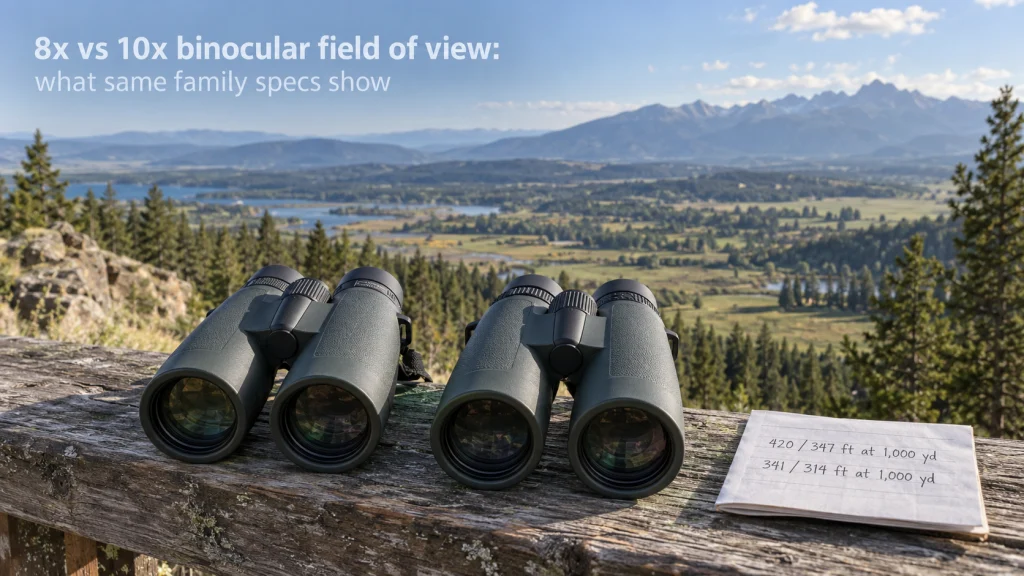
8x vs 10x binocular field of view: what same family specs show

8X Vs 10X Binocular Field Of View

In this 8x vs 10x binocular field of view dataset, four current 8×42 and 10×42 pairs from the same product families show that the narrower 10x view is real but not uniform. The observed loss ranges from about 7.9% to 17.4% when each 10x model is compared with its 8x family mate using manufacturer-published linear

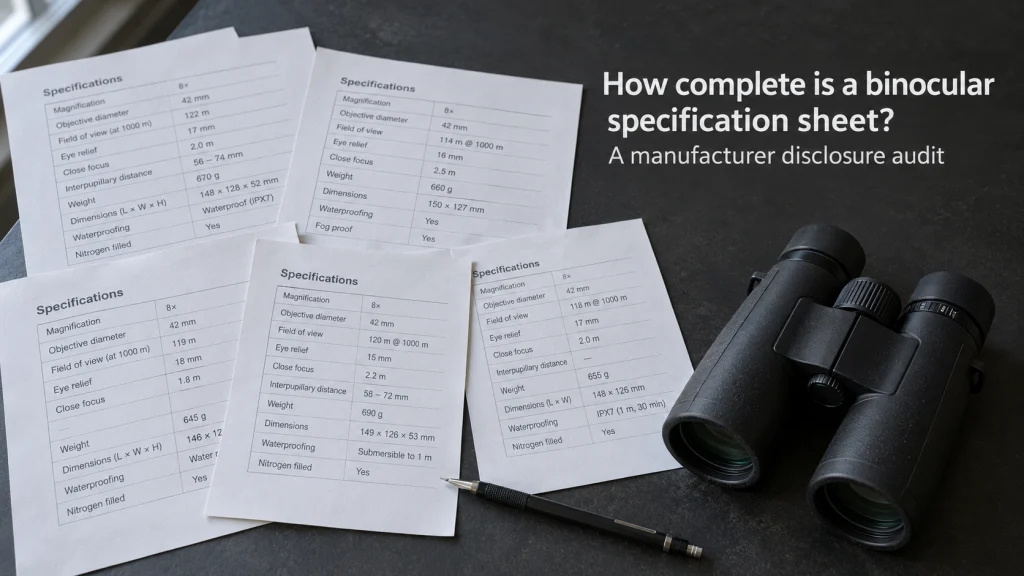
How complete is a binocular specification sheet? A manufacturer disclosure audit

Binocular Specification Sheet

A binocular specification sheet can look detailed while still leaving important comparison work to the buyer. In this five-page audit of current official manufacturer product pages, eight of nine predefined fields appeared on every page, while interpupillary distance appeared on only three. The bigger problem was not simple absence: dimensions and waterproofing were often disclosed