The best binoculars under 300 dollars are not automatically the ones closest to the spending ceiling. Current U.S. inventory includes credible full-size, compact, and higher-power choices, so the useful upgrade is the one that fixes a limitation you can actually notice in field of view, eye relief, weight, sealing, or optical design. Treat price as eligibility first, then compare exact specifications and decide whether the extra spend changes the viewing job.
Establish what the extra budget is supposed to solve
Shopping for the best binoculars under 300 dollars starts with a practical question: what becomes possible here that was not good enough at a lower ceiling? Current U.S. inventory is not thin, so the problem is not finding something with two barrels and a price tag below the limit. The current Sportsman’s Warehouse category shows 49 items, covering mainstream 8×42 and 10×42 models, compact formats, and higher-power choices. That depth makes selection harder, not easier, because a buyer needs a reason to pay more than the cost of a credible lower-priced option.
If you are still deciding how much budget matters in the first place, the broader budget binoculars guide puts the price tiers in context. If configuration, eye relief, field of view, weight, or fit is still unfamiliar, the binocular buying guide gives you the wider buying framework before price starts steering the choice. For this ceiling, define the viewing job first, then reject anything that misses a required specification even if it looks like a premium bargain. A 299 dollar binocular that is awkward with your glasses or too heavy to carry is not an upgrade just because it consumes the budget.
Confirm current eligibility before comparing
Price is the least stable part of this comparison, so check the live selling price before treating any option as an under-300 candidate. The Leupold BX-3 Alpine HD 10×42, for example, is currently listed at 199.99 dollars from a regular 299.99 dollar price, while the Nikon PROSTAFF P7 10×42 is currently listed at 199.95 dollars from 229.95 dollars. A sale can therefore move a model into direct competition with a cheaper tier even though its normal price position is different. Compare stable specifications first, then use the live price as the final eligibility check.
Start from the required configuration, not the 300 dollar number
An 8×42 buyer and an 8×32 buyer are solving different problems even when both can spend the same amount. The 8×42 shopper may care more about a larger exit pupil and full-size grip, while the 8×32 buyer may give up some low-light margin to save weight and packed volume. A 10×42 buyer may prioritize more apparent detail at distance but needs to be comfortable with the stability and field-of-view trade. The spending ceiling should help you get the right version of the configuration you need, not push you into a different configuration simply because it looks more expensive.
Use the deeper 8×42 and 10×42 market to be more selective
The under-300 market is deep enough that mainstream 8×42 and 10×42 shoppers should not accept a poor fit just to stay within budget. Compare field of view, eye relief, weight, close focus, interpupillary range, weather sealing, focus behavior, and included accessories on the exact candidate. Those details can vary meaningfully even when two binoculars share the same magnification and objective size. More choice should give you permission to reject mismatches, not pressure you to chase the most expensive remaining option.
| Configuration | What the extra budget should improve | What to reject first |
|---|---|---|
| 8×42 | Better fit, useful field of view, comfortable eye relief, lower weight, or a verified optical refinement | Excess weight, short usable eye relief, or a view that is no more useful than a cheaper 8×42 |
| 10×42 | More distant detail while keeping manageable weight, focus control, and a usable field | A configuration that becomes tiring or too difficult to hold steady for the intended use |
| 8×32 | Lower packed volume and weight without giving up too much field width or eye comfort | A compact body that saves space but creates fussy eye placement or the wrong physical fit |
| 12×50 | Higher power only when the extra reach serves a real viewing need | Extra weight, shorter eye relief, and narrower handheld usability that do not solve the actual job |
The matrix is not a ranking because configuration comes before price. Pick the row that resembles your real use, then compare candidates inside that lane instead of crossing categories for a feature label. This keeps a compact buyer from being upsold into a heavy full-size binocular and keeps a general-use buyer from overvaluing magnification. The shortlist below applies that rule to models that are currently eligible under the ceiling.

This 8x42 model provides a 393-foot field of view at 1,000 yards, 17 mm eye relief, and a 21.8 oz weight. Vortex specifies dielectric prism coatings, phase correction, ArmorTek, and argon purging. It fits this section when the extra budget is meant to improve verified optical treatment and field-ready protection without changing the basic 8x42 configuration.
Check on AmazonIf you click this link and buy, we earn a commission at no additional cost to you.
Test whether current under-300 options deliver a real gain
A useful shortlist has to do more than prove that a model costs less than 300 dollars. The candidates below cover different jobs, so an 8×32 and a 12×50 should not be ranked as substitutes. Compare the stable specifications that affect fit and use inside the configuration you actually need. That makes the cheaper winner visible when a higher price does not improve the requirement that matters.
Current pricing also produces some counterintuitive results. A sale-priced 10×42 can sit below another midrange option, while an ED 8×32 can use the full ceiling even though a cheaper 8×32 publishes a wider field. Those differences are why this article needs model-level evidence instead of a generic price ladder. Each shortlist entry represents a distinct decision rather than a simple best-to-worst rank.
| Current shortlist | Current retailer price | Verified fit and view specs | What the extra money actually buys | When to skip it |
|---|---|---|---|---|
| Vortex Diamondback HD 8×42 | $239.99 | 393 ft FOV, 17 mm eye relief, 21.8 oz | Dielectric prism coatings, phase correction, ArmorTek, argon purging, and lower weight than the cheaper Crossfire HD 8×42 | Skip if the cheaper 8×42 already gives you the field, eye relief, and handling you need |
| Vortex Diamondback HD 8×32 | $209.99 | 426 ft FOV, 16 mm eye relief, 15.9 oz | A lighter body and wide published field with the Diamondback HD prism and coating package | Skip if you need the larger exit pupil and fuller grip of an 8×42 more than lower carry weight |
| Nikon PROSTAFF P7 10×42 | $199.95 sale, $229.95 regular | 367 ft FOV, 15.7 mm eye relief, 21.2 oz | A wide published 10×42 field, phase and dielectric coatings, and a locking diopter | Skip if 10x is harder for you to hold steady or if the eye relief does not work with your glasses |
| Leupold BX-3 Alpine HD 10×42 | $199.99 sale, $299.99 regular | 342 ft FOV, 16 mm eye relief, 22.6 oz | Interchangeable Form-Fit eyecups, magnesium chassis, tripod readiness, and Leupold’s Elite Optical System package | At regular price, skip unless its fit or mechanical package solves a need the cheaper 10×42 options do not |
| Hawke Endurance ED 8×32 | $299.99 | 404 ft published FOV, ED glass, fully multi-coated optics, waterproof and fogproof construction | A verified ED-glass compact configuration at the ceiling | Skip if ED glass is not solving a visible concern and a cheaper 8×32 fits better |
| Vortex Diamondback HD 12×50 | $279.99 | 271 ft FOV, 14 mm eye relief, 28.9 oz | Higher magnification and a 50 mm objective within the ceiling | Skip for general handheld use if the narrower field, shorter eye relief, or added weight works against you |
Price does not rise in a neat line with field width, eye relief, or weight. The Nikon PROSTAFF P7 10×42 currently undercuts several 10×42 competitors while publishing a 367 ft field, and the Diamondback HD 8×32 costs much less than the Hawke Endurance ED 8×32 while publishing a wider field and lower weight. Those numbers do not prove optical superiority in every condition because the manufacturers do not publish one comparable performance score. They do show that the extra money needs a specific job.
Check whether compact, higher-power, or specialty options actually fit the job
The Diamondback HD 8×32 and Endurance ED 8×32 show why smaller formats need their own comparison lane. The Vortex is currently 209.99 dollars with a 426 ft field and 15.9 oz weight, while the Hawke sits at 299.99 dollars and documents ED glass with a 404 ft field. The extra money is not buying a wider published field, so pay it only if the Hawke’s ED design or exact fit solves something you can identify. At the other end, the Diamondback HD 12×50 earns its 279.99 dollar place only for buyers who already want 12x and accept a 271 ft field, 14 mm eye relief, and 28.9 oz weight. Neither a smaller body nor higher magnification is an upgrade unless the format matches the viewing job.
Treat field of view, eye relief, and weight as rejection variables
The current 10×42 choices show why fit numbers should reject candidates before feature lists start to impress you. Nikon’s PROSTAFF P7 10×42 publishes a 367 ft field, 15.7 mm eye relief, and 21.2 oz weight, while the Leupold BX-3 Alpine HD 10×42 publishes 342 ft, 16 mm, and 22.6 oz. The Leupold adds interchangeable eyecups and a different chassis and optical-system package, but its regular-price premium does not buy a wider published field. If field width is the priority, the cheaper Nikon has the stronger specification case; if eyecup fit or the Leupold mechanical package solves your problem, that can reverse the decision.
- Reject eye relief that does not give you a comfortable full view with your normal eyeglasses or eyecup position.
- Reject a field that is too restrictive for the subjects and distances you expect to follow.
- Reject weight and bulk that make the binocular inconvenient enough that you are less likely to carry it.
- Reject a specialty magnification when the added detail does not compensate for steadiness or field-of-view trade-offs.
- Reject vague premium claims that cannot be confirmed on the exact manufacturer specification or support page.
Use the list to remove mismatches before comparing premium labels. Once the poor fits are gone, the extra budget can be judged against a smaller set of needs you can verify. That is more useful than assigning every feature a score.
Verify ED, phase-correction, and coating claims on the exact product
Optical feature names are useful only when tied to the exact model. Hawke documents ED glass and fully multi-coated optics on the Endurance line, Vortex documents dielectric prism coatings and phase correction on the Diamondback HD 8×42 and 8×32, and Nikon documents phase and dielectric coatings on the PROSTAFF P7 10×42. Those are real design differences, but none guarantees better fit or a universally better view. Confirm the feature, then return to field of view, eye relief, weight, focus behavior, and the viewing job. Pay for the feature only when it answers a requirement rather than decorating the specification sheet.
Separate regular price from temporary sale eligibility
The Leupold BX-3 Alpine HD 10×42 shows how a sale changes the comparison without changing the binocular. At 199.99 dollars it competes directly with under-200 choices, while its regular 299.99 dollar price puts the same specifications at the top of this tier. The Nikon PROSTAFF P7 10×42 also falls below 200 dollars on its current sale even though its regular price is 229.95 dollars. State both numbers when a discount is doing the work, because the verdict can change when the sale ends. If the price changes, rerun the comparison instead of preserving an old value judgment.
Key point: Sale pricing can create an excellent opportunity, but it does not change field of view, eye relief, weight, or fit. Buy the specification match, not the size of the discount.

This 8x32 model provides a 426-foot field of view at 1,000 yards, 16 mm eye relief, and a 15.9 oz weight. Vortex specifies dielectric prism coatings, phase correction, ArmorTek, and argon purging. Its lighter compact format makes it relevant when the real gain is easier carry without giving up a wide published field.
Check on AmazonIf you click this link and buy, we earn a commission at no additional cost to you.
Keep or move the ceiling based on incremental value
The strongest way to test a 300 dollar candidate is to compare it with a credible cheaper alternative that has the same basic job. The Vortex Crossfire HD 8×42 currently costs 139.99 dollars, while the Diamondback HD 8×42 is 239.99 dollars. Both publish a 393 ft field and 17 mm eye relief, so the extra 100 dollars does not buy a wider field or more published eye relief. It buys a lighter body plus Vortex’s dielectric prism coatings, phase correction, ArmorTek, and argon purging on the Diamondback HD.
That is a useful upgrade only when those differences matter to the buyer. If you mainly need an 8×42 with a 393 ft field, 17 mm eye relief, waterproof construction, and a straightforward general-use configuration, the Crossfire HD already covers those basics for much less. If lower weight and the Diamondback HD prism and exterior-coating package are worth paying for, the jump has a reason. The decision is concrete because the extra money is attached to exact changes instead of a vague promise that the more expensive binocular is simply better.
Compare the best fit here with a credible under-200 alternative
Before paying more, run the same checklist against a candidate from the best binoculars under 200 dollars range. Keep magnification and objective size comparable, then look for a concrete improvement in field of view, eye relief, weight, sealing, optical treatment, focus behavior, build, or included ownership essentials. The Crossfire HD versus Diamondback HD 8×42 comparison is useful because both keep the same basic 8×42 job while exposing exactly what changes. If the changes do not solve a limitation you care about, saving the money is the stronger result.
| 8×42 comparison | Vortex Crossfire HD 8×42 | Vortex Diamondback HD 8×42 |
|---|---|---|
| Current retailer price | $139.99 | $239.99 |
| Field of view | 393 ft at 1,000 yd | 393 ft at 1,000 yd |
| Eye relief | 17 mm | 17 mm |
| Weight | 23.8 oz | 21.8 oz |
| Verified optical and protection differences | HD optical system, fully multi-coated lenses, nitrogen purging | HD optical system, fully multi-coated lenses, dielectric prism coatings, phase correction, ArmorTek, argon purging |
| Incremental-value verdict | Keep the savings when the shared field and eye-relief numbers already fit the job | Pay more when lower weight and the added prism, lens-protection, and purging package matter to you |
This is the kind of comparison the 300 dollar ceiling needs. The more expensive model has documented upgrades, but two of the most obvious fit numbers do not improve at all. That prevents the premium from becoming an automatic recommendation and gives the cheaper model a legitimate win condition. The third hundred dollars earns its place only when you can point to the exact difference you are buying.
Move to 500 only when the missing requirement is not available here
There is no reason to move into binoculars under 500 dollars just because you can afford it. Move up only after the under-300 shortlist fails a requirement that you have already defined and verified. The higher ceiling should solve a specific problem, such as a fit need, field width, mechanical design, or optical feature you cannot get here, rather than create a new shopping exercise. If one of the current under-300 candidates already meets the requirement without a meaningful mismatch, the more expensive tier is unnecessary.
Do not invent a 250 dollar decision when the inventory is the same
A price threshold deserves attention when it changes the useful choice set or the decision logic. Current examples already show why 250 dollars is not a clean technical boundary: the Diamondback HD 8×42 is 239.99 dollars, the Nikon PROSTAFF P7 10×42 has a 229.95 dollar regular price, and sale pricing moves other models below 200 dollars without changing their specifications. Slicing those same candidates into another page would mostly rearrange price labels rather than create a new buying problem. It is more useful to compare the under-200 and under-300 tiers directly and ask what the added spending actually changes.
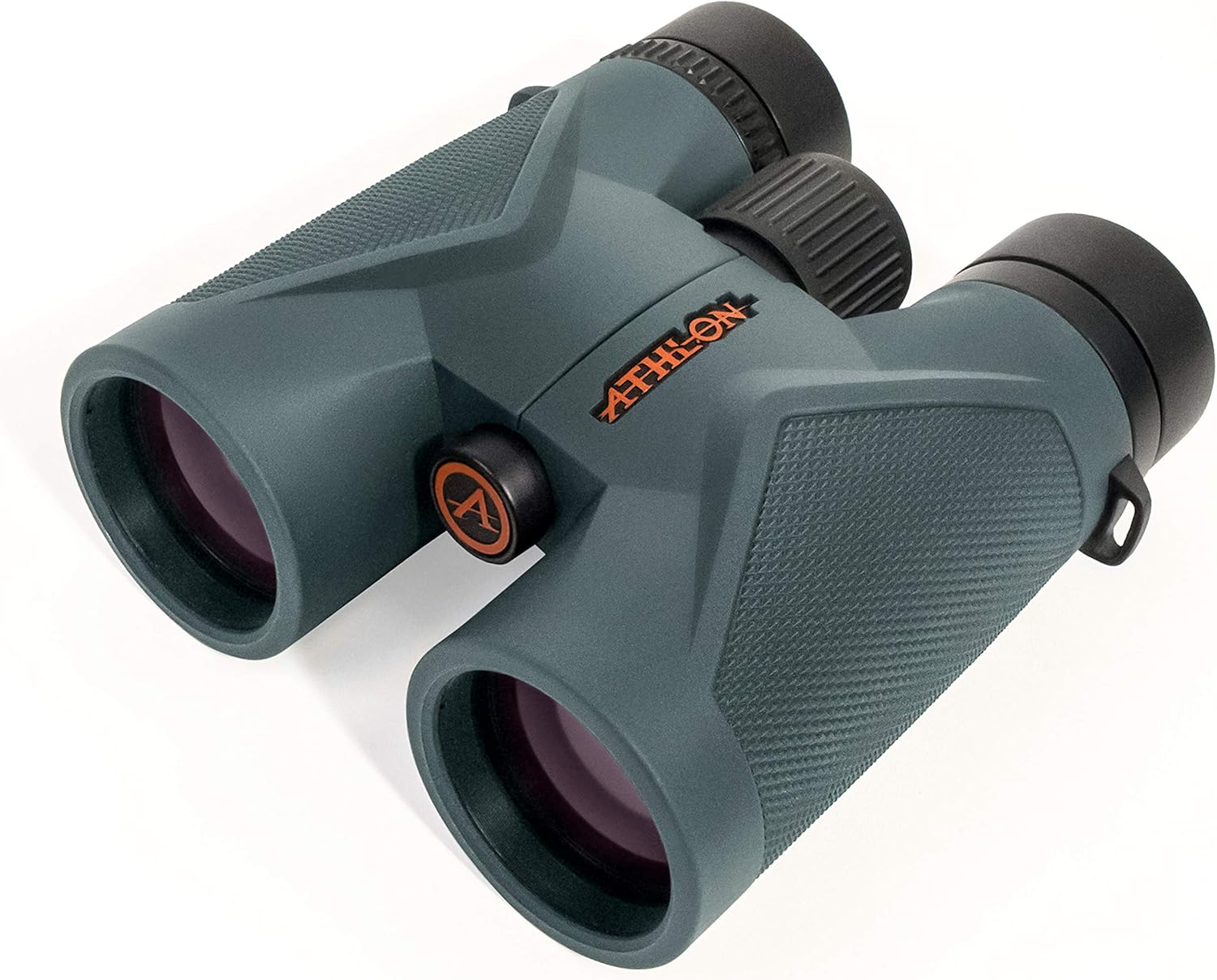
This 8x42 model provides a 426-foot field of view at 1,000 yards and 17.2 mm eye relief. Athlon specifies UHD glass, an ESP dielectric coating, phase-corrected prisms, a magnesium chassis, and argon purging. Those documented upgrades make it useful for judging whether additional spending buys optical or construction features that matter to the intended viewing job.
Check on AmazonIf you click this link and buy, we earn a commission at no additional cost to you.
Final Thoughts: spend the third hundred only when it changes the job
The current shortlist makes the case more clearly than a generic price rule can. Vortex’s Diamondback HD 8×42 is a defensible step up when its lower weight and added prism and protection features matter, while the cheaper Crossfire HD 8×42 keeps the same published field and eye relief. Nikon’s PROSTAFF P7 10×42 is especially competitive while its sale holds, and the Leupold BX-3 Alpine HD 10×42 becomes a very different value question at sale price than at regular price. The 8×32 and 12×50 options should be chosen only when their format matches the job rather than because they use more of the budget.
Use the ceiling as permission to reject, not permission to spend. Pick the configuration first, eliminate candidates that miss eye relief, field of view, weight, or handling needs, and verify any optical feature that is supposed to justify the price difference. If a cheaper binocular already does the job, keep the savings. If the added money fixes a limitation you can name before checkout, then the higher spend has earned its place.

This 12x50 model combines 12x magnification with 50 mm objective lenses for a higher-power viewing role. Vortex publishes a 271-foot field of view at 1,000 yards, 14 mm eye relief, and a 28.9 oz weight. Its tripod-adaptable design suits the article's warning that 12x should be chosen for a specific need rather than simply to use more of the budget.
Check on AmazonIf you click this link and buy, we earn a commission at no additional cost to you.
FAQs
🔭 Which current under-300 binocular is the safest general 8×42 starting point?
The Vortex Diamondback HD 8×42 is a strong current starting point at 239.99 dollars because it combines a 393 ft field, 17 mm eye relief, 21.8 oz weight, and a documented phase-corrected, dielectric-coated roof-prism system. Compare it directly with the cheaper Crossfire HD 8×42 before buying, because the lower-priced model publishes the same field and eye relief.
👓 Which shortlisted model gives the most published eye relief?
Among the models with directly comparable manufacturer numbers in this shortlist, the Vortex Diamondback HD 8×42 and Crossfire HD 8×42 both publish 17 mm. The Nikon PROSTAFF P7 10×42 publishes 15.7 mm and the Leupold BX-3 Alpine HD 10×42 publishes 16 mm, so eyeglass wearers should verify actual usable fit rather than relying on price.
🌲 Is the Nikon PROSTAFF P7 10×42 a better value than a 250 dollar 10×42?
It can be while the current sale holds because it is listed below 200 dollars and publishes a 367 ft field with phase and dielectric coatings. That still does not make it universally better, because fit, eye relief, handling, and the exact feature set can favor another model.
🎒 Is the Vortex Diamondback HD 8×32 worth choosing over an 8×42?
Choose it when lower carry weight and a smaller body matter more than the larger exit pupil of an 8×42. Its published weight is 15.9 oz and its field is 426 ft, making it the lightest and widest-field model in this shortlist with complete manufacturer fit data.
🏷️ Should I buy the Leupold BX-3 Alpine HD 10×42 only because it is on sale?
No. The sale makes it much more competitive, but you should still choose it for its fit, interchangeable eyecups, mechanical design, or other exact features that solve your requirement. If those differences do not matter, the discount alone is not a reason to prefer it.
🔎 Is 12×50 the best way to use the full 300 dollar budget?
No. The Diamondback HD 12×50 is a specialty choice with a 271 ft field, 14 mm eye relief, and 28.9 oz weight, so it asks more from handheld stability and carrying tolerance. Choose it because you need 12x, not because its price sits close to the ceiling.
References and Sources
- Sportsman’s Warehouse binoculars under 300 dollars: Supports current market depth, current shortlist eligibility, and sale versus regular pricing used in the comparison.
- Vortex Diamondback HD 8×42: Verifies field of view, eye relief, weight, prism coatings, phase correction, ArmorTek, and argon-purged construction.
- Vortex Crossfire HD 8×42: Verifies the under-200 comparison model’s field of view, eye relief, weight, coatings, and nitrogen-purged construction.
- Vortex Diamondback HD 8×32: Verifies the compact model’s field of view, eye relief, weight, and documented optical features.
- Nikon PROSTAFF P7 10×42: Verifies field of view, eye relief, weight, phase coating, dielectric coating, waterproofing, and locking diopter.
- Leupold BX-3 Alpine HD 10×42: Verifies field of view, eye relief, weight, interchangeable eyecups, magnesium chassis, tripod readiness, and current optical-system features.
- Hawke Endurance binoculars: Verifies the Endurance ED 8×32 configuration, published field of view, ED glass, fully multi-coated optics, and waterproof and fogproof construction.
- Vortex Diamondback HD 12×50: Verifies field of view, eye relief, weight, magnification, objective size, and documented optical features for the higher-power shortlist option.