A useful budget prevents overspending without forcing you into binoculars that fail the viewing job. The right ceiling depends on what you need to see, carrying time, glasses, weather, and nonnegotiable fit requirements. A sale can move a model into or out of a spending band, so price should be a filter rather than a quality score. Protect fit and function first, then compare value inside a ceiling that suits the use.
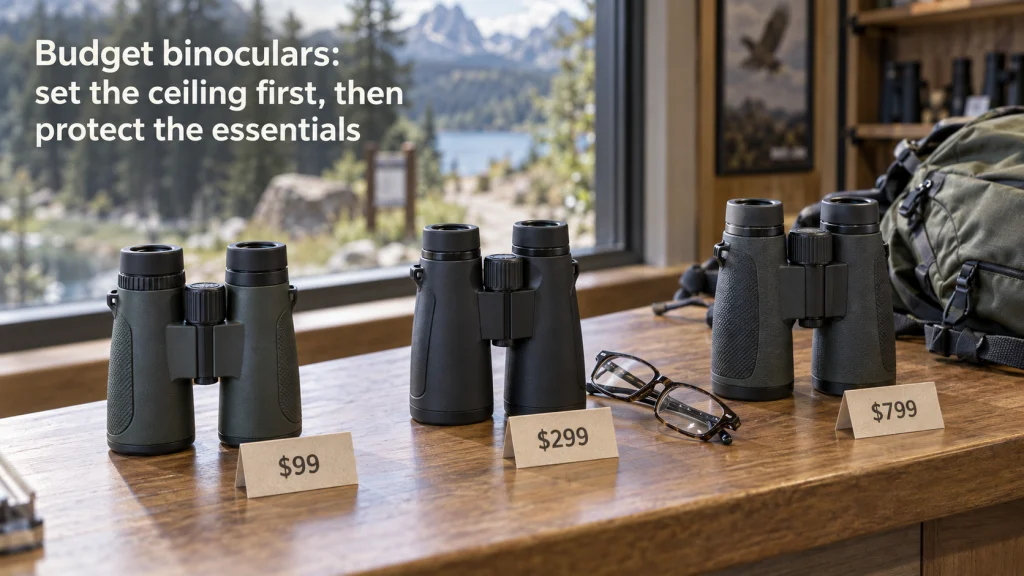
A budget ceiling filters the market but does not define quality
Budget binoculars make sense only when the budget comes after the viewing job, not before it. Two pairs can reach the same current sale price while carrying different MSRPs and differing in eye relief, field of view, weight, weather protection, and return support. The shared sale price does not make them equivalent, and the higher MSRP does not automatically identify the better binocular. Start with the conditions you actually need to handle, then use the budget to narrow the choices that survive those conditions.
If you are still deciding what configuration fits the job, use the binocular buying guide for matching specifications to real viewing needs before setting a final ceiling. A general daytime pair for moving subjects may place more value on field of view and manageable weight, while a low light setup may justify a different balance of objective size and bulk. Eyeglass wearers also have a practical reason to protect usable eye relief instead of chasing a discount. Once those needs are clear, the price ceiling becomes a useful constraint rather than a substitute for judgment.

The PROSTAFF P3 uses 8x magnification, 42 mm objectives, and a 377-foot field of view at 1,000 yards. Its 20.2 mm eye relief and turn-and-slide rubber eyecups provide fit details that matter independently of price. O-ring seals, nitrogen filling, and rubber armor add weather and handling features without changing the basic 8x42 configuration.
Check on AmazonIf you click this link and buy, we earn a commission at no additional cost to you.
Establish the budget before comparing price tags
Beginning with a wall of prices makes it easy to confuse inexpensive with suitable. Start with the viewing job, separate must haves from preferences, and choose a ceiling that preserves the essentials. A discounted pair should not win simply because its price looks attractive beside a better fit. This keeps the tradeoffs visible before a promotion starts steering the decision.
A hard ceiling is the number you will not cross, while a preferred spend is where you would rather stay if fit and function are right. Keeping those numbers separate lets you reject a poor fit without automatically raising the budget. It also stops a sale from becoming an excuse to buy features that solve no real viewing problem. The ceiling remains a boundary, not a target.
Define the viewing job before deciding whether a price is good
Price has meaning only in relation to the job. Begin with distance, light, movement, viewing duration, carrying needs, weather, and glasses. Those constraints show which field of view, eye relief, weight, configuration, and focus behavior deserve protection. A lower priced option is not a bargain if it makes the binoculars uncomfortable or ineffective for the intended use.
Separate a hard ceiling from a preferred spend
Write down the number you cannot exceed and a second number you would prefer to spend. Compare candidates around the preferred amount first, with the hard ceiling as a boundary rather than a target. If a lower cost pair meets the job, there is no reason to spend the remainder. If nothing below the ceiling satisfies a must have, reconsider the requirement or purchase rather than call a weak fit good value.
Protect fit, configuration, and weather requirements before features
Fit failures are expensive even when the purchase price is low. Check whether the eyecups, eye relief, hinge range, grip, weight, and focus control are workable for the person who will actually use the binoculars. Then verify the configuration and weather protection against the real use, especially if the pair will be carried for long periods or used in wet conditions. Extra coatings, accessories, or premium sounding features belong later in the decision because they cannot repair a basic mismatch.
Treat MSRP, regular street price, and sale price as different facts
MSRP, a normal street price, and a temporary sale price describe different retail facts. MSRP shows the manufacturer’s suggested position, the regular street price shows where a product commonly competes, and the sale price tells you what it costs when you are ready to buy. None of those numbers proves optical quality, comfort, durability, or suitability for your use. Record the seller, the price you actually observed, and the date observed so that a comparison does not quietly mix temporary promotions with ordinary pricing.
| Price fact | What it tells you | What it does not prove |
|---|---|---|
| MSRP | The manufacturer’s suggested retail position before seller-specific pricing. | That the binocular is better, better fitted, or worth more to your use. |
| Current sale price | The amount a specific seller is asking when you check the listing. | That the discount is permanent or that the binocular now belongs in a higher quality class. |
Two binoculars can therefore share the same sale price while arriving there from different MSRPs and offering different fit, specifications, and support. Compare the product facts first, then use the current price as the purchase condition that determines whether each candidate fits your ceiling. If the sale ends, the product has not changed, but its eligibility for your shortlist may have changed.
Expect threshold membership to change when prices move
A pair that qualifies for one spending band during a promotion may sit above that ceiling later. That does not mean the binocular itself changed, only that the buying decision changed at the new price. Treat price band membership as temporary and keep the stable product facts separate from the volatile purchase price. This is why a useful shortlist should record both what the binoculars are and what they cost from the seller you are considering.

The H2O Xtreme uses a 10x42 roof-prism configuration with BaK-4 prisms and fully multi-coated optics. Its O-ring sealed, nitrogen-purged design carries an IPX7 waterproof rating for wet outdoor conditions. The package includes a case, strap, and objective and ocular covers for storage and transport.
Check on AmazonIf you click this link and buy, we earn a commission at no additional cost to you.
Use price ceilings that create a different buying decision
Not every round number deserves its own shopping strategy. A useful ceiling should change market depth, likely compromises, or how candidates should be compared. The five bands below each create a meaningfully different decision problem instead of merely changing a search number. The point is not to rank them from bad to good, but to protect the right requirements as the choice set changes.
Use these ceilings as filters, then verify the selling price before treating any pair as eligible. Within every band, fit and use outrank the price label, and you do not need to spend to the limit. A pair below the ceiling can be better if it meets the viewing job with fewer compromises. A higher band matters only when it gives you a change you can actually use.
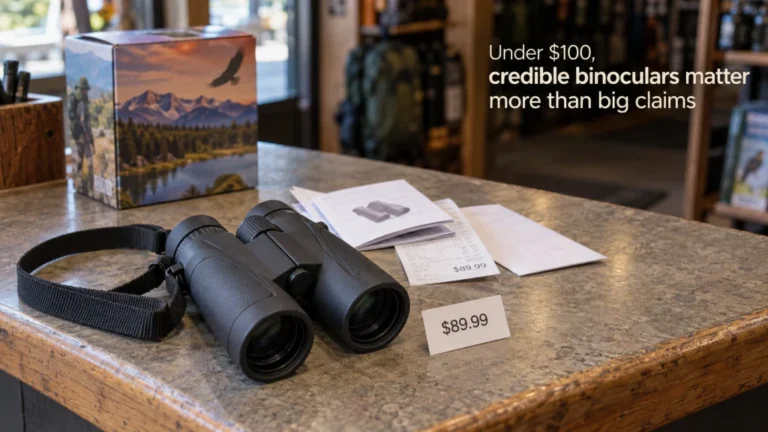
Under 100 dollars is a credibility constrained entry market
At this level, protect basic usability rather than chase a long feature list. Check configuration, focus, eye relief when glasses matter, weather protection, and the seller return path. Compromises are harder to avoid, but low price alone does not prove failure. The guide to binoculars under 100 dollars focuses on credible choices without treating the ceiling as a quality label.
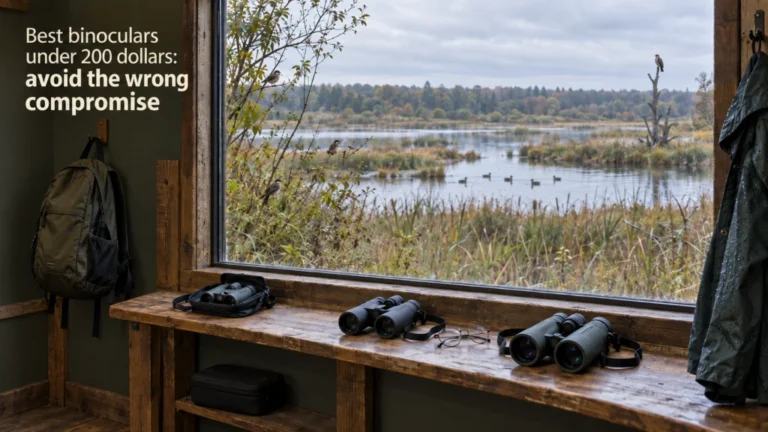
Under 200 dollars creates a deeper credible choice set
This ceiling gives you more room to reject awkward fit, weak weather protection, or the wrong configuration. The deeper choice set lets you compare alternatives instead of accepting the first pair that clears a minimum. Price still is not a shortcut for optical quality. Use the under 200 dollar binocular guide for a broader shortlist with a firm spending cap.
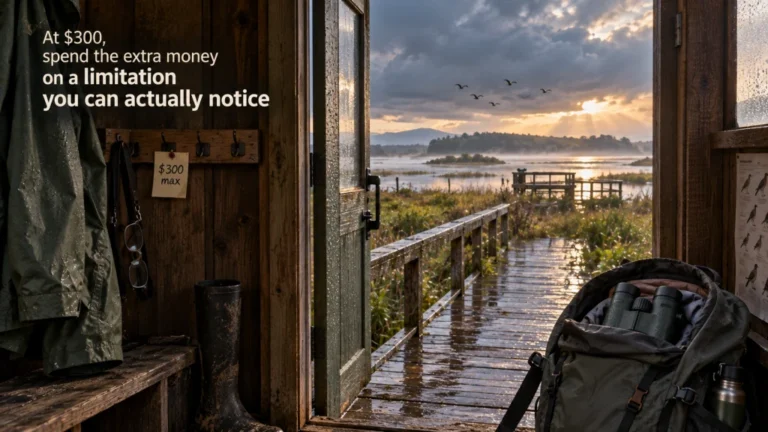
Under 300 dollars adds an incremental value decision
Here the question shifts toward whether added refinement solves something you can name. Compare field of view, eye relief, weight, focus behavior, weather sealing, warranty, and handling when those differences matter. A stronger paper specification is irrelevant if it does not change actual use. The under 300 dollar binocular guide tests whether a higher priced option earns its place through a practical improvement.
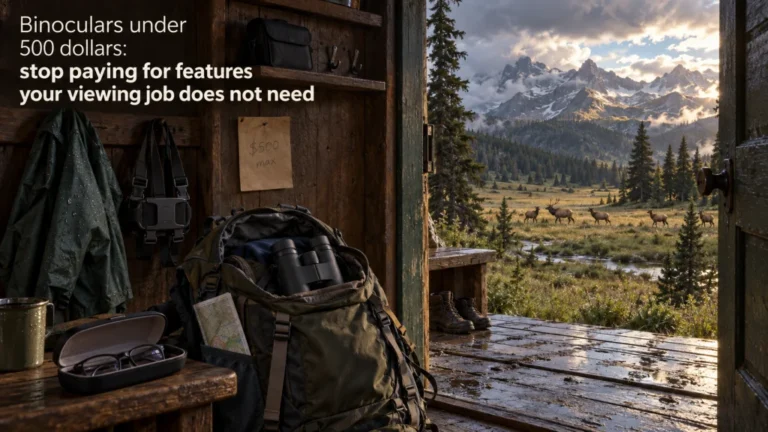
Under 500 dollars opens a broad refinement market
A larger ceiling means more candidates may meet the basic job, so the decision becomes more selective rather than simply easier. Differences in fit, field of view, eye relief, balance, warranty, and carrying comfort can matter more when fewer options fail obvious minimums. Premium sounding features still deserve scrutiny if they do not improve actual use. The under 500 dollar binocular guide narrows that field around concrete viewing priorities instead of prestige.
Under 1000 dollars is a fixed ceiling premium shortlist
This band is useful when a firm upper limit still leaves room to compare higher level refinement. Whether that refinement is worthwhile depends on the user, viewing conditions, and the improvement being purchased. Keep the same fit gates and reject extra cost that does not help the job. The under 1000 dollar binocular guide handles that fixed ceiling decision rather than a generic premium optics debate.

The Cometron uses 7x magnification, 50 mm objectives, and a 344-foot field of view at 1,000 yards. Its multi-coated optics and 7.1 mm exit pupil suit wide-field nighttime viewing, giving the shortlist a configuration that solves a different viewing job. The aluminum housing is water resistant and tripod adaptable, with a carrying case and lens caps included.
Check on AmazonIf you click this link and buy, we earn a commission at no additional cost to you.
Know which price modifiers do not create a distinct buying decision
It is tempting to build a separate shopping rule for every intermediate price, but that usually creates false precision. A ceiling is useful only when it changes the shortlist or the tradeoffs enough to deserve a different process. Otherwise the buyer ends up repeating the same comparison with slightly different numbers and no new decision logic. Keeping fewer, stronger bands makes it easier to focus on fit, function, seller terms, and the actual reason for spending more.
The same boundary applies to adjacent topics that look like budget questions but are really different decisions. Whether premium binoculars justify their cost, how much a first time buyer should spend, and whether used binoculars are worth considering each require a different set of checks. Mixing those questions into one budget article makes the advice less precise and can hide important risks or tradeoffs. Keep the ceiling decision narrow, then move to the more specific question when that is what actually controls the purchase.
Merge intermediate ceilings into the nearest useful band
Ceilings such as 50, 150, 250, 400, or 750 dollars may matter to an individual wallet, but they do not automatically create a new category of binocular decision. Use the smallest validated ceiling that contains your actual cap, then apply your exact personal limit inside that framework. A 250 dollar cap, for example, belongs in the under 300 dollar comparison framework, but anything priced above 250 dollars is still excluded from your shortlist. That keeps the decision logic intact without throwing away viable options that sit between two published ceilings.
| Personal cap | Use this comparison framework | Keep this boundary |
|---|---|---|
| 50 dollars | Under 100 dollars | Reject anything above 50 dollars |
| 150 dollars | Under 200 dollars | Reject anything above 150 dollars |
| 250 dollars | Under 300 dollars | Reject anything above 250 dollars |
| 400 dollars | Under 500 dollars | Reject anything above 400 dollars |
| 750 dollars | Under 1000 dollars | Reject anything above 750 dollars |
This merge rule prevents intermediate numbers from becoming duplicate shopping pages while preserving the buyer’s real limit. The published ceiling supplies the broader comparison logic, and the personal cap decides which candidates are actually eligible. If the broader guide includes a product above your cap, simply remove it rather than dropping to a lower framework that would also hide valid choices below your limit.
Keep price versus quality analysis separate from ceiling selection
If your real question is whether higher prices produce improvements you will notice, move to the discussion of when more expensive binoculars are worth paying for. That decision requires looking at diminishing returns, optical refinement, build, handling, and which improvements matter in a specific viewing situation. A fixed ceiling article cannot answer that by simply pointing to a higher band. Price may limit the field, but it does not prove the value of crossing from one level to another.
Separate first pair spending and used buying from the main budget ceiling
A first purchase adds uncertainty about personal fit and which specifications the user will actually value, so the decision deserves its own safeguards. The first binocular buying framework handles that learning problem directly instead of assuming the buyer already knows the right ceiling. Used binoculars create a different risk profile around condition, alignment, wear, return options, and seller confidence. If stretching the budget through a secondhand purchase is the real goal, use the used binocular buying checklist rather than treating a lower used price as equivalent to a normal retail discount.

The Diamondback HD uses 10x magnification, 42 mm objectives, and a 330-foot field of view at 1,000 yards. Its fully multi-coated lenses, dielectric prism coatings, and adjustable eyecups provide concrete optical and fit variables to compare. Argon purging, O-ring seals, rubber armor, and the included GlassPak harness support outdoor use and carrying.
Check on AmazonIf you click this link and buy, we earn a commission at no additional cost to you.
Build a budget worksheet before you shortlist
A short worksheet keeps the decision from drifting once you compare listings. Record the viewing job, hard ceiling, preferred spend, and requirements that cannot be traded away. Then add the seller, observed price, date observed, return terms, and warranty information for each serious candidate. The result preserves the context when promotions or stock changes alter the storefront.
Keep the worksheet simple enough to use while shopping. It should separate stable product facts from changing purchase conditions and show why each candidate remains. Compare surviving options on differences that affect use rather than feature counts. Remove any candidate that fails a nonnegotiable requirement, regardless of price.
Record the ceiling, use, and must haves
Start with one sentence that describes the main use, such as general daytime wildlife viewing, travel, or long sessions from a fixed position. Add the hard ceiling and preferred spend on separate lines so you can tell whether you are choosing or merely spending to the limit. Then list the few requirements that would make you reject a candidate, such as insufficient eye relief, excessive weight, unsuitable magnification, or inadequate weather protection. Keep preferences below those must haves so a nice extra cannot quietly outrank a basic need.
Record the price, seller, date observed, and return path
For each candidate, note the actual selling price, the seller offering it, and the date you observed that price. Add the return window or relevant return restrictions because a good fit on paper may still fail when you bring the binoculars to your eyes. Keep promotional pricing separate from ordinary selling price when that difference is visible, since the same pair may move across your ceiling later. This record lets you compare the purchase you can make while preserving the timing context of a price that may not last.
Record warranty support and the reason each candidate stays
Warranty terms belong in the worksheet when they affect the purchase, but they should not be reduced to a single number. Check who provides the coverage, what the official terms say, and whether the seller qualifies. Then add one viewing or fit based reason each candidate remains on the shortlist. If the reason depends on prestige, discount size, or vague quality claims, reconsider the candidate.
| Worksheet field | What to record | Why it matters |
|---|---|---|
| Viewing job | Distance, light, movement, duration, carrying conditions | Defines which specifications and compromises matter |
| Hard ceiling | Maximum total you will spend on the binocular purchase | Prevents comparison from drifting upward |
| Preferred spend | Amount you would rather stay near | Leaves room to choose a lower cost option that already works |
| Must haves | Fit, eye relief, weight, configuration, weather needs | Stops a discount from overriding basic usability |
| Purchase conditions | Seller, observed price, date observed, return terms, warranty support | Separates the product from changing retail conditions and preserves when the price was valid |
| Reason to keep | One use based reason the candidate remains viable | Forces every shortlist entry to earn its place |
After filling in the worksheet, remove any candidate that fails a must have before comparing optional features. Then compare only the survivors on differences that affect the way you will actually use them, such as field of view, weight, eye relief, handling, or support. A lower price is a useful advantage when the binoculars still do the job, but it is not a substitute for fit. A higher price is justified only when the change it buys solves a problem you can describe.

The Nature DX uses 8x magnification, 42 mm objectives, phase-coated BaK-4 prisms, and fully multi-coated optics. Its 388-foot field of view at 1,000 yards and 6.5-foot close focus provide useful comparison points for a shortlist worksheet. The waterproof, nitrogen-filled body has 17.5 mm of eye relief and twist-up eyecups.
Check on AmazonIf you click this link and buy, we earn a commission at no additional cost to you.
Final Thoughts: use the ceiling to narrow choice, not to rank quality
A budget ceiling works best when it removes options you do not need to consider while preserving the requirements that make the binoculars usable. Set the viewing job first, define the hard ceiling and preferred spend, and protect fit before comparing optional refinements. Record current purchase conditions separately from stable product facts so a sale does not distort the rest of the decision. If a lower cost pair clears the same important requirements, there is no reason to spend more simply because the budget allows it.
The useful question is not which price band is best, but which ceiling gives you enough credible choices for your specific job. Move upward only when the larger budget opens an improvement that matters to your eyes, hands, carrying needs, or viewing conditions. Move downward when the simpler option already does what you need without giving up a nonnegotiable requirement. That approach makes the budget a guardrail for a good purchase instead of a scoreboard for binocular quality.

The PROSTAFF P3 uses 10x magnification, 42 mm objectives, and a 367-foot field of view at 1,000 yards. Its 15.7 mm eye relief and turn-and-slide rubber eyecups provide concrete fit details to compare against a budget ceiling. The waterproof, nitrogen-filled construction is designed to resist water and internal fogging.
Check on AmazonIf you click this link and buy, we earn a commission at no additional cost to you.
Choose the ceiling that matches your shortlist
Once you know the viewing job and the highest amount you will spend, use the smallest validated ceiling that still contains your actual cap. Each guide keeps the same rule that fit and function come before the price label, while your personal hard cap removes any candidates priced above your limit. You do not need to read every ceiling from bottom to top, and you do not need to spend to the limit of the guide you choose. This keeps options between two published ceilings visible without allowing the broader guide to raise your budget.
| Budget ceiling | What the guide helps you decide |
|---|---|
| Binoculars under 100 dollars | How to protect basic usability and reject weak fits in a tightly constrained entry market. |
| Binoculars under 200 dollars | How to use the deeper choice set without confusing a higher ceiling with higher quality. |
| Binoculars under 300 dollars | How to decide whether incremental refinement solves a real viewing or fit problem. |
| Binoculars under 500 dollars | How to compare a broad refinement market while keeping weight, fit, handling, and use ahead of prestige. |
| Binoculars under 1000 dollars | How to build a fixed ceiling premium shortlist without turning the article into a generic expensive versus cheap debate. |
If your exact limit falls between two of these ceilings, use the nearest relevant guide and apply your own hard cap inside that framework. The purpose of the table is to move you to the comparison problem that actually changes, not to encourage a larger purchase. If a lower ceiling already contains options that meet every important requirement, stop there and compare the survivors. A budget is doing its job when it makes the decision smaller, clearer, and easier to defend.

The Triumph HD uses a 10x42 configuration with a 334-foot field of view at 1,000 yards. It provides 17 mm of eye relief and fully multi-coated lenses in a rugged full-size body. The package includes a GlassPak binocular harness and neck strap for carrying the binoculars in the field.
Check on AmazonIf you click this link and buy, we earn a commission at no additional cost to you.
FAQs
💵 How much should I spend on binoculars?
Spend enough to meet the viewing job and your nonnegotiable fit requirements, not enough to reach a particular status level. Set a hard ceiling after you know the needed configuration, eye relief, weight, weather protection, and carrying demands. If a lower cost pair meets those needs, spending more is optional rather than automatically better.
🔭 Are budget binoculars good enough for general use?
They can be, provided the pair fits the user and matches the viewing conditions. Check field of view, eye relief, weight, focus behavior, weather needs, and return support instead of judging from price alone. A low price becomes poor value when it forces a compromise that interferes with the main use.
🏷️ Should I buy binoculars just because they are on sale?
No. A sale changes the purchase price, not the fit, configuration, or underlying product characteristics. Verify that the binoculars already meet the job, then treat the discount as a secondary advantage.
👓 What should eyeglass wearers protect first in a budget?
Protect usable eye relief and eyecup fit before optional features. Published eye relief is useful, but the exact eyecup design and your glasses can affect how much of the field you actually see. A return option is especially valuable when you cannot confirm the fit in person.
📉 Is a higher original price proof that a sale binocular is better value?
No. Original price and sale price describe retail positioning and current cost, not optical quality or suitability for your use. Compare the stable specifications, fit, warranty support, and real viewing requirements before deciding whether the lower sale price creates value.
🧾 What should I write down before buying?
Record the viewing job, hard ceiling, preferred spend, must haves, seller, observed price, date observed, return terms, and warranty support. Add one practical reason each candidate remains on the shortlist. That short record makes it easier to reject a tempting price that does not fit the job or to recognize when an old price is no longer relevant.
References and Sources
- Digital Camera World budget binocular guide: Supports the low cost shopping segment used to frame the budget decision.
- Sportsman’s Warehouse binoculars under 100 dollars: Market depth for this ceiling.
- Sportsman’s Warehouse binoculars under 200 dollars: Market depth for this ceiling.
- Sportsman’s Warehouse binoculars under 300 dollars: Market depth for this ceiling.
- Sportsman’s Warehouse binoculars under 500 dollars: Market depth for this ceiling.
- Sportsman’s Warehouse binoculars under 1000 dollars: Market depth for this ceiling.