A $1,000 ceiling gives you access to many serious binoculars, but it does not make the most expensive eligible option the right one. The useful question is whether a higher-priced choice fixes a real limitation in field of view, eye relief, weight, handling, optical design, or another part of the viewing job. Start with the configuration that fits how and where you observe, then judge premium features against that requirement. A cheaper option remains the better buy when it already passes the fit and performance checks that matter to you.
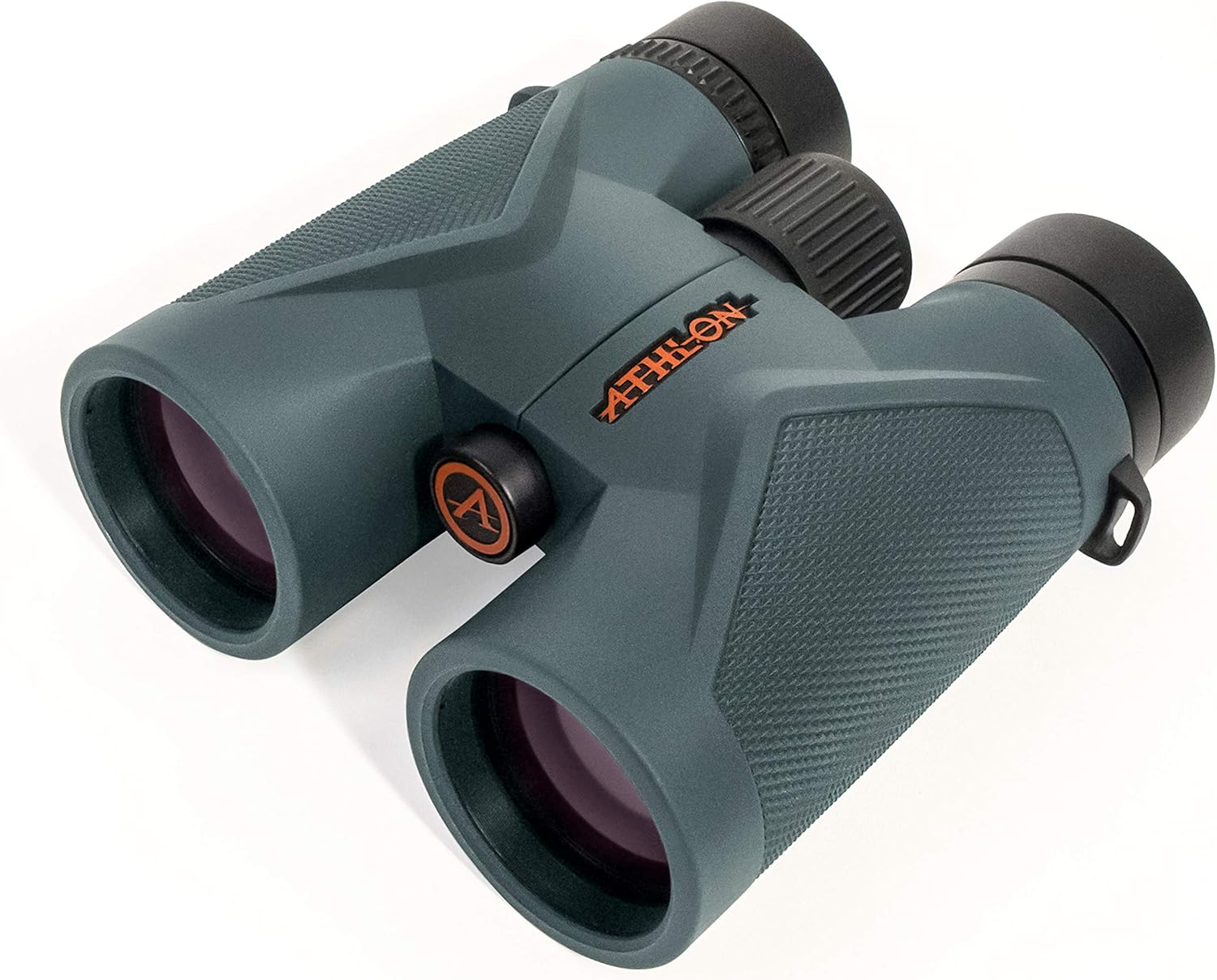
The Midas UHD 8x42 uses extra-low-dispersion glass, phase-corrected BaK-4 prisms, and an ESP dielectric coating. Its 426-foot field of view at 1,000 yards, 17.2 mm eye relief, and 6.5-foot close focus provide concrete fit and viewing metrics. A magnesium chassis, argon purging, and waterproof construction support repeated field use.
Check on AmazonIf you click this link and buy, we earn a commission at no additional cost to you.

The Diamondback HD 8x42 combines an HD optical system with fully multi-coated lenses and dielectric prism coatings for clear, color-accurate views. Its 393-foot field of view at 1,000 yards, 17 mm eye relief, and 5-foot close focus give concrete fit and viewing metrics to compare. Argon purging, O-ring seals, rubber armor, and the included GlassPak harness support regular field use.
Check on AmazonIf you click this link and buy, we earn a commission at no additional cost to you.
Decide when the ceiling is justified and when it is not
The higher ceiling makes the most sense when a verified candidate solves something the lower-priced options do not. The Razor HD 10×42 is relevant when a buyer specifically wants a premium conventional 10×42 near the ceiling, while the ZULU6 HDX 10×30 is relevant when handheld stabilization is the requirement worth paying for. The BX-4 Pro Guide HD Gen 2 8×42 demonstrates that a buyer can still get a premium-featured full-size 8×42 while leaving roughly four hundred dollars of the ceiling unused. Price only becomes persuasive after the exact feature is tied to the viewing job.
Before buying, make a final pass through price, seller, returns, warranty, accessories, and compatibility. Confirm whether the case, strap, tripod adapter, batteries, or other required items are included or add cost afterward. Check exact dimensions and weight rather than assuming all binoculars with the same numbers handle alike. A premium purchase is easier to defend when both the optical decision and the ownership details have been checked.
Treat replacement of an already-owned binocular as an upgrade decision
If you already own binoculars that work, compare the new candidate against the exact weakness of the pair you have now. A modest specification change may not produce a meaningful ownership improvement if your current binoculars already fit your face, hands, carrying setup, and viewing conditions. Write down what you want to improve before shopping, then reject candidates that mostly duplicate what you already have. An upgrade should remove a limitation, not merely reset the price tag.
Treat brand-family value as a separate brand-selection decision
Warranty reputation, service access, accessory ecosystems, and the way a manufacturer structures its product families can matter, but those questions should not override configuration fit. Two brands may approach focus feel, armor, eyecups, weight, or included accessories differently even at similar prices. Compare the exact model first, then use brand-level support and ownership factors as a second layer. That keeps a familiar logo from becoming a substitute for the specifications you actually need.
Let the viewing activity decide the final configuration
A person following moving wildlife at moderate distance may value a wider field and steadier handheld view more than extra magnification. Someone observing smaller distant details may accept a narrower field or additional support if the higher image scale solves the actual task. Frequent travelers may rank compactness and weight above low-light capability, while eyeglass wearers may reject otherwise excellent options that do not provide a comfortable full field. The final configuration should come from those conditions, then the premium budget can be used to refine it.
- Keep a cheaper candidate on the list until a premium feature clearly beats it on a requirement that matters.
- Compare only the exact configuration and specifications you intend to buy.
- Check field of view, eye relief, weight, dimensions, close focus, weather protection, and included accessories where they affect your use.
- Verify the selling price, seller, return policy, and warranty path before treating a listing as eligible.
- Skip the upgrade when the more expensive choice does not solve a named viewing or ownership problem.
This checklist keeps the decision practical when the shortlist starts filling with attractive premium features. It also makes it easier to explain why one candidate is still in the running and another is not. The goal is not to eliminate every expensive choice. The goal is to make the expensive choice prove that it belongs there.

The MONARCH M7 8x42 uses ED glass with multilayer lens and prism coatings in a waterproof, nitrogen-filled body. Its 435-foot field of view at 1,000 yards, 17.1 mm eye relief, and 23.6-ounce weight provide concrete comparison points for fit and handling. Turn-and-slide eyecups, a locking diopter, and oil- and water-repellent lens coatings add practical refinements for repeated field use.
Check on AmazonIf you click this link and buy, we earn a commission at no additional cost to you.
Final Thoughts: make every dollar above the cheaper alternative solve something real
A $1,000 budget can buy more optical and mechanical refinement, but the ceiling should never become a command to spend all of it. Start with the viewing job, settle the configuration, and compare exact specifications that affect field, eye placement, weight, handling, and ownership. Then keep the less expensive candidate alive until the premium option fixes a limitation you can clearly name. That discipline makes the final choice easier to defend long after the excitement of a higher price tag fades.
If two candidates both satisfy the same must-have requirements, the cheaper one deserves serious preference unless the higher-priced option adds a benefit you will use often. If the premium model clearly improves comfort, tracking, steadiness, optical control, durability, or another defined need, the extra spend can be reasonable. Verify the exact listing, seller, warranty, and included accessories before paying. The right answer is the binocular that solves the job with the fewest unnecessary compromises, not the one that simply sits closest to the ceiling.

The Nature DX 8x42 uses phase-coated BaK-4 prisms and fully multi-coated optics in a waterproof, nitrogen-filled body. Its 388-foot field of view at 1,000 yards and 6.5-foot close focus suit broad scanning and nearby subjects. Twist-up eyecups, 17.5 mm eye relief, and the included case and neck strap support practical everyday field use.
Check on AmazonIf you click this link and buy, we earn a commission at no additional cost to you.
Frequently asked questions
The questions below focus on the points that usually change a fixed-ceiling buying decision. They are not meant to create a second buying guide inside the FAQ. Use them to check whether price, configuration, fit, or ownership details are still unresolved. If one answer exposes a missing requirement, go back to the relevant comparison before buying.
The answers also assume you are comparing new binoculars sold in the United States and that you will verify the exact model before purchase. Specifications such as field of view, eye relief, weight, close focus, and weather protection vary by model even when the basic configuration looks similar. Price and availability can also change independently of MSRP. Treat the exact listing and manufacturer specification page as the final check.
🔭 Do I need to spend the full $1,000 to get excellent binoculars?
No. If a cheaper model already meets your field, eye relief, weight, handling, and weather needs, spending more is optional. Pay more only when the added feature fixes a limitation you can identify.
👓 Should eyeglass wearers prioritize eye relief over premium glass labels?
Usually, yes, because losing part of the field through poor eye placement can matter more than a premium optical label. Check the exact eye relief, eyecup design, and whether you can see the full field comfortably with your glasses.
🌲 Is 10x automatically better than 8x at this budget?
No. Higher magnification can give more image scale, but it often comes with a narrower field and more visible hand movement. Choose 10x when the added detail solves your distance requirement, not because the budget allows it.
🎒 Does a premium compact make more sense than a full-size binocular?
It can if carrying bulk is one of your main constraints. Check hand fit, eye placement, low-light expectations, and how often you actually need the smaller size before paying a premium for compactness.
💰 Should a sale price count when deciding whether a binocular is under the ceiling?
Yes, if that is the actual selling price available to you, but verify the seller, stock status, return terms, and warranty path. Do not treat a temporary discount as proof that the binocular is a better fit than a regularly cheaper option.
⚙️ Are electronically assisted binoculars automatically better at the top of this budget?
No. Electronics can solve specific steadiness or viewing problems, but they also add battery dependence, complexity, and potentially different weather or weight considerations. Choose that architecture only when the assisted function is central to your use.
References and Sources
The retailer sources establish checked selling prices and whether an exact configuration fits under the $1,000 ceiling. Price, stock, seller, and promotions can change, so those facts should be checked again before purchase. Manufacturer pages are used for the stable model specifications and documented feature sets that drive the shortlist. No retailer rating or price is treated as proof of optical superiority.
The manufacturer sources let the comparison stay at model level without pretending that a specification sheet is a side-by-side optical test. Field of view, eye relief, weight, close focus, battery requirements, stabilization, chassis design, and included features can be verified directly. Claims about image quality are kept within the language the manufacturers document unless independent testing establishes more. That is why the final choice remains conditional on the viewing job and physical fit.
- Sportsman’s Warehouse binoculars under $1,000: supports current market breadth, checked price eligibility, and the mix of conventional and electronically assisted binoculars under the ceiling.
- Sportsman’s Warehouse Vortex Viper HD 8×42 listing: supports the checked selling price used for the lower-cost 8×42 comparison.
- Vortex Viper HD 8×42: supports field of view, eye relief, weight, close focus, coatings, and included accessories for the current Viper configuration.
- Vortex Razor HD 8×42: supports the published 8×42 specifications and premium optical and chassis features used in the same-job comparison.
- Vortex Razor HD 10×42: supports the 10×42 field of view, eye relief, weight, close focus, and conventional premium configuration.
- Leupold BX-4 Pro Guide HD Gen 2 8×42: supports the exact model’s weight, eye relief, field of view, open-bridge design, eyecup system, and tripod-ready construction.
- SIG Sauer ZULU6 HDX 10×30: supports current price, availability, image stabilization, battery runtime, field of view, eye relief, weight, and waterproof rating.