Choosing between the Vortex Razor HD and Razor UHD 10×42 is less about buying the higher line and more about deciding what you are willing to carry for a different viewing package. The Razor HD is lighter, shorter, and slightly wider in field of view, while the Razor UHD focuses closer and uses a larger optical architecture that comes with a substantial size and weight penalty. Independent testing supports treating image-quality differences as real but conditional rather than assuming the UHD wins every measurable category. The useful decision is whether those refinements solve a viewing problem you actually have.
Put physical fit ahead of the lineup ladder: Razor HD versus Razor UHD
Choosing between the Vortex Razor HD and Razor UHD starts with a simple mismatch: the model placed higher in the family can be the worse tool if its body makes you carry less often, raise it less comfortably, or tire sooner during long observation. If you are already comparing models inside the Vortex binocular lineup, keep the comparison fixed at 10×42 so magnification and objective diameter do not muddy the result. For broader brand context, the binocular brand decision guide explains where brand-level questions belong, but this page stays on the remaining Razor choice. The first job here is not to reward the more expensive badge, but to decide which body role fits your actual viewing routine.
That distinction matters because the published dimensions are not close enough to dismiss as cosmetic. Vortex lists the Razor HD 10×42 at 5.9 inches high, 5.1 inches wide, and 24.8 ounces, while the Razor UHD 10×42 is 7.0 inches high, 5.6 inches wide, and 32.2 ounces. The UHD therefore adds 7.4 ounces, roughly a 30 percent increase in weight, while also becoming 1.1 inches taller. If most of your use is handheld scanning, walking, travel, or repeated raising and lowering, that physical difference belongs near the start of the decision, not in the fine print after the optics discussion.

This RZB-2102 is the Vortex Razor HD 10x42 roof-prism binocular with a magnesium chassis. Amazon lists a 362-foot field of view and 16.5 mm of eye relief for this variant. The package includes a GlassPak binocular case and harness, comfort neck strap, rainguard, and tethered objective covers.
Check on AmazonIf you click this link and buy, we earn a commission at no additional cost to you.
What the reader gains by carrying Razor HD
The Razor HD gains most clearly by asking less of your hands, neck, harness, and bag. Its 24.8 ounce weight is not ultralight, but it is materially easier to treat as an all-day 10×42 than a 32.2-ounce body, especially when the binocular is repeatedly lifted from chest level and held unsupported. The shorter 5.9 inch body also takes less vertical room in a case and is less likely to feel like a 50 mm class instrument hanging from a harness. Those are not abstract ergonomic points; they affect whether the binocular stays accessible or gradually becomes something you leave packed away.
The HD also gives you a slightly broader published viewing window. Vortex lists 362 feet at 1,000 yards for the Razor HD and 346 feet for the Razor UHD, so the HD shows 16 more feet across at that distance. That difference is modest, but wider field of view can help when acquiring moving wildlife, following a subject through branches, or scanning without constant recentering. The trade is that the HD gives up some close-focus reach, so its body-role advantage is strongest for buyers who value carrying ease and a broader scan more than very close observation.
Key point: If the binocular will spend hours on your body and much of its use is handheld, the HD’s lower mass and shorter body are functional benefits. A higher family position does not cancel the cost of carrying nearly half a pound more glass and chassis.

This medium GlassPak uses a bungee closure and a water-resistant nylon body. It has two mesh side pockets plus one rear zippered pocket for small field items. Its binocular tethers attach to the optic to help prevent accidental drops.
Check on AmazonIf you click this link and buy, we earn a commission at no additional cost to you.
Compare the pair on the decision gates that matter before price: Razor HD vs Razor UHD
Because both models are 10×42 roof-prism binoculars, the useful comparison is unusually clean. Magnification, objective diameter, and nominal exit pupil are fixed, so the decision shifts to field of view, eye relief, close focus, body size, weight, optical architecture, and the evidence behind claimed image differences. The table below uses the manufacturers’ current 10×42 specifications rather than mixing generations or borrowing a nearby size. Treat it as a fit screen first, then use performance evidence only for the claims that actually require testing.
If one of these numbers is already a deal breaker, stop there rather than paying to solve a problem you do not have. Someone who regularly observes butterflies, feeder activity, or nearby details may care about the UHD’s 4.5-foot close focus, while a person who scans moving subjects for long periods may care more about the HD’s 362 foot field and lower weight. Eye relief is effectively tied on paper at 16.5 mm versus 16.7 mm, so eyeglass wearers should not crown a winner from a 0.2 mm specification gap. Eyecup shape, facial geometry, prescription lenses, and whether you can see the full field without blackouts still need a real fit check.
| Decision gate | Razor HD 10×42 | Razor UHD 10×42 | What changes in use |
|---|---|---|---|
| Field of view | 362 ft at 1,000 yd | 346 ft at 1,000 yd | HD gives a slightly wider scan. |
| Eye relief | 16.5 mm | 16.7 mm | Too close on paper to replace an eyeglass fit test. |
| Close focus | 6.0 ft | 4.5 ft | UHD reaches subjects 1.5 ft closer. |
| Height | 5.9 in | 7.0 in | UHD occupies noticeably more vertical space. |
| Width | 5.1 in | 5.6 in | UHD is broader in the hand and in storage. |
| Weight | 24.8 oz | 32.2 oz | UHD adds 7.4 oz, about 30 percent. |
| Listed MSRP | $1,449.99 | $2,599.99 | Price comes last because street pricing can move. |
The comparison also has an ownership-cost wrinkle. Vortex lists a GlassPak binocular harness with the HD and a GlassPak Pro harness with the UHD, along with the usual covers, strap, and lens cloth, so the exact package can change what you would otherwise buy separately. Retail bundles can differ from the manufacturer’s box contents, so verify the exact listing rather than assuming every seller includes the same accessories. Both models are listed as tripod adaptable, which matters if long observation sessions push you away from unsupported handheld use.
What the reader gives up by moving to Razor UHD
The UHD’s most obvious cost is not money but mass. Adding 7.4 ounces may sound small beside a full pack, yet it is a large percentage increase in an object held at eye level, where fatigue is more noticeable than the same weight buried in a bag. Its 7.0 inch body is also 1.1 inches taller than the HD, so a case, chest pouch, or shelf that fits the HD comfortably may become tighter. If your present 10×42 already feels near your comfort ceiling, the UHD should prove its value before you accept the extra body.
Compare field of view, eye relief, and eyeglass fit as one viewing envelope
The HD’s 362 foot field is wider than the UHD’s 346 foot field, but that does not mean every observer will experience the HD as easier. A person wearing glasses may lose usable field if the eyecup and face geometry prevent reaching the stated eye-relief position, while another observer may see the entire window without effort. Because the published eye-relief numbers differ by only 0.2 mm, the sensible test is whether you can see the field stop comfortably with your normal glasses and eyecup setting. Treat the viewing envelope as the combination of field, eye position, blackout behavior, and how quickly the image settles when you raise the binocular.
How body format changes the Razor HD versus Razor UHD trade
Vortex explicitly identifies an Abbe-Koenig prism in the UHD, and that larger optical path helps explain why this is not simply an HD shell with a different label. The architecture gives the UHD a different physical role, one that accepts more length and weight in pursuit of its optical design. Independent laboratory testing is useful here because architecture alone does not prove a visible advantage for every observer or lighting condition. The right inference is that the UHD has a meaningfully different optical package, not that its position in the range guarantees a universal win.
That evidence boundary changes the tone of the purchase decision. AllBinos measured transmission at 86.8 percent plus or minus 1 percent for the Razor HD 10×42 and 86.5 percent plus or minus 1 percent for the Razor UHD 10×42, a difference inside the stated measurement uncertainty rather than proof of higher transmission from the UHD. The same UHD test still found very good correction and a broad usable field, so the result is not an argument that its optical design adds nothing. It is a reminder that “UHD” should trigger a closer look at the kind of improvement being claimed, not an automatic assumption that every optical metric rises.
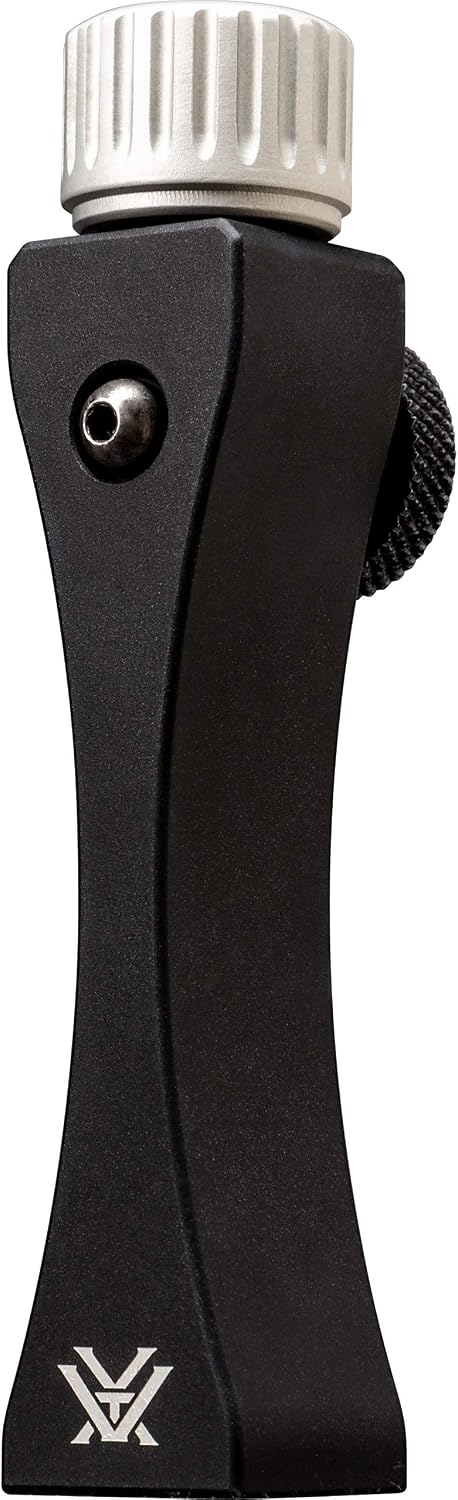
The Vortex Pro Binocular Adapter connects tripod-adaptable binoculars that use a 1/4-20 socket to a tripod with a 1/4-20 interface. Its two-part design uses a binocular-side stud and a tripod-side base. It supports steadier, hands-free observation when long viewing sessions make unsupported 10x use tiring.
Check on AmazonIf you click this link and buy, we earn a commission at no additional cost to you.
When Razor HD is enough even if Razor UHD sits higher
Razor HD is enough when your existing problem is not close focus and you do not have independent evidence that a UHD image difference matters to your eyes. A buyer who spends most of the day walking, scans in ordinary daylight, follows moving wildlife, and holds the binocular unsupported can benefit every hour from the HD’s lower weight and slightly wider field. In that use case, the physical savings are repeated constantly, while a small optical refinement may only become visible in narrower conditions. Paying more to carry more is a poor trade if the extra capability rarely enters the scene.
It is also the more conservative choice for a buyer who already knows that 10×42 is near the upper limit of comfortable handheld weight. The HD still carries Vortex’s published HD optical system, XR Plus coatings, APO labeling, magnesium chassis, weather sealing, and tripod adaptability, so choosing it is not stepping down to a stripped model. More importantly, the manufacturer specification does not reveal a weak viewing envelope that needs fixing: its field is wider, its eye relief is essentially tied, and its close focus is still six feet. If those numbers fit your subjects and your body, the lineup ladder has not given you a reason to move.
- Choose the HD side of the comparison when lower carried weight matters every outing.
- Favor it when a slightly wider field helps more than focusing 1.5 feet closer.
- Keep it in front when eyeglass fit is already comfortable and the UHD does not solve a documented problem.
- Do not treat a lower family position as a defect when the smaller body is the feature you actually need.
If your uncertainty is really whether you need to be in the Razor family at all, move that question out of this comparison. The separate Viper HD versus Razor HD comparison owns the step below Razor, so you can resolve that budget and performance fork without stretching this page into a lineup roundup. Once you return to HD versus UHD, the decision should again be about the specific body and viewing differences above.

This V201 is the Vortex Viper HD 10x42 roof-prism binocular. Its package includes a GlassPak binocular harness, rainguard eyepiece cover, tethered objective covers, and comfort neck strap. The 10x42 format keeps magnification and objective size aligned with the Razor comparison in this section.
Check on AmazonIf you click this link and buy, we earn a commission at no additional cost to you.
When Razor UHD solves a real handling or viewing constraint
The UHD makes the clearest case when its 4.5-foot close focus changes what you can actually observe. If your subjects regularly enter the five-foot range, the HD’s 6.0 foot specification can force a step backward or leave the subject outside focus, while the UHD can keep working. That is a concrete capability difference, not a prestige argument. It becomes less important when nearly everything you observe is tens or hundreds of feet away, because both models are already operating far beyond their close-focus limit.
The optical case for UHD should be handled more carefully. Independent comparison work has reported improvements in perceived definition and contrast in darker areas, but laboratory transmission measurements do not show a meaningful transmission gain over the HD within measurement uncertainty. That means a buyer interested in shadow detail, edge behavior, or subtle contrast should verify those traits in a controlled side-by-side view rather than assuming a label will be visible to every eye. If you can repeatedly see a useful difference on the subjects and lighting you care about, then the UHD’s extra bulk is buying something specific.
There is also a focus-behavior consideration that matters for moving subjects. Independent testing of the UHD recorded a very long focus travel from near to far, which favors fine adjustment more than rapid large-distance changes. That can be welcome when you are settling on a stationary subject, but less attractive when the target jumps from a nearby branch to a distant tree line. The UHD therefore solves some constraints while creating others, which is exactly why it should not be treated as a universal upgrade.

This RZB-1042 is the 10x42 Razor UHD with a magnesium chassis, locking diopter, and XR Plus lens coatings. It is tripod adaptable for supported viewing. The Amazon package includes a GlassPak Pro harness, comfort neck strap, rangefinder pouch, lens covers, and lens cloth.
Check on AmazonIf you click this link and buy, we earn a commission at no additional cost to you.
Check current price after the role decision is settled: Razor HD versus Razor UHD
Price belongs late in this comparison because a discount cannot make the wrong body comfortable. Vortex currently lists MSRP at $1,449.99 for the Razor HD 10×42 and $2,599.99 for the Razor UHD 10×42, a listed gap of $1,150 before any retailer discounts or bundle differences. Street prices can compress or widen that gap, so use MSRP as a stable reference point rather than pretending it is the price every buyer will pay. First decide what the UHD must improve for you, then check what the market is charging for that improvement.
A useful way to handle the premium is to divide it by actual use, not by marketing hierarchy. If the closer focus, particular optical rendering, or slower fine-focus behavior solves a repeated problem and you are comfortable with 32.2 ounces, a narrower price gap may be easier to justify. If the only reason left is that UHD sits higher in the family, the decision logic has failed because the HD already gives you the wider published field and easier carry. Price should confirm a role decision that already makes sense, not create the role after the fact.
Note: Check the exact seller package before comparing totals. Harness type, case, covers, and other included accessories can change the real ownership cost even when the binocular price looks lower.

This large GlassPak Pro is the P600-L variant with an easy-adjust harness, DWR-treated exterior, and modular attachment points. Amazon's fit guide specifically lists the Large size for Razor UHD 42 mm binoculars. Front, side, and rear storage pockets add space for field accessories around the binocular.
Check on AmazonIf you click this link and buy, we earn a commission at no additional cost to you.
Reject both if neither body format fits the reader: Razor HD versus Razor UHD
There is no rule that the correct answer has to be one of these two models. If 10x is too difficult to hold steadily, if 24.8 ounces is already heavier than you want to carry, if the eye relief does not work with your glasses, or if neither close-focus limit matches your subjects, choosing the less-wrong Razor does not fix the underlying mismatch. The same applies when your actual use needs a smaller travel body or a different magnification rather than a more expensive optical package. A flagship comparison should still be allowed to end with no purchase.
Rejecting both is also sensible when you cannot see a repeatable UHD advantage but dislike the HD for unrelated fit reasons. Do not convert uncertainty into a price ladder by assuming the expensive model will somehow solve grip, facial fit, or stability. If the budget question moves you farther down the same brand, the Diamondback HD versus Razor HD comparison handles that different fork without confusing it with this one. The goal is to end with a binocular you will actually use, not to complete a family progression.
- Choose Razor HD when lower weight, smaller dimensions, and the wider published field matter more than 4.5-foot close focus.
- Choose Razor UHD when its closer focus or a repeatable optical advantage solves a real viewing constraint and the larger 32.2-ounce body is acceptable.
- Skip both when 10x stability, eyeglass fit, body size, carrying weight, or budget fails before the optical comparison becomes relevant.
Run that card in order rather than starting with price. Physical fit eliminates bad matches quickly, the viewing envelope shows whether the image is usable, and controlled comparison tells you whether any optical refinement is visible enough to matter. Only after those gates pass does the purchase price become a useful tie breaker. That sequence protects you from paying more for an improvement that never reaches your actual observation routine.

This DB-215 is the Vortex Diamondback HD 10x42 binocular with 42 mm objectives and 10x magnification. Amazon lists a 330-foot field of view and tripod-mount compatibility. Its package includes a GlassPak case and harness, comfort neck strap, tethered objective covers, rainguard, and lens cloth.
Check on AmazonIf you click this link and buy, we earn a commission at no additional cost to you.
Final thoughts: make the UHD earn its extra body
The Razor UHD 10×42 should not win because it sits higher in the range. It should win only when its closer focus or a visible, repeatable optical refinement matters enough to justify a 7.4-ounce weight increase, a taller body, a slightly narrower published field, and a much higher listed MSRP. The Razor HD is the cleaner fit when portability and scanning ease matter more, while the UHD is the more specialized choice when its particular strengths solve a real constraint. Verify eyeglass fit and the image difference with your own viewing conditions before turning a family hierarchy into a purchase.
Start with the body you can comfortably carry and hold, then confirm that its field of view and eye relief work for the way you actually observe. Move to the UHD only when the closer focus or optical rendering creates a benefit you can identify repeatedly rather than a difference you expect to see because of the label. If neither body feels right, or if 10x itself is the wrong fit, walking away from both is a better decision than forcing a flagship purchase. The useful winner is the binocular that solves the real constraint without adding penalties you notice more often than the benefit.

This Vortex kit pairs lens cleaner with a Vor-Tek microfiber cloth for optical-surface maintenance. The cleaner is designed for effective cleaning and anti-fog protection without affecting optical properties. The cloth removes fingerprints and other smudges before or during a viewing session.
Check on AmazonIf you click this link and buy, we earn a commission at no additional cost to you.
FAQs
🔭 Is Razor UHD optically better than Razor HD?
It can show useful differences in definition or contrast, but the size of that advantage is test-dependent. Independent transmission measurements of the 10×42 versions were effectively tied within measurement uncertainty, so do not treat the UHD label as proof that every optical metric is better.
🎒 How much heavier is the Razor UHD 10×42?
Vortex lists the UHD at 32.2 ounces and the HD at 24.8 ounces. The 7.4 ounce difference is roughly a 30 percent increase, which is large enough to matter during repeated handheld use or long carrying sessions.
🌲 Which one has the wider field of view?
The Razor HD 10×42 has the wider published field at 362 feet per 1,000 yards versus 346 feet for the UHD. That can help with scanning and moving subjects, although usable field still depends on eye position and fit.
🦋 Does the Razor UHD focus closer?
Yes. Vortex lists 4.5 feet for the UHD and 6.0 feet for the HD, so the UHD can focus about 1.5 feet closer when nearby subjects are part of your routine.
👓 Is Razor HD or Razor UHD better with glasses?
The published eye-relief figures are 16.5 mm for the HD and 16.7 mm for the UHD, which is too small a difference to choose from paper alone. Try your normal glasses and verify that you can see the full field comfortably at a stable eyecup setting.
💰 Is the Razor UHD worth the extra money?
It is worth paying more only if its closer focus or a repeatable optical difference solves a problem you encounter often. If you mainly gain more weight and bulk while your current viewing needs are already met by the HD, the premium is harder to justify.
References and Sources
- Vortex Razor HD 10×42 specifications: verifies field of view, eye relief, close focus, dimensions, weight, MSRP, tripod compatibility, and listed box contents.
- Vortex Razor UHD 10×42 specifications: verifies field of view, eye relief, close focus, dimensions, weight, Abbe-Koenig prism, MSRP, tripod compatibility, and listed box contents.
- AllBinos Razor HD 10×42 test: supports independent transmission and optical-performance measurements used to separate measured results from manufacturer claims.
- AllBinos Razor UHD 10×42 test: supports independent transmission, field, close-focus, focus-travel, and optical-performance measurements used in the comparison.