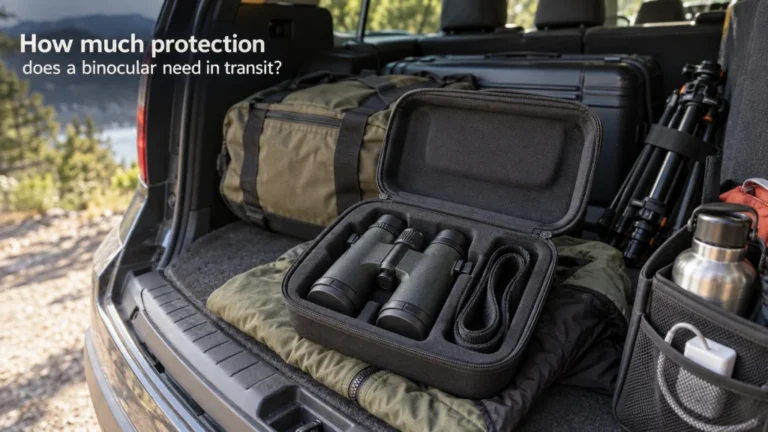
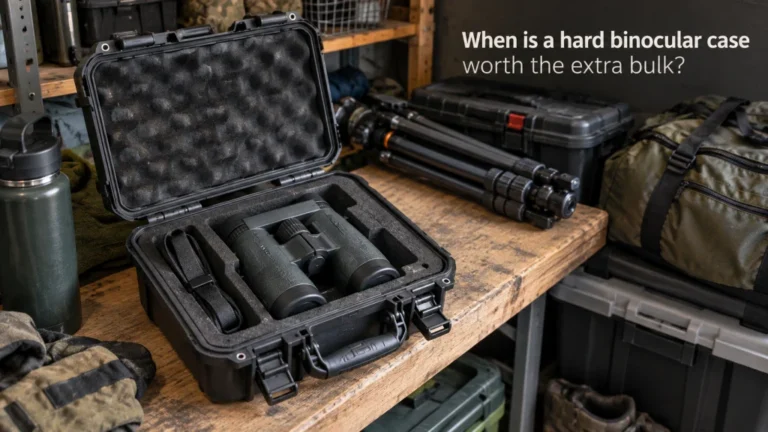
A binocular case should solve a specific protection problem without adding more bulk than the way you carry the optic can tolerate. A soft pouch can be enough for dust and light contact, while padded, semi-rigid, or hard construction makes more sense as crush and transport risk rise. The right choice also depends on internal fit, what stays attached to the binoculars, how quickly you need access, and whether weather protection is actually documented. Choose the protection level first, then choose the case architecture that delivers it.
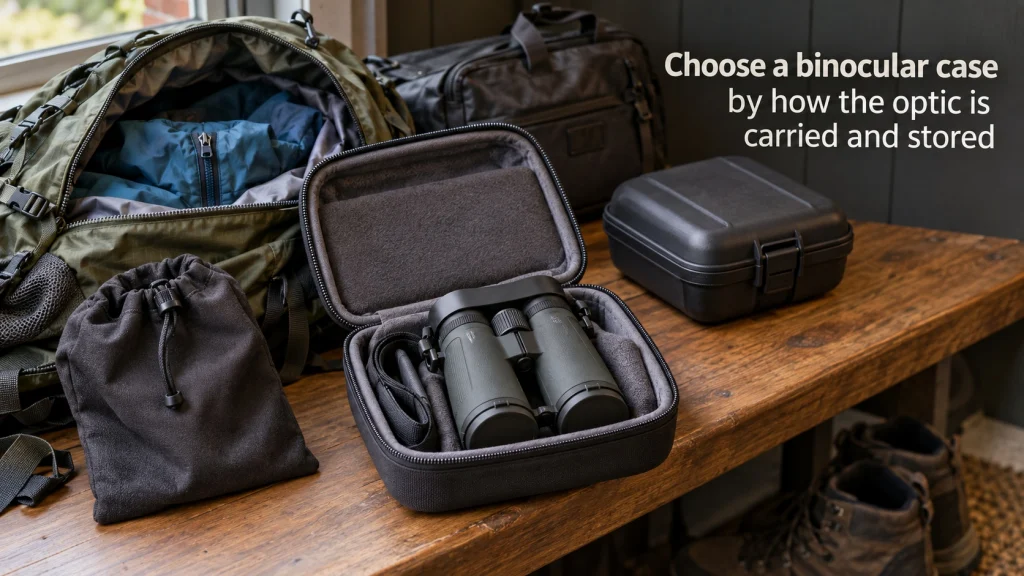
Choose the protection problem before the case type
A binocular case is useful only when it addresses the way the optic is actually carried and stored. A pair that rides inside a clean daypack needs something different from a pair that shares space with heavier gear, gets moved between vehicles, or spends long periods in storage. Dust, light knocks, compression, weather exposure, and rough transport are different risks, so they should not be treated as one generic need for more protection. Start by naming the most likely problem, because that immediately narrows the amount of structure and padding you need.
This is also where it helps to keep the case decision connected to the rest of your setup instead of treating it as an isolated accessory purchase. The broader binocular accessories guide explains where a case fits alongside straps, harnesses, lens protection, and other add-ons, but the case itself should be judged by protection, fit, access, and bulk. If light contact and dust are the main concerns, a soft solution may be enough. If the binoculars can be compressed by other gear or handled separately during travel, the case needs more structure.
| Primary risk | Useful case direction | Main trade-off to check |
|---|---|---|
| Dust, surface contact, light scuffs | Pouch or soft sleeve | Low bulk, but limited structural protection |
| Routine movement in a pack or vehicle | Padded or semi-rigid case | More protection with moderate added bulk |
| Compression, stacking, rough transport | Rigid or hard case | Higher protection, but more weight and fixed volume |
| Rain, spray, dust ingress, wet transport | Case with documented weather protection | Protection depends on the stated seal and closure, not appearance |
That matrix is a starting point rather than a promise about any individual case. Materials, closures, seams, padding, and fit determine what a particular design can actually do. A thick-looking shell may still have an ordinary zipper, and a soft case may be very well padded without offering meaningful resistance to crushing. Once the risk is clear, the next step is to match the architecture to that risk without buying protection you will rarely use.

This compact binocular case has a weather-resistant exterior with a shoulder strap and belt loop. The interior uses anti-scratch plush lining to separate the optic from the outer shell. Amazon lists it for small binocular formats, making it relevant when low carried bulk matters.
Check on AmazonIf you click this link and buy, we earn a commission at no additional cost to you.
Match case architecture to the risk
Case style matters because structure changes both protection and usability. Soft materials conform around the binoculars and pack easily, while stiffer designs preserve space around the optic when other gear presses against the outside. Hard cases go farther by maintaining a rigid shell, but that benefit comes with fixed volume that does not disappear when the binoculars are out. The practical question is not which style looks tougher, but how much external force the case is expected to manage.
Current manufacturer documentation also shows why labels alone are not enough. Fitted field cases may use molded construction and zip closures, soft pouches may emphasize a close fit and flexible carry, and hard cases may publish padding and internal dimensions as part of the protection system. Those are materially different architectures even when all of them are sold simply as binocular cases. Judge the construction by what is documented, then decide whether that level of protection is useful for your routine.
Use a pouch or soft sleeve for low-bulk protection
A pouch or soft sleeve makes sense when the binoculars mainly need separation from dust, grit, light contact, and the contents of another bag. This type of binocular pouch is attractive because it adds little structure and usually packs down when empty. It is a poor choice when the main danger is a heavy object pressing on the binoculars or the case being tossed around independently. Use it when compact carry matters more than crush resistance.
Use a padded or semi-rigid case for routine transport
Padded and semi-rigid cases sit between a simple pouch and a full hard shell. They can cushion routine bumps and help keep other objects from rubbing against the binoculars while still remaining easier to pack than a rigid box. This is often the most useful architecture when the optic moves regularly between a shelf, vehicle, backpack, or travel bag but is not being treated like checked equipment. The important check is whether the structure actually surrounds the binoculars without allowing them to shift freely inside.
Use a hard case when compression is the real concern
A hard binocular case earns its extra bulk when the optic may be stacked under other equipment, transported separately, or exposed to meaningful compression. Rigid construction can preserve a protective cavity in situations where a soft case would simply deform with the load around it. That does not mean every hard shell has the same impact performance, sealing, latch quality, or padding. If those capabilities matter, verify the specific claims instead of treating the shell material as proof.

The hard EVA shell adds structure for compact and mid-size binoculars during transport. Its exterior is listed as water-resistant, and the case includes a carry handle and shoulder strap. An interior mesh pocket keeps light accessories such as a cleaning cloth separate from the main cavity.
Check on AmazonIf you click this link and buy, we earn a commission at no additional cost to you.
Fit the binocular by internal dimensions
The number printed on the binoculars is not a case size. Two 10×42 binoculars can differ in body length, hinge width, eyecup shape, armor thickness, strap hardware, and the amount of space they occupy when folded to your interpupillary setting. That is why a case labeled for a general objective size can still fit one model comfortably and another poorly. For reliable fit, compare the binoculars in their stored configuration with the usable internal space of the case.
The goal is controlled clearance rather than the smallest cavity you can force the optic into. A case that is too tight can load the zipper, press on eyecups or lens covers, and make removal awkward, while a much larger cavity can let the binoculars move before the padding has a chance to control them. The dedicated binocular case size guide goes deeper into measurement, but the basic principle is simple: measure what actually goes into the case and compare that with internal, not exterior, dimensions. If the maker does not publish usable internal dimensions, compatibility is less certain and should be treated that way.
- Measure the binoculars in the folded or stored position you really use.
- Include attached lens covers, strap lugs, and any hardware that stays on the body.
- Check length, width, and depth against the usable interior rather than the outside shell.
- Allow enough clearance for easy insertion and removal without leaving the optic free to rattle around.
- Check whether padding, dividers, or a shaped liner reduce the advertised interior space.
This fit check matters even more with rigid cases because the shell cannot flex around an unexpected protrusion. Soft materials can sometimes tolerate small differences, but that should not become an excuse to ignore pressure points around eyecups, focus wheels, or objective covers. A good fit protects by holding the binoculars predictably, not by squeezing them. After the bare fit works, check what happens when the accessories you actually carry are added.

The Pelican 1170 provides a rigid foam-lined cavity with published interior dimensions of 10.54 by 6.04 by 3.16 inches. Its Pick N Pluck foam can be shaped around the stored optic. Pelican lists the case as watertight and crushproof, so fit can be checked against a defined protective enclosure.
Check on AmazonIf you click this link and buy, we earn a commission at no additional cost to you.
Check what stays attached inside the case
Case fit changes as soon as a neck strap, harness tether, rain guard, objective covers, or other attached hardware remains on the binoculars. A case that looks generous around the bare body can become awkward when a strap has to be folded into the same cavity. The reverse can also happen: removing every accessory just to make the case close can turn storage into a repetitive setup chore. Decide what you realistically plan to leave attached before judging the fit.
Accessory placement matters as much as total space. A loose strap can end up between the eyecups and lid, a bulky buckle can press against the body, and a cleaning cloth can become harmless padding or unwanted pressure depending on where it sits. If a case includes pockets or dividers, use them only when they keep hard or dirty items away from optical surfaces and controls. The case should close without forcing accessories against the binoculars or relying on the zipper to compress the entire load.
| Item that may stay attached | What to verify inside the case |
|---|---|
| Neck strap | Enough space to fold it without pressing on eyecups or controls |
| Lens covers | No binding against the lid or sidewalls when the case closes |
| Harness tethers | Connectors do not create hard pressure points against the binocular body |
| Cleaning cloth | Stored clean and dry, separate from grit and hard accessories |
Do not solve an accessory-space problem by automatically jumping to a much larger case. Extra room is useful only when the binoculars still remain controlled within the padding or divider system. If the optic can slide from one wall to the other, the larger shell has created a new movement problem. Fit should account for the whole carried setup without turning the binoculars into loose cargo.

This elastic harness uses quick-release Uni-Loop connectors for fast attachment and detachment. Its self-adjusting design distributes the carried load across the harness rather than a single neck strap. Amazon describes it for binocular use, making it useful when checking how tether hardware will coexist with a case.
Check on AmazonIf you click this link and buy, we earn a commission at no additional cost to you.
Treat weather protection as a separate documented claim
A hard shell is not automatically waterproof, and a fabric case is not automatically useless in wet conditions. Weather protection depends on the actual material, seam construction, closure, seal, and any rating or test the manufacturer states for the specific case. A rigid body with an ordinary zipper can still allow water or fine dust through the opening. If rain, spray, or wet transport is part of the use case, the protection claim needs to be verified directly.
The same caution applies to terms such as weather resistant, water resistant, rainproof, and waterproof. They are not interchangeable, and the practical meaning can vary between products if no test or rating is given. The waterproof binocular case guide focuses on those claims in more detail, but the buying rule here is straightforward: do not upgrade to a heavier case based on shell appearance alone. Pay for documented protection that matches a real exposure risk.
Also remember that a protective case does not turn wet binoculars into a dry storage setup. If the optic or strap is damp after use, sealing it immediately inside a closed case can trap that moisture around the equipment. Drying and long-term storage are separate ownership tasks from case selection. A good case protects during carry and storage, but it does not replace proper drying before the binoculars are put away.

The Pelican 1200 uses a watertight copolymer shell with a foam insert for controlled equipment storage. A purge valve equalizes pressure while the rigid shell protects the contents during transport. Amazon lists this black With Foam variant for equipment storage and travel.
Check on AmazonIf you click this link and buy, we earn a commission at no additional cost to you.
Compare access speed and carried bulk after protection needs are met
Once the required protection level is clear, access becomes a legitimate tie-breaker. A fitted soft case can be quicker to open and easier to stuff into another bag, while a rigid case may require a more deliberate opening and closing routine. Neither is automatically better. The right choice depends on whether the binoculars need to be ready repeatedly during an outing or mainly protected between uses and during transport.
Bulk behaves differently too. A soft case can collapse when empty and often conforms to the shape of surrounding gear, while a hard case keeps the same external volume whether the binoculars are inside or not. That fixed volume can be worth it when the shell is solving a real compression problem, but it is wasted space when the optic already rides in a protected compartment. Compare the case in the context of the bag, shelf, vehicle space, or carry method you already use.
| Case direction | Protection potential | Access | Carried bulk |
|---|---|---|---|
| Soft pouch or sleeve | Low to moderate, depending on padding | Usually simple and quick | Low and flexible |
| Padded or semi-rigid | Moderate for routine transport | Varies with flap, zipper, or lid | Moderate |
| Hard case | Best suited to compression and rough transport when documented | Usually more deliberate | Highest and fixed |
For longer trips, consider whether the case is the primary transport container or a protective layer inside another bag. Those are different jobs, which is why a binocular travel case may prioritize structure and secure packing more heavily than an everyday field pouch. Avoid paying for maximum structure when the outer luggage already provides it. Protection should be layered deliberately rather than duplicated by habit.
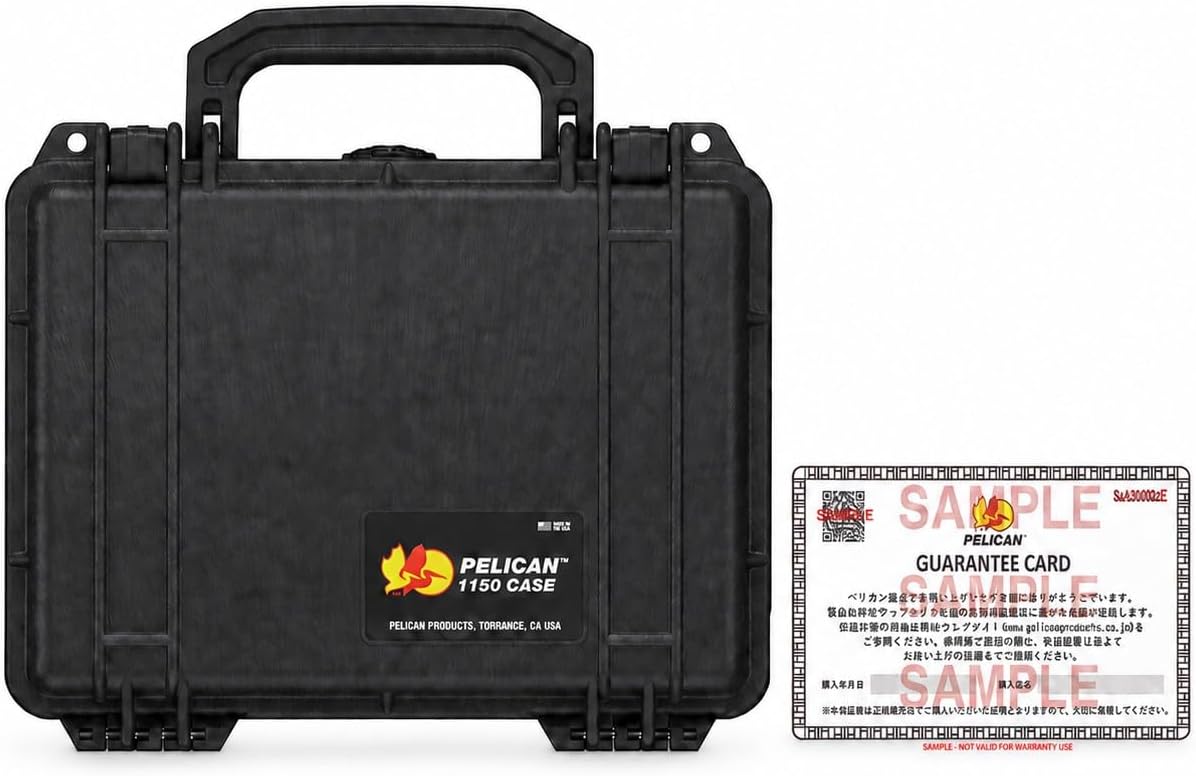
The Pelican 1150 is a compact rigid case supplied with foam for a fitted storage cavity. Its automatic purge valve equalizes air pressure, and the lid uses a watertight silicone O-ring. It also uses over-molded rubber handles and stainless steel hardware.
Check on AmazonIf you click this link and buy, we earn a commission at no additional cost to you.
Keep cleaning, drying, and long-term storage separate from case selection
A case can keep dust and contact away from the binoculars, but it does not decide whether the optic is clean or dry enough to store. Dirt on a strap, moisture around the eyecups, or grit trapped in a soft liner can remain inside the case if the equipment is packed away without checking it. That is an ownership procedure, not a reason to buy a more elaborate shell. Before long storage, make sure the binoculars and the case interior are clean and dry according to the binocular maker’s care guidance.
If the larger question is where the binoculars should live between trips, the separate guide on how to store binoculars covers that decision more directly. Case selection should stay focused on protection, fit, transport, and access rather than becoming a general maintenance article. Keeping those jobs separate also makes it easier to diagnose a bad setup. If moisture, grit, or pressure is the problem, solve that problem specifically instead of assuming a different case material will fix everything.

The Nikon Lens Pen combines a retractable soft brush with a non-liquid cleaning compound on a natural chamois tip. Nikon states that it removes fingerprints, dust, and other debris from lenses. The compact pen-style body keeps the brush retracted when stored in a camera or optics bag.
Check on AmazonIf you click this link and buy, we earn a commission at no additional cost to you.
Use the included case when it already controls the relevant risk
An included case is not automatically a temporary placeholder. If it fits the binoculars correctly, closes without pressure, protects against the kind of contact the optic actually faces, and works with your carry routine, replacing it may add cost and bulk without solving a real problem. Current binocular packages commonly include fitted carrying cases, and current accessory catalogs also sell fitted cases separately for specific model families. That is a reminder to judge the case by fit and job, not by whether it arrived in the original box.
Upgrade only when you can name what the current case fails to do. Maybe it does not control movement in a larger travel bag, maybe attached accessories no longer fit, maybe you need more structure against compression, or maybe you need a verified level of weather protection. Those are clear reasons to change the case architecture. More protective by itself is too vague to justify a heavier and bulkier solution.

The Diamondback HD 8x42 package includes the Vortex GlassPak binocular harness. The GlassPak stores and protects the binoculars while keeping them close for quick deployment, and its tethers attach to the binocular for added security. The package also includes a neck strap, so the original carry system can be evaluated before adding another case.
Check on AmazonIf you click this link and buy, we earn a commission at no additional cost to you.
Final Thoughts: buy only the protection level the binocular actually needs
The right binocular case is the one that controls the most realistic risk without making the optic harder to carry, access, or store. Start with the protection problem, verify internal fit with the binoculars in their real stored configuration, and account for whatever straps or covers stay attached. Treat weather resistance and impact protection as documented properties rather than assumptions based on shell appearance. That sequence keeps the decision tied to the way the binoculars are actually handled.
If the included case already handles the job, keeping it can be the most sensible choice. Move to a pouch, padded case, semi-rigid design, or hard shell only when it fixes a specific shortcoming in protection, fit, transport, access, or weather exposure. Extra structure is useful when it answers a real risk, not when it simply looks more protective. Buy the least bulky case that reliably controls the problem you have identified.

The Pelican 1300 uses a watertight copolymer shell with foam and a purge valve. Its padded foam is designed to protect stored equipment from shocks and bumps during travel. The case is sold for cameras, electronics, and lenses, so the foam cavity is intended for protected equipment storage.
Check on AmazonIf you click this link and buy, we earn a commission at no additional cost to you.
Explore the next case decision
Once you know what level of protection you need, the next step is to narrow the case by travel use, shell structure, compactness, fit, or weather exposure. Each of those questions changes a different part of the decision, so there is little value in solving all of them with the largest case available. Start with the issue that remains unresolved after the basic protection check. That keeps the next comparison focused instead of sending you into another broad accessory search.
| Topic | What you’ll find |
|---|---|
| Choose a binocular travel case | How to match protection and packing structure to travel conditions. |
| Decide when a hard case is justified | When rigid structure is useful and what claims still need verification. |
| Choose a low-bulk binocular pouch | How soft protection fits light carry and quick access needs. |
| Measure for binocular case size | How to compare the stored optic with usable internal case space. |
| Verify waterproof case protection | How to separate shell appearance from documented weather protection. |
Use the branch that matches the unresolved part of your decision instead of moving automatically toward a larger or more rigid case. Travel questions need a packing and transport answer, while fit questions need measurements and usable interior space. Weather questions require documented protection claims, and low-bulk carry questions may point back toward a pouch rather than more structure. Following the specific problem keeps protection proportional to the way the binoculars are really used.

The Pelican 1400 is a rigid case with foam and published interior dimensions of 11.81 by 8.87 by 5.18 inches. Those dimensions provide a concrete reference for travel packing and accessory clearance. Amazon identifies this exact ASIN as the With Foam configuration.
Check on AmazonIf you click this link and buy, we earn a commission at no additional cost to you.
FAQs
📏 How do I know what size binocular case I need?
Measure the binoculars in the configuration that will actually go into the case, including attached covers or hardware, then compare those measurements with the case’s usable internal dimensions. Do not choose from the 8×42 or 10×42 label alone because body dimensions vary between models.
🧱 Is a hard binocular case always better than a soft case?
No. A hard case is useful when compression or rough transport is a realistic risk, but it adds fixed bulk and weight. For controlled everyday carry, a well-fitted padded or soft case may solve the actual problem with less inconvenience.
🌧️ Does a hard shell mean the case is waterproof?
No. Waterproofing depends on the complete case design, including seals, seams, closures, and any documented test or rating. Verify the exact claim for the case instead of assuming a rigid shell keeps water out.
🎒 Can a binocular case be too big?
Yes. Extra room becomes a problem when the binoculars can move freely or when accessories can strike the body inside the case. A larger case is useful only if padding, dividers, or shaped support still control that movement.
🔗 Should the neck strap stay on the binoculars inside the case?
It can, if the case has enough room for the strap without forcing it against eyecups, controls, or the lid. If the strap makes the closure tight or creates pressure points, change the packing method or case fit rather than forcing it closed.
📦 Do I need to replace the case that came with my binoculars?
Not if it fits properly and controls the risks you actually face. Replace it when you can identify a specific gap such as poor accessory fit, inadequate structure for transport, or a need for verified weather protection.
References and Sources
- ZEISS Terra ED binocular field case: Shows a current fitted molded case with a zip closure designed around a specific binocular family.
- Nocs Provisions 32mm binocular pouch: Documents a current soft pouch built around a specific binocular size and a secure closure.
- Negrini binocular travel and storage case: Publishes hard-case construction, padding, closure, and internal dimensions, illustrating why those details matter more than the generic hard-case label.