Triumph HD and Crossfire HD do not form a simple lower and higher rung once fit enters the decision. In the matched 10×42 configuration, Triumph HD gives you more published eye relief and a slightly wider field of view, while Crossfire HD focuses much closer and costs more in the retailer comparison checked for this article. Their published weight is effectively the same, so the useful question is not which name sounds more advanced, but which set of constraints matches how you actually view and carry binoculars. The decision becomes much easier when eye position, close focus, and the included carry setup are checked before price.
Start with carry and eye position, not the price ladder
Choosing between Vortex Triumph HD and Crossfire HD binoculars can look like an easy upgrade question until you put eyeglasses, field of view, and close focus ahead of the price tag. Both are entry-level 10×42 roof-prism binoculars, both land close to 23 ounces on the published spec sheets, and both include a GlassPak carry solution. Yet the fit numbers do not all move in the same direction, which is exactly why a higher price cannot settle the choice by itself. Start with the constraint most likely to make one of them uncomfortable or unusable, then let price break the tie only if both still fit.
If you are still sorting out where these models sit in the broader lineup, the Vortex binoculars guide gives the family context without turning this comparison into a brand roundup. If the bigger question is how Vortex fits among other manufacturers, the binocular brand comparison is the better next stop. Here, the job is narrower: decide whether Triumph HD or Crossfire HD better fits your eye position, viewing distance, and carry routine. That keeps family hierarchy from replacing the fit checks that can actually reject one model.

The Triumph HD uses a 10x42 configuration with HD optics. Amazon lists it as tripod adaptable, waterproof, fogproof, shockproof, and supplied with a GlassPak harness. It directly matches the Triumph side of this comparison where eye position and the included carry setup are the first filters.
Check on AmazonIf you click this link and buy, we earn a commission at no additional cost to you.
Decide what job the 10×42 body has to do
Before comparing labels, define the job in physical terms. A 10×42 binocular used mostly for distant wildlife from open overlooks asks for a different balance than one used around a yard, feeder, trail edge, or mixed-distance observation area. If you frequently shift between near and far subjects, close focus can matter every time you raise the binocular, while a wider field can matter more when the subject is moving and you need to find it quickly. Those two needs point in different directions here, so your usual viewing distance should be settled before you treat either model as the default choice.
Eyeglasses add another constraint because the usable view depends on whether your eyes can sit close enough to the ocular lenses with the eyecups retracted. Published eye relief is not a guarantee of perfect fit for every face or pair of glasses, but it is a useful screening number. Carry also matters because a binocular that spends more time in a case or harness than in your hands still has to be comfortable enough to bring along. A comparison is more useful when it checks these physical conditions first instead of treating every specification as equally important.
| Matched 10×42 check | Triumph HD | Crossfire HD | What it changes |
|---|---|---|---|
| Field of view | 334 ft at 1,000 yd | 325 ft at 1,000 yd | Triumph gives a small published advantage when finding or tracking a subject. |
| Eye relief | 17 mm | 15 mm | Triumph has more published clearance, which can be helpful for eyeglass wearers. |
| Close focus | 15.3 ft | 6 ft | Crossfire is much better suited on paper to nearby subjects. |
| Weight | 22.9 oz | 23 oz | The difference is too small to treat as a meaningful carry advantage by itself. |
| Published body size | 6.1 by 5 in | 6 by 5.2 in | They occupy nearly the same full-size 10×42 carrying envelope. |
| Retailer price example | $99.99 | $149.99 | Price favors Triumph in the retailer check, but this row can change with promotions and stock. |
The table is useful because it turns a vague tier question into several rejection tests. None of these numbers proves which image looks sharper to you, which focus wheel feels better, or which eyecup shape fits your face. It does show that the cheaper option does not lose every published fit specification, and that the more expensive option has one very large practical advantage at short viewing distances. Read the rows as reasons to keep or reject a candidate, not as points in a scorecard.

The Crossfire HD uses a 10x42 configuration with HD optics. Amazon lists it as tripod adaptable, waterproof, fogproof, shockproof, and supplied with a GlassPak harness. It directly matches the section that asks what the 10x42 body must do across near, distant, and carried use.
Check on AmazonIf you click this link and buy, we earn a commission at no additional cost to you.
Compare field of view before comparing tier
For two 10×42 binoculars, the field-of-view difference is small but still directional. Triumph HD is published at 334 feet at 1,000 yards, while Crossfire HD is published at 325 feet at the same distance. That does not make Triumph automatically easier for every user, but it gives you a little more scene around the subject, which can matter when you are trying to acquire a moving bird, follow an animal through brush, or relocate something after lowering the binoculars. If target acquisition is already difficult for you at 10x, even a modest width advantage deserves more attention than the family name.
The mistake is to turn nine feet of published width into a dramatic optical claim. Field of view tells you how much scene is visible, not whether edge sharpness, contrast, glare control, or color rendering is better. Those qualities need comparable testing, and a spec table cannot settle them honestly. The published width is therefore a fit clue, not proof that one binocular has the better image.
Eye relief and eyeglass fit need their own check
Triumph HD lists 17 mm of eye relief and Crossfire HD lists 15 mm. If you wear glasses, that two-millimeter difference is worth treating as a real screening factor because extra clearance may make it easier to see the full field with the eyecups down. It still is not a promise, since frame shape, lens position, facial structure, and eyecup geometry can change what reaches your eye. If possible, keep your glasses on, retract the eyecups, and check whether the field stays circular and complete without pressing the binocular hard into the frames.
Close focus can reverse the preference
Crossfire HD has the decisive published advantage at short distance, with a 6-foot close-focus specification compared with 15.3 feet for Triumph HD. That gap is large enough to matter if you watch feeders from a porch, inspect nearby wildlife, use binoculars in a garden, or frequently switch between close and distant subjects. If everything you care about is comfortably beyond that range, the advantage becomes less important. Close focus is therefore a use-case gate, not a badge of overall quality.

The Diamondback HD keeps the same 10x42 format used in this article. Amazon lists HD optics, tripod adaptability, waterproof and fogproof construction, and an included GlassPak. It provides a same-format reference for separating field-of-view and fit questions from assumptions based only on product-family tier.
Check on AmazonIf you click this link and buy, we earn a commission at no additional cost to you.
How Triumph HD fits the carrying and viewing job
Triumph HD makes the strongest case when your normal subjects are not very close and you value eye-position margin. Its 17 mm eye relief gives eyeglass wearers a more encouraging published starting point, and its 334-foot field is slightly wider than the matched Crossfire HD. The 22.9-ounce weight also means you are not accepting a meaningful weight penalty to get those fit numbers. That combination is most relevant when comfort behind the eyepieces and finding distant subjects matter more than focusing on something only a few steps away.
The included package matters too. Vortex lists a GlassPak binocular harness and case, a comfort neck strap, tethered objective covers, eyepiece covers, and a lens cloth with Triumph HD. That means the basic carry system is part of the package rather than an immediate add-on, so the purchase price does not tell the whole ownership story unless you compare what is actually included. If the supplied harness fits your routine, you may not need to budget for a separate carrying solution right away.
- Triumph HD is the cleaner fit when longer eye relief is a priority.
- It makes more sense when subjects are normally well beyond its 15.3-foot close-focus limit.
- Its slightly wider published field is useful when target acquisition matters more than near-focus flexibility.
- Its included harness and case reduce the need to solve carrying immediately after purchase.
None of that proves superior image quality. It simply shows where Triumph HD has documented advantages that can change usability before optical preference even enters the discussion. If those advantages line up with your actual constraints, paying more for a different family needs a specific reason rather than an assumption. The next question is whether Crossfire HD solves a problem that Triumph HD cannot solve for you.

The Vortex GlassPak is a binocular harness with adjustable straps and extra storage. Amazon lists two mesh side slip pockets, one rear zippered pocket, nylon construction, and the tan GlassPak configuration for this ASIN. It directly supports the carry-system check in a section that discusses whether the included harness already fits the reader’s routine.
Check on AmazonIf you click this link and buy, we earn a commission at no additional cost to you.
How Crossfire HD changes the handling envelope
Crossfire HD changes the decision most clearly through close focus. A 6-foot minimum focus distance gives it much more flexibility for nearby observation than Triumph HD can provide on paper. That can be a major practical difference in a backyard, wooded trail, garden, or any setting where the interesting subject may appear only a few steps away. If near subjects are common rather than occasional, this one specification can outweigh a small field-of-view advantage elsewhere.
Its published weight, at 23 ounces, is essentially the same as Triumph HD, so the extra price is not buying a lighter carry. The body dimensions are also very close, which means neither should be treated as a compact alternative to the other. Crossfire HD therefore earns its place here through a different fit envelope, not through a simple size or weight upgrade. If your main complaint is carrying bulk, moving between these two models is unlikely to solve it.
Vortex lists a GlassPak binocular harness with Crossfire HD along with a comfort neck strap, tethered objective covers, a rainguard eyepiece cover, and a lens cloth. The manufacturer page does not present that package as identical to the Triumph package, so compare the exact included carrying pieces rather than assuming the boxes are interchangeable. Package details can affect whether you need another case or harness immediately. Check the selling configuration you are actually buying, especially when a retailer bundles or omits accessories differently.

This Small GlassPak Sport harness is listed for most 42 mm and smaller binoculars. Amazon’s compatibility table includes Crossfire HD 8x42 and 10x42 models, while the listing also specifies easy-adjust straps, quick-release buckles, and extra pockets. It is a direct carry-system match for the section discussing the Crossfire HD handling envelope.
Check on AmazonIf you click this link and buy, we earn a commission at no additional cost to you.
Separate the optical claims from the documented fit facts
Both models are marketed with an HD optical system and fully multi-coated lenses, but those labels are not enough to rank visible performance. Manufacturer descriptions can tell you what design features are claimed, while independent side-by-side testing would be needed to compare resolution, contrast, chromatic aberration, glare behavior, edge performance, or low-light detail under the same conditions. Without that matched test record, the defensible conclusion stops at the specification boundary. A family name or feature label should not be promoted into an image-quality verdict that the evidence does not support.
This matters because a buyer can easily overread the family name. Crossfire HD may sound like the obvious step up from Triumph HD, but published fit specifications already show a mixed result rather than a clean sweep. Treat the documented numbers as facts and any untested image-quality hierarchy as unresolved unless you have comparable evidence in front of you. That distinction keeps a commercial comparison useful without pretending a spec sheet can replace an optical test.
| Claim type | What the published record can support | What still needs matched testing |
|---|---|---|
| Field of view | Triumph HD is published wider in the matched 10×42 configuration. | How usable the outer field looks to a specific observer. |
| Eye relief | Triumph HD lists more eye relief. | Whether a particular pair of glasses sees the full field comfortably. |
| Close focus | Crossfire HD lists a much shorter minimum focus distance. | Focus feel, speed, and precision in actual use. |
| Optical quality | Both product pages describe HD optical systems and multi-coated lenses. | Resolution, contrast, glare, color, low-light detail, and edge behavior under matched conditions. |
The practical takeaway is simple: do not pay for an optical conclusion that the available evidence does not establish. Use the specifications to screen fit first, then treat image character as something to verify through a credible matched test or, ideally, your own viewing check. That keeps the recommendation conditional instead of turning marketing order into a performance ranking. Once that boundary is clear, the reject conditions become easier to apply without guessing.

These ZEISS pre-moistened wipes come in a 200-count pack for single-use lens cleaning. Amazon states that they are suitable for eyeglasses and safe for prescription lenses and anti-reflective coatings. They are relevant when comparing optical impressions because clean eyeglasses and lens surfaces reduce an avoidable source of viewing interference.
Check on AmazonIf you click this link and buy, we earn a commission at no additional cost to you.
Reject Triumph HD when its close-focus limit gets in the way
Triumph HD should fall out of the running if you regularly need to focus inside roughly 15 feet. A feeder close to a window, a butterfly in a garden, or wildlife appearing near the edge of a trail can all expose that limitation quickly. In those situations, a slightly wider field does not compensate for being unable to bring the subject into focus at all. The rejection is based on viewing distance, not on Crossfire HD carrying a higher position in the lineup.
It can also be the wrong choice if you are buying specifically to reduce the size or weight of a full-size 10×42 setup. At 22.9 ounces and a little over six inches tall, it is still a normal full-size binocular rather than a pocketable carry solution. The included harness can distribute that load better, but it does not make the body smaller. If compactness is the real requirement, comparing two similarly sized 10×42 bodies is solving the wrong problem.
- Skip Triumph HD if frequent subjects are inside its published close-focus distance.
- Skip it if your real goal is a substantially lighter or smaller binocular.
- Do not choose it solely because the lower price looks efficient if the fit does not work with your viewing distance.
This is the rejection test the price-first approach misses. A lower purchase price has no value if the binocular cannot focus where you need it or if the full-size body solves the wrong carry problem. Fit remains the gate. Once Triumph HD fails that gate, its lower price should not pull it back into the comparison.

The Triumph HD 10x28 uses 10x magnification with 28 mm objective lenses. Amazon lists it at 12.8 ounces and 5 by 4.8 inches, with waterproof construction and tripod-mount capability. It gives this section a smaller same-family reference when a full-size 10x42 body is the carry problem rather than the solution.
Check on AmazonIf you click this link and buy, we earn a commission at no additional cost to you.
Reject Crossfire HD when the extra cost solves no real constraint
Crossfire HD should be rejected when its close-focus advantage is irrelevant and the shorter published eye relief creates more risk for your eyeglass fit. If your subjects are normally far away, you do not need to focus at six feet just because the specification is impressive. In that case, the feature can become something you are paying for without using. A specification only earns value when it changes the way you can observe.
The same logic applies to the price gap. A retailer check for the matched 10×42 models showed Crossfire HD above Triumph HD, while weight and overall dimensions stayed almost identical. If your viewing pattern does not use the shorter close focus, the extra spend needs another verified benefit before it becomes rational. Otherwise, you are paying more without solving a constraint that the cheaper model leaves open.
- Skip Crossfire HD if eyeglass clearance is already marginal and the published 15 mm eye relief concerns you.
- Skip it if near-focus viewing is rare and you cannot identify another documented benefit you need.
- Do not treat the higher price as evidence of a better image without comparable testing.
The point is not that Crossfire HD is overpriced in general. It is that price should correspond to a constraint you actually solve. If the main differentiator you can document is not relevant to your use, the upgrade logic has not been proven. That is the moment to stop comparing tiers and return to your own viewing conditions.
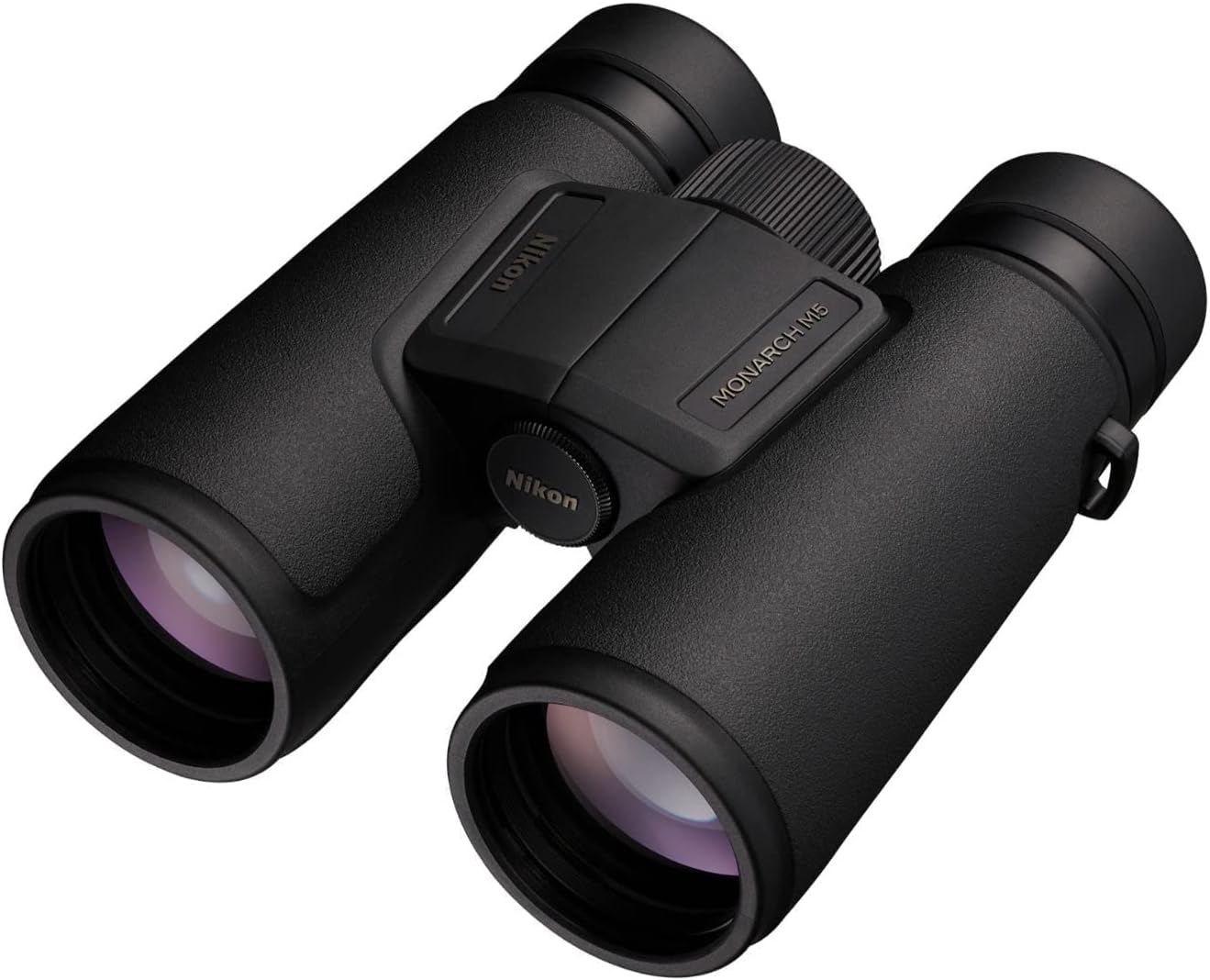
The Nikon Monarch M5 keeps the 10x42 format while listing 18.4 mm of eye relief. Amazon also lists ED glass elements, fully multi-coated optics, and nitrogen-filled waterproof and fogproof construction. It provides a same-format alternative for readers who need to test more eyeglass clearance before treating price as the deciding factor.
Check on AmazonIf you click this link and buy, we earn a commission at no additional cost to you.
Only then decide whether the price gap matters
Once fit has removed the wrong option, price becomes useful instead of distracting. The retailer comparison checked for this article listed Triumph HD at $99.99 and Crossfire HD at $149.99, while the Vortex pages showed higher manufacturer suggested retail prices for both. Retail pricing can move, so the important point is not to preserve those numbers forever, but to compare the live gap only after you know what the extra money changes for you. A temporary sale should not reverse a rejection caused by eye position, close focus, size, or another physical constraint.
If the six-foot close focus solves a recurring problem, Crossfire HD can justify the premium even though it gives up some published eye relief and a small amount of field width. If longer eye relief and the slightly wider field fit your use better, Triumph HD can remain the stronger fit even at the lower price. Choosing between Triumph HD and Crossfire HD is therefore a constraint question before it is a budget question. The live price gap matters only after both models have survived the fit test.
| Decision | Condition that supports it |
|---|---|
| Choose Triumph HD | You want the longer published eye relief, slightly wider field, and do not need to focus inside 15.3 feet. |
| Choose Crossfire HD | You frequently view nearby subjects and the 6-foot close focus matters more than the two-millimeter eye-relief difference. |
| Skip both | You need a substantially lighter body, a different magnification, or a fit requirement that neither 10×42 configuration resolves. |
This decision card is intentionally conditional. It does not claim one model wins for everyone, and it does not use price as a proxy for optical quality. The right purchase is the one that passes the fit test you will encounter most often. If neither one passes, skipping both is a complete buying decision rather than a failure to choose.

The Nikon PROSTAFF P3 uses a 10x42 configuration with 15.7 mm of eye relief. Amazon lists a 367-foot field of view at 1,000 yards plus waterproof and fogproof construction. It gives the price section another live 10x42 specification set to compare only after the reader has identified the fit constraints that matter.
Check on AmazonIf you click this link and buy, we earn a commission at no additional cost to you.
Final Thoughts: Let fit decide before price
Triumph HD and Crossfire HD are close enough in size, weight, and basic configuration that the useful differences are easy to miss if you start with brand hierarchy. Triumph HD leads on published eye relief and field width, while Crossfire HD has the much shorter close-focus distance. Those differences point to different users rather than a universal winner. The better starting point is the model whose documented fit advantages match the viewing situation you face most often.
Verify eyeglass fit if relevant, check whether your normal subjects ever fall inside Triumph HD’s close-focus limit, and make sure the full-size 10×42 body is acceptable to carry. Only after those checks should the live price gap influence the decision. Do not pay more because Crossfire HD sounds like the higher step, and do not choose Triumph HD merely because it is cheaper. If neither set of constraints matches your use, walking away from both is a better decision than forcing a winner.

Vortex lists this field cleaning kit for use with binoculars, monoculars, spotting scopes, riflescopes, and red-dot sights. The listing is specifically a lens-cleaning accessory rather than a binocular configuration change. It fits the final section as a practical maintenance item after the reader has already settled the more important questions of viewing fit and carry.
Check on AmazonIf you click this link and buy, we earn a commission at no additional cost to you.
FAQs
👓 Which model is the safer starting point for eyeglass wearers?
Triumph HD has the longer published eye relief at 17 mm versus 15 mm for Crossfire HD. That makes it the more promising starting point on paper, but frame shape and facial fit can still change whether you see the full field.
🌿 Which one is better for nearby wildlife or feeder viewing?
Crossfire HD has the stronger documented fit for nearby subjects because its published close focus is 6 feet rather than 15.3 feet. If your subjects are normally farther away, that advantage may not matter enough to justify paying more.
🔭 Does Crossfire HD have a wider field of view?
No, not in the matched 10×42 comparison. Triumph HD is published at 334 feet at 1,000 yards, while Crossfire HD is published at 325 feet.
🎒 Is Crossfire HD lighter to carry?
No meaningful weight advantage appears in the published specifications. Triumph HD is listed at 22.9 ounces and Crossfire HD at 23 ounces, so carry comfort should be judged more by harness fit and body handling than by that tiny difference.
💵 Is Crossfire HD automatically worth more because it costs more?
No. The extra cost only makes sense when its documented advantages, especially close focus, solve a problem you actually have. Price does not prove better visible optical performance.
References and Sources
- Vortex Triumph HD 10×42 specifications: Verifies eye relief, field of view, close focus, dimensions, weight, included carry items, and manufacturer feature descriptions.
- Vortex Crossfire HD 10×42 specifications: Verifies the matched Crossfire HD specifications, package contents, and manufacturer feature descriptions.
- B&H matched 10×42 comparison: Supports the retailer price example and like-for-like specification cross-check used in the article.