Binocular eyecup adjustment is about placing your eyes at a usable distance behind the eyepieces, not changing focus. A good setting lets you see a complete, stable field without black rings, kidney-shaped shadows, or a clipped edge appearing whenever your head moves slightly. Fully extended and fully retracted positions are useful starting points, but twist-up designs with intermediate stops may fit some faces better between those extremes. If no eyecup position produces a stable full field, the next thing to check is interpupillary distance and then whether the binocular provides enough usable eye relief for your face and eyewear.
Eyecups position your eyes, they do not change focus
Start with the viewing problem rather than the control. If you raise the binoculars and the image is sharp in the center but part of the field disappears behind black arcs, the first job is to place your eyes more consistently behind the eyepieces. Eyecups help control that eye position by setting how close your face can come to the ocular lenses. They do not sharpen the target, compensate for differences between your eyes, or replace the rest of a proper binocular setup.
That distinction matters because several adjustments can create symptoms that look similar. A poor eyecup setting can make the field unstable, while incorrect barrel spacing can leave the two views poorly merged or vignetted at the edges. If you are working through the controls in order, the broader binocular use guide separates eyecup height from IPD, diopter, and center focus. For this adjustment, judge success by whether your eyes reach a comfortable position where the full field stays visible with normal, relaxed viewing.
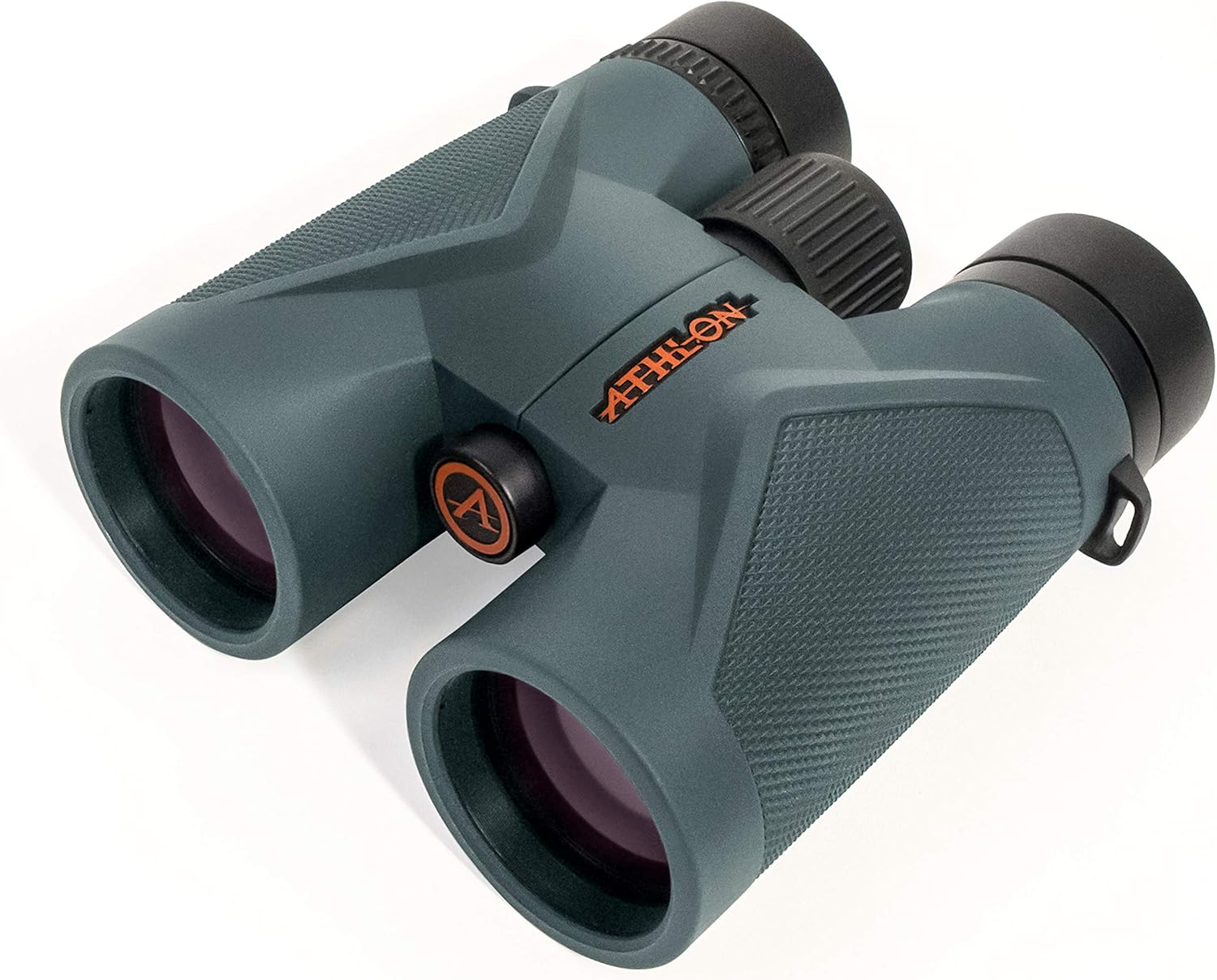
This 8x42 roof-prism binocular provides 17.2 mm of eye relief and a 5.25 mm exit pupil. Athlon uses improved twist-up eyecups to help set eye position behind the oculars. The waterproof magnesium-body design also uses fully multi-coated optics for outdoor viewing.
Check on AmazonIf you click this link and buy, we earn a commission at no additional cost to you.
Identify the eyecup type before you start adjusting
Most current binoculars use either twist-up eyecups or flexible rubber eyecups, and the adjustment method is different. A twist-up eyecup rotates to change height and may have click stops, friction positions, or a limited number of fixed detents. A foldable rubber eyecup normally changes between an upright position and a folded position, so it offers much less fine control. Before forcing anything, check the exact model instructions because the direction of rotation, number of stops, and intended positions can differ.
The practical question is not which design sounds more sophisticated. It is whether the design gives you a repeatable eye position that matches your face, glasses, and normal way of holding the binoculars. Twist-up designs can make intermediate adjustment easier, while simple fold-down eyecups may still work perfectly when one of their two positions matches the user. Use the control as designed, and stop if an eyecup binds, tilts, or requires unusual force rather than treating resistance as another adjustment range.
- Twist-up eyecups: rotate through the supported height range and use the available stops or stable positions.
- Fold-down rubber eyecups: use the raised or folded position intended by the manufacturer.
- Unfamiliar or asymmetric controls: verify the model instructions before trying to force both sides into matching movement.
Once you know what the eyecup can actually do, you can start from a sensible baseline instead of guessing. That makes the next step a fit test rather than a mechanical experiment.

This 8x40 Porro binocular uses rubber eyecups that stay up for viewing without glasses and fold down for eyeglass use. Celestron specifies 12 mm of eye relief and a 56 to 72 mm interpupillary range. Its multi-coated optics and water-resistant rubber-armored chassis suit general wildlife viewing.
Check on AmazonIf you click this link and buy, we earn a commission at no additional cost to you.
Start from the normal glasses or no-glasses position
For many designs, fully extended eyecups are the normal starting position without glasses, while fully retracted or folded eyecups are the normal starting position with glasses. That guidance is useful because glasses already hold the eyes farther from the ocular lenses, so extra eyecup extension can push the eyes too far back. Without glasses, extension often helps keep the eyes from moving too close. Treat these positions as the beginning of the fit check, not proof that the view is already correct.
Keep your normal eyewear exactly as you would use it in the field. If you sometimes wear glasses and sometimes remove them, expect to need different eyecup settings rather than trying to preserve one permanent position. Readers who consistently struggle to see the entire field with glasses should separate adjustment from the larger question of using binoculars with glasses, because the binocular’s available eye relief may become the limiting factor. For now, choose the normal starting position, look at a detailed target at a comfortable distance, and check whether the field appears as one clean circular view.

This 8x42 roof-prism binocular provides 19.5 mm of eye relief. Nikon pairs long eye relief with turn-and-slide eyecups for easy adjustment, including for users who wear glasses. The waterproof and fogproof body uses ED glass and weighs 22.2 ounces.
Check on AmazonIf you click this link and buy, we earn a commission at no additional cost to you.
Fine-tune until the field is complete and stable
Do not fine-tune by chasing sharpness, because focus can stay sharp while eye position is still wrong. Hold the binoculars the way you normally would, center your pupils behind the eyepieces, and make a small change in eyecup height. Then relax your grip and make a few small, natural head movements instead of freezing in one perfect position. A useful setting keeps the complete field visible without demanding that you hold your face with millimeter-level precision.
With twist-up eyecups, move one supported position at a time and compare what changes at the edge of the view. If the full field appears only when you press hard into the eyecups, the height may still be wrong, and excessive pressure is not a good substitute for fit. If a slightly lower or higher stop produces a field that remains visible as you scan, that repeatability matters more than whether the setting looks symmetrical with somebody else’s binoculars. The goal is a stable viewing window that works with your facial geometry and normal posture.

This 8x42 roof binocular has twist-up eyecups with multiple stops for repeatable eye positioning. Celestron specifies 17.5 mm of eye relief and a 56 to 74 mm interpupillary range. The waterproof, nitrogen-filled body uses fully multi-coated optics and phase-coated BaK-4 prisms.
Check on AmazonIf you click this link and buy, we earn a commission at no additional cost to you.
Recognize the signs that your eyes are too close or too far away
Eyecup problems are easier to correct when you treat the pattern in the view as feedback. If your eyes sit too close, dark kidney-shaped shadows or sudden blackouts can appear as your pupils move off the best optical position. If your eyes sit too far back, the visible field can feel narrowed or clipped, almost as if you are looking through a smaller circular opening. Either symptom can become more obvious when you scan because small head movements expose a setting that seemed acceptable while you were perfectly still.
Use the table as a directional check, not as a diagnosis of every possible viewing problem. Similar dark areas can also appear when IPD is wrong, especially if the two optical axes do not line up with your pupils. A pattern that changes clearly when eyecup height changes points toward eye position, while a persistent two-circle or poorly merged view points toward barrel spacing. Make one adjustment at a time so you know which control actually improved the image.
| What you see | What to try next |
|---|---|
| Kidney-shaped shadows or blackouts with small head movement | Increase eye distance slightly by extending the eyecups one supported step. |
| Field looks narrowed or clipped around the outside | Reduce eye distance slightly by retracting the eyecups one supported step. |
| Two circles do not merge cleanly | Check interpupillary distance before continuing to change eyecup height. |
| View is stable only with hard pressure against the eyecups | Try a nearby eyecup position and use lighter, repeatable contact. |
A symptom table is most useful when it helps you choose the next controlled test. After each small change, return to normal viewing posture and confirm that the improvement survives ordinary scanning.
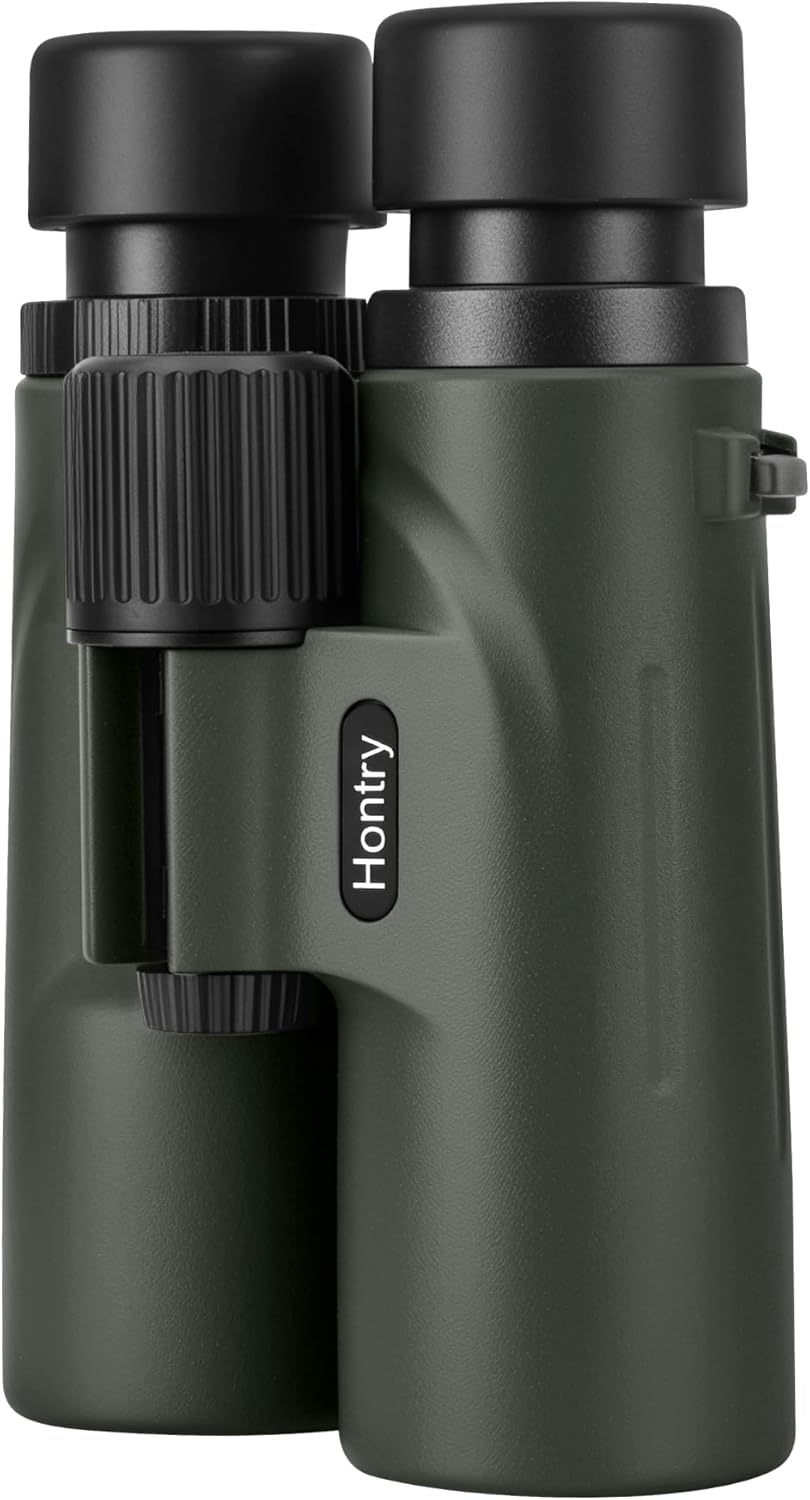
This 8x42 roof binocular uses 15 mm soft rubber twist-up eyecups for adjustable eye positioning. Hontry lists IPX6 water resistance and nitrogen filling for outdoor use. Fully multi-coated lenses and phase-coated BAK-4 prisms complete the optical system.
Check on AmazonIf you click this link and buy, we earn a commission at no additional cost to you.
Coordinate eyecup height with interpupillary distance
Eyecup height and interpupillary distance solve different alignment problems, but they meet at the same place: your pupils must line up with the binocular’s exit pupils. Set the eyecups close to a workable height first, then adjust the hinge until the left and right fields merge into one circle. If you change IPD significantly, recheck the eyecups because the way the eyepieces meet your brow and eye sockets can also change. This is why adjusting one control once and declaring the setup finished can leave an otherwise good binocular feeling unnecessarily fussy.
A clean test is to look at a distant, evenly detailed scene and keep your eyes relaxed. If you see two separate circles or a central overlap that never feels natural, use the hinge rather than trying to cure the problem by moving both eyecups up and down. The step-by-step method in the interpupillary distance adjustment guide covers that control separately. Once the fields merge, return to eyecup height and confirm that the outer edge remains complete without blackouts.

This 10x42 roof binocular has a 56 to 72 mm interpupillary adjustment range. Nikon specifies 15.7 mm of eye relief and turn-and-slide rubber eyecups with multi-click positioning. The body is waterproof, nitrogen-filled, and rubber armored for field use.
Check on AmazonIf you click this link and buy, we earn a commission at no additional cost to you.
Use an intermediate click stop when it gives you the better view
The extremes are convenient references, but they are not automatically the best fit for every face. Twist-up eyecups often provide intermediate stops precisely because users can need more or less eye distance than the endpoints provide. Brow shape, eye socket depth, glasses frame thickness, and how firmly you hold the binoculars all affect the physical relationship between your eyes and the eyepieces. If a middle stop gives you the full field with less blackout and more relaxed contact, there is no reason to reject it simply because it is not fully up or fully down.
Repeatability is the important part. Set both eyecups to the same supported position unless your exact binocular design or documented fitting need calls for something different, then raise the binoculars several times and see whether the field appears cleanly without searching for the sweet spot. A setting that works only after several seconds of face repositioning is less useful than one that lands correctly as soon as the binoculars reach your eyes. When you find a stable position, remember the stop count or another harmless visual reference so you can restore it after cleaning or shared use.

This 8x42 roof binocular uses turn-and-slide rubber eyecups with multi-click positioning. Nikon specifies 20.2 mm of eye relief for this model. Its 56 to 72 mm interpupillary adjustment range lets the hinge spacing be matched independently from eyecup height.
Check on AmazonIf you click this link and buy, we earn a commission at no additional cost to you.
Know when no eyecup position can fix the view
There is a point where more adjustment becomes the wrong solution. If every supported eyecup position still clips the field with your glasses, the binocular may not provide enough usable eye relief for the distance created by your lenses and frames. If the image will not merge into one circle, IPD should be checked rather than continuing to change eyecup height. If one side remains persistently dark, displaced, or uncomfortable after basic setup, do not assume the eyecup alone is responsible.
Separate a fit limitation from a damaged or misaligned instrument. Eyecups are an owner-level control, but they are not a way to correct internal optical alignment, a loose prism, a broken hinge, water ingress, or severe double image. Do not disassemble the binoculars or attempt internal collimation to chase a viewing problem that survives normal setup. When the view remains abnormal after eyecup height, IPD, focus, and diopter have been set according to the model instructions, the sensible next step is the manufacturer’s support guidance or qualified service.

Celestron specifies 13 mm of eye relief for this 7x50 Porro binocular. The model has a 56 to 72 mm interpupillary adjustment range and a 7.1 mm exit pupil. Its 50 mm objectives and multi-coated optics support wide-field, low-light observing.
Check on AmazonIf you click this link and buy, we earn a commission at no additional cost to you.
Final thoughts: use eyecups to place your pupils at the exit pupil
A good eyecup setting should make the binoculars easier to use, not give you one more number to obsess over. Start with the normal glasses or no-glasses position, then fine-tune only if the field is clipped, unstable, or prone to blackouts. Judge the result while holding and scanning normally rather than while forcing your head into one exact pose. The best setting is the supported position that gives you the fullest, most stable field with comfortable contact.
If that position does not exist, stop blaming the eyecups. Recheck IPD, confirm your focus and diopter setup, and consider whether available eye relief is the real constraint for your face or glasses. Persistent double image, obvious internal misalignment, damage, or water ingress belongs outside routine eyecup adjustment. That boundary keeps a simple fit control useful without asking it to solve a problem it was never designed to solve.

This 8x42 roof binocular uses twist-up eyecups and provides 18 mm of eye relief. Its interpupillary adjustment range is 56 to 74 mm, allowing barrel spacing to be set separately from eyecup height. The nitrogen-purged body is waterproof and fogproof, with multi-coated optics and BAK-4 prisms.
Check on AmazonIf you click this link and buy, we earn a commission at no additional cost to you.
Frequently asked questions
Eyecup questions often sound simple because the control itself is simple, but the correct answer depends on eye position and the rest of the binocular setup. The most useful checks are whether the full field is visible, whether it remains stable during small head movements, and whether the two barrels merge into one view. Glasses can change the required eye distance, while IPD can create a different kind of vignetting that eyecup movement will not cure. These questions focus on the adjustment choices that can be made without crossing into internal repair.
Use the answers as short troubleshooting steps rather than fixed rules for every model. Exact stop positions, twist direction, and available adjustment range are model-specific, so the manufacturer’s instructions remain the final reference for the hardware itself. If a setting works comfortably and keeps the full field visible, it does not need to match another user’s preferred position. If none of the supported positions works, move to the next relevant setup variable instead of forcing the eyecups.
👓 Should binocular eyecups always be fully down with glasses?
Fully retracted is the normal starting point on many models, but it is not a universal proof of correct fit. If your twist-up eyecups offer intermediate positions and a slightly higher setting keeps the full field visible without blackouts, use the supported position that fits your glasses and face.
🔭 Should I fully extend eyecups when I do not wear glasses?
Full extension is a common starting position for users without glasses. If that position creates kidney-shaped shadows or makes the view unstable, try one supported step lower and judge the result by field completeness and stability.
⚫ Why do I see black areas when I move my eyes slightly?
Your pupils may be sitting too close, too far away, or off-center relative to the exit pupils. Change eyecup height in small steps, then recheck IPD if the dark areas persist or the two views do not merge cleanly.
📏 Can eyecup adjustment fix a narrow field of view with glasses?
It can help if your eyes are simply being held too far back by the current eyecup position. If the field remains clipped with the eyecups fully retracted, usable eye relief may be the limiting factor rather than adjustment.
🌀 Why does one middle click stop work better than fully up or down?
An intermediate stop can place your eyes at a better distance for your facial geometry, glasses, and normal grip. If that position is supported by the eyecup mechanism and gives a stable full field, it is a valid setting.
👁️ Do eyecups change binocular focus?
No. Eyecups change the physical position of your eyes relative to the eyepieces, while center focus and diopter controls handle image focus.
References and sources
- Fujifilm binocular instructions: Supports eyecup positioning, twist-up click adjustment, IPD setup, and the relationship between pupil alignment and blackout.
- Nikon guide to using CF binoculars: Supports the normal fully extended and fully retracted starting positions and the distinction between eyecup adjustment and IPD.
- Cornell Lab binocular adjustment guidance: Supports practical identification of blacked-out areas and the need to check both eyecups and barrel spacing.