Set up binoculars in the right order: fit, focus, diopter and eyecups
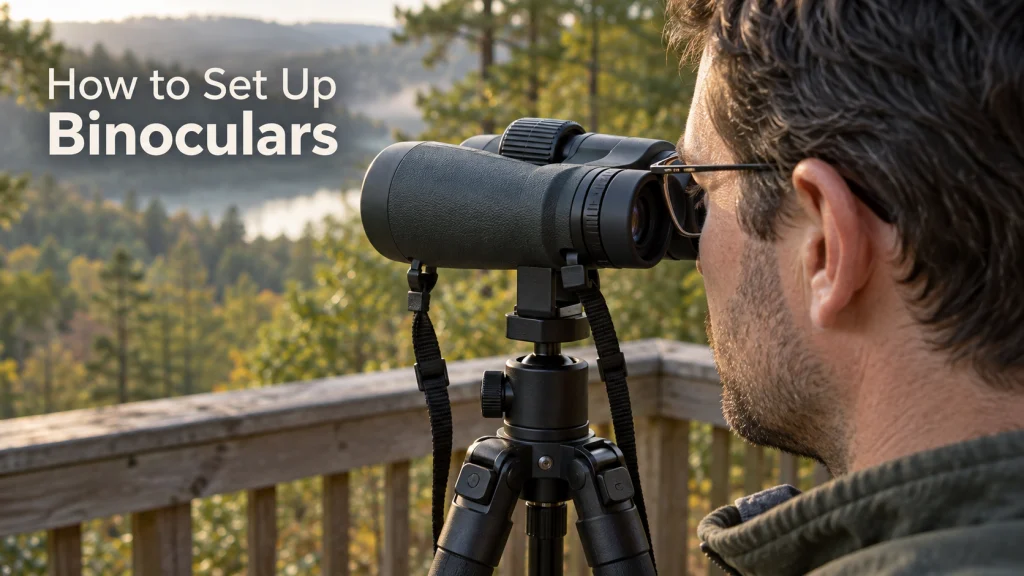
Binocular Setup

Good binocular setup starts with matching the binocular to your eyes before you chase sharpness with the focus wheel. Eyecup position, interpupillary distance, center focus, and diopter each solve a different problem, and the exact control layout can vary by model. Once the personal settings are established, normal viewing should require far less adjustment. The
Where the Vortex upgrade ladder starts to matter

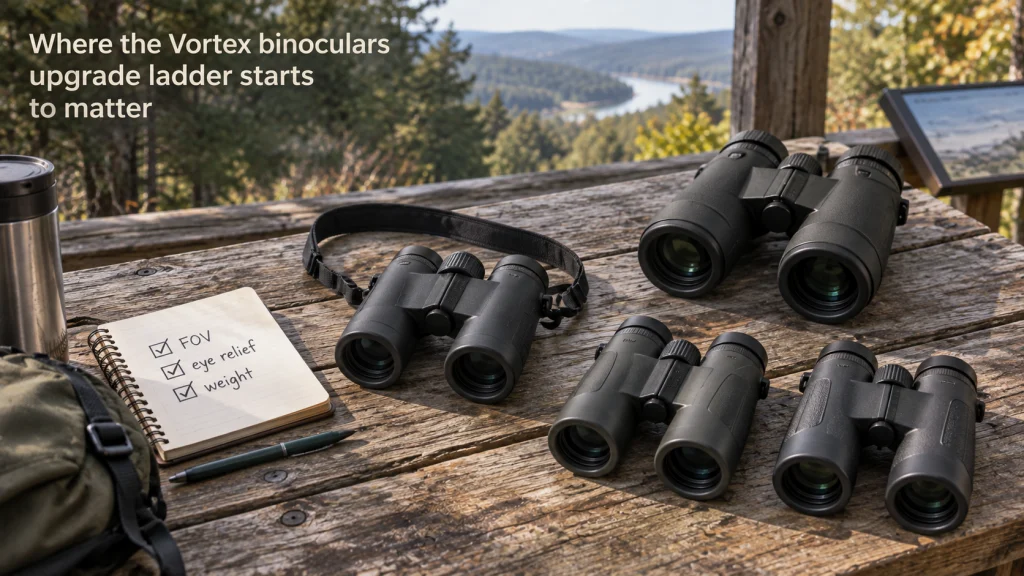
Vortex Binoculars

Vortex binoculars make more sense when the lineup is treated as a set of different stopping points, not a straight quality ladder. The useful question is whether moving to another family solves a remaining constraint such as close focus, eye relief, field of view, weight, configuration choice, or a performance difference that has actually been

Set the budget ceiling first, then protect the binocular essentials

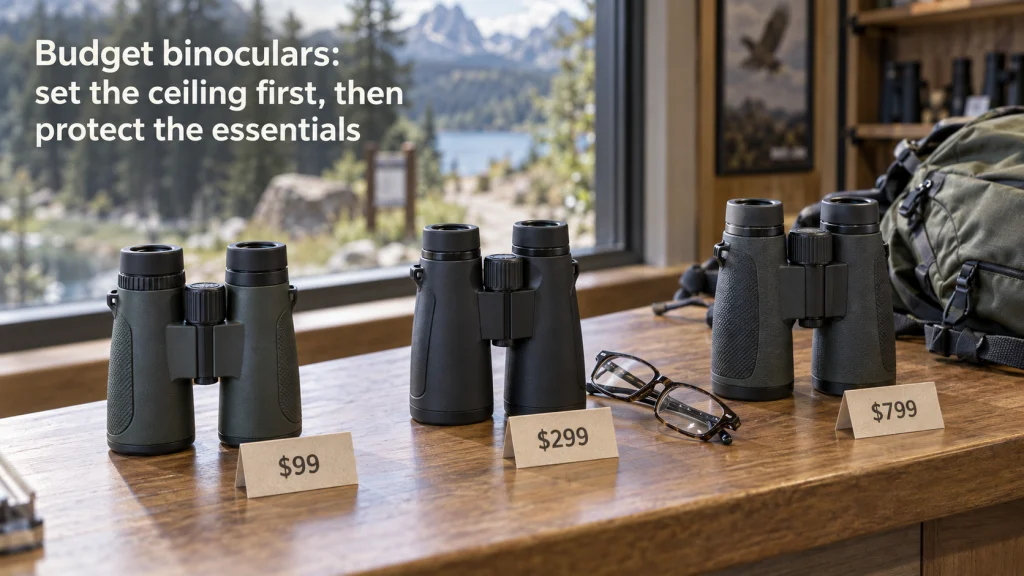
Budget Binoculars

A useful budget prevents overspending without forcing you into binoculars that fail the viewing job. The right ceiling depends on what you need to see, carrying time, glasses, weather, and nonnegotiable fit requirements. A sale can move a model into or out of a spending band, so price should be a filter rather than a

Birding binoculars: why fast acquisition and a wide usable field matter more than a bigger number

Birding Binoculars

Birding binoculars work best when they help you acquire a bird quickly, bring it into focus without fuss, and keep it visible as it moves. Magnification matters, but field of view, close focus, focus control, eye relief, weight, and fit can change the experience just as much. The right configuration depends on where you watch,

Compact binoculars that stay portable without shrinking past usability

Compact Binoculars

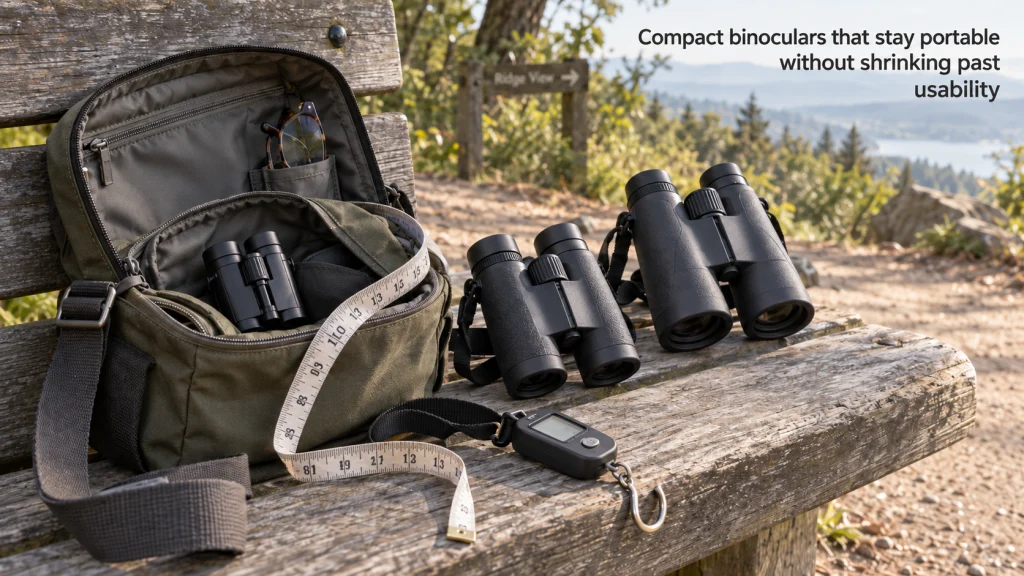
Compact binoculars are useful only when the smaller body solves a real carrying problem without making viewing difficult. Compact is not a universal size standard, so objective diameter alone cannot tell you whether a model is truly portable for your bag, pocket, hands, or viewing conditions. A better choice comes from checking packed dimensions, weight,

8×42 decoded: what the numbers on binoculars actually tell you

What Do The Numbers On Binoculars Mean

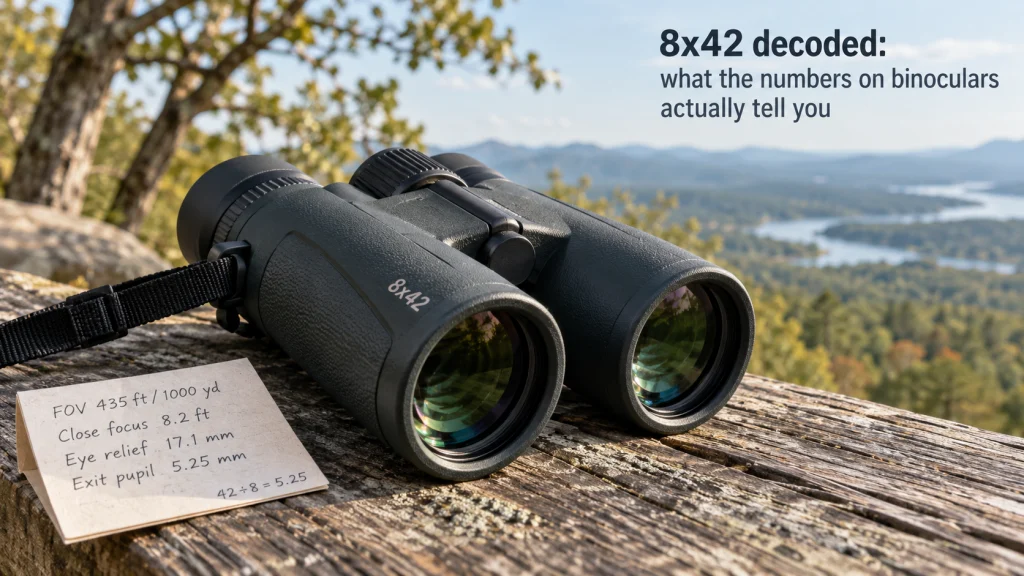
The numbers printed on binoculars tell you less than a full specification sheet does. In 8×42, the first number is magnification and the second is the objective lens diameter in millimeters, while field of view, close focus, eye relief, and physical fit still need separate checks. Exit pupil is one useful value you can calculate

The binocular rabbit hole starts when every spec looks like an upgrade

Binocular Rabbit Hole

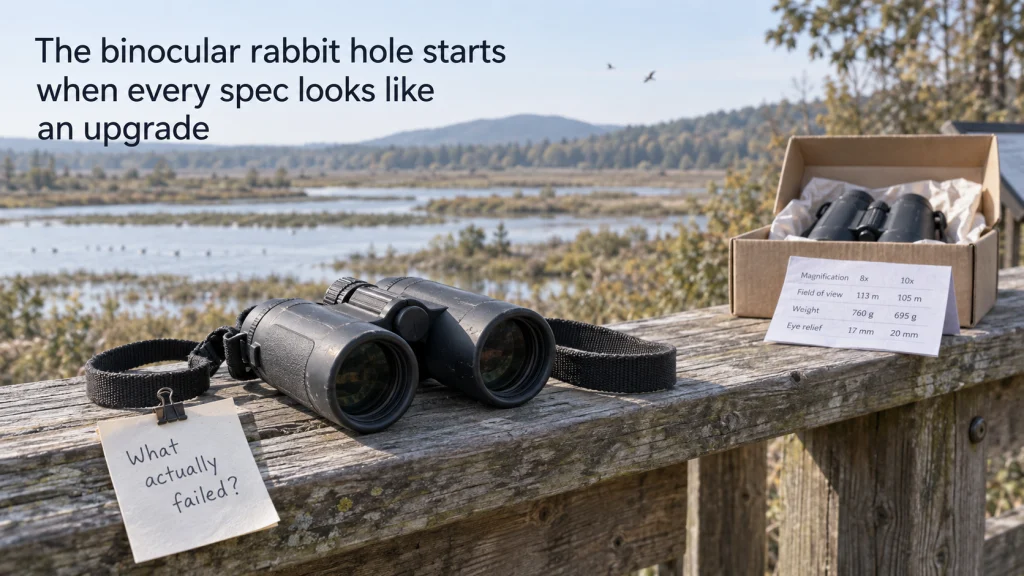
A binocular rabbit hole often starts when a pair that was doing its job gets compared against a specification that sounds better. The binocular has not changed, but the comparison can make its normal trade-offs feel like new defects. Curiosity is useful, but it becomes a poor reason to buy when there is no viewing

I coded binocular buyer complaints instead of reading another star rating

Binocular Buyer Complaints

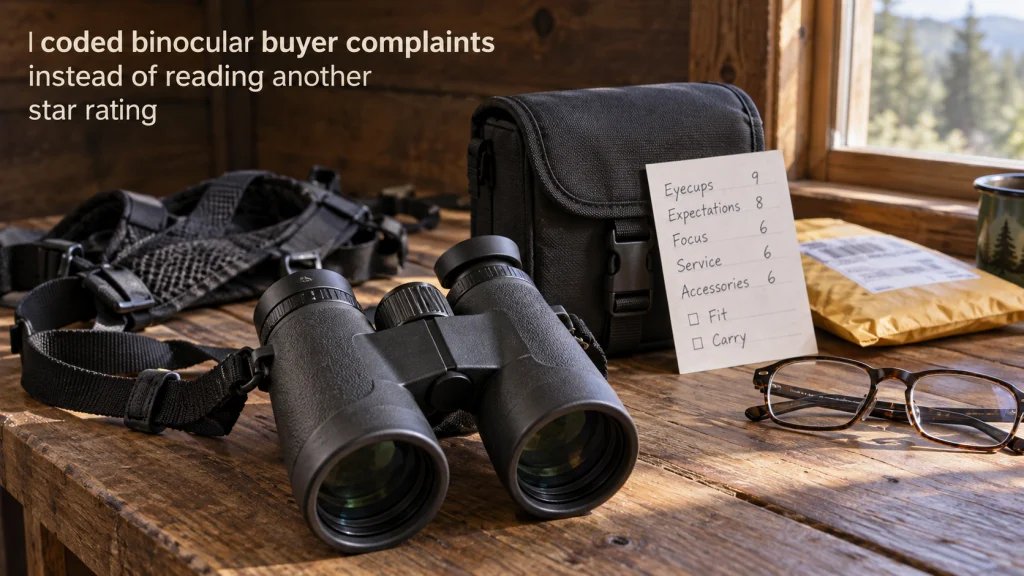
I coded a frozen set of public binocular ownership complaints instead of treating star ratings as a shortcut to ownership quality. The method separates fit, eyecup behavior, focus, carrying, stability, service, accessories, and expectation mismatch before any category is ranked. The counts are useful for identifying what a buyer should verify, not for estimating defect

I counted what major binocular brands actually offer U.S. buyers

Binocular Brand Lineup

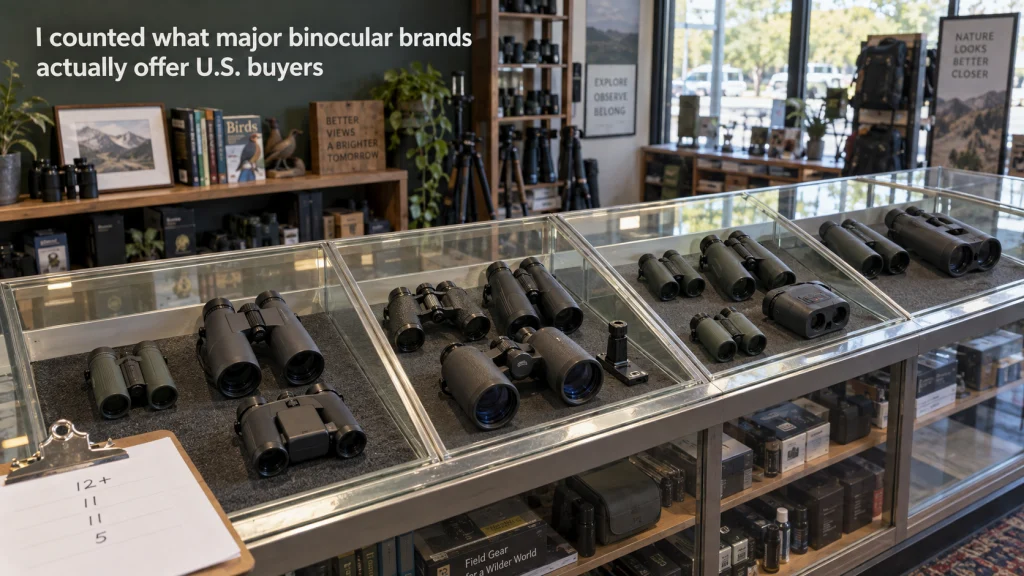
A binocular brand lineup looks much less uniform once I stop counting individual magnifications and start counting product families. In this U.S. sample, Vortex and Celestron each expose 11 clearly named families or series, while Bushnell presents a much tighter current set and Nikon requires a lower-bound count because its active family pages are not

8x vs 10x binocular field of view: what same family specs show

8X Vs 10X Binocular Field Of View

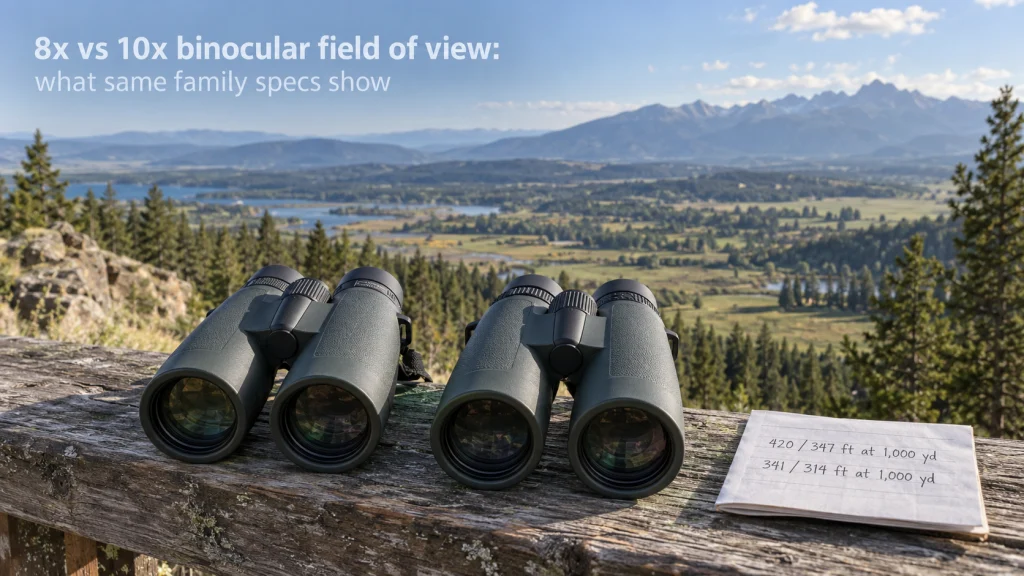
In this 8x vs 10x binocular field of view dataset, four current 8×42 and 10×42 pairs from the same product families show that the narrower 10x view is real but not uniform. The observed loss ranges from about 7.9% to 17.4% when each 10x model is compared with its 8x family mate using manufacturer-published linear

How complete is a binocular specification sheet? A manufacturer disclosure audit

Binocular Specification Sheet

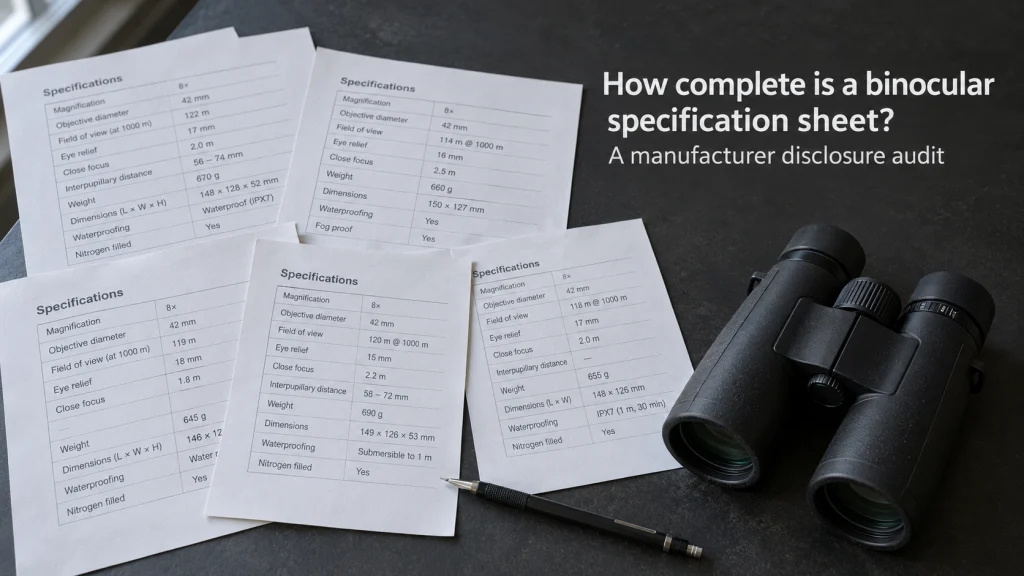
A binocular specification sheet can look detailed while still leaving important comparison work to the buyer. In this five-page audit of current official manufacturer product pages, eight of nine predefined fields appeared on every page, while interpupillary distance appeared on only three. The bigger problem was not simple absence: dimensions and waterproofing were often disclosed

Binoculars market size: three estimates, three different answers

Binoculars Market Size

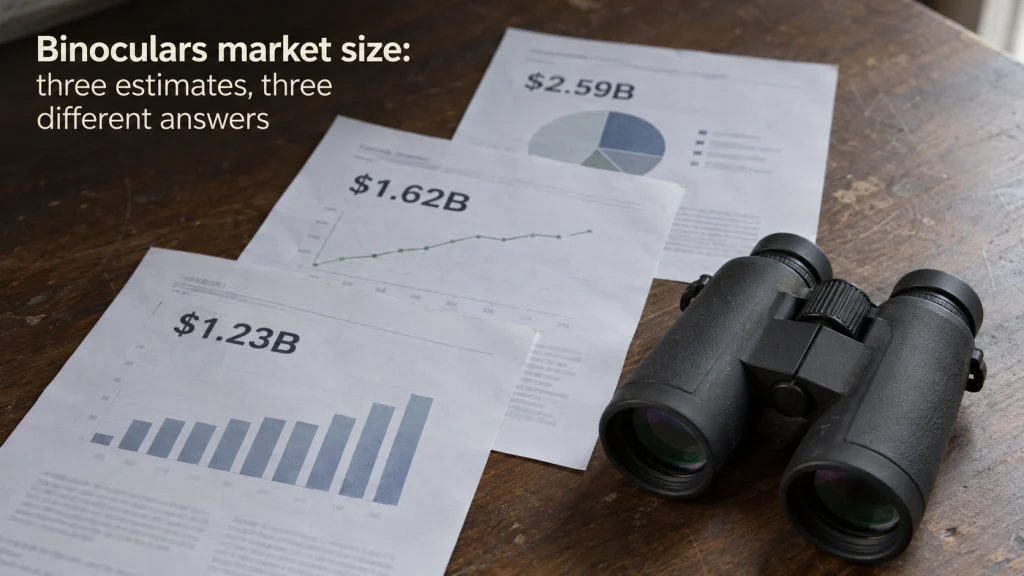
Current binocular market reports disagree by more than a factor of two, and the gap cannot be explained by rounding alone. The public pages use different product boundaries, application segments, revenue definitions, forecast assumptions, and levels of methodology disclosure. The useful answer is therefore a source-labeled range, not a synthetic market value. Readers should match

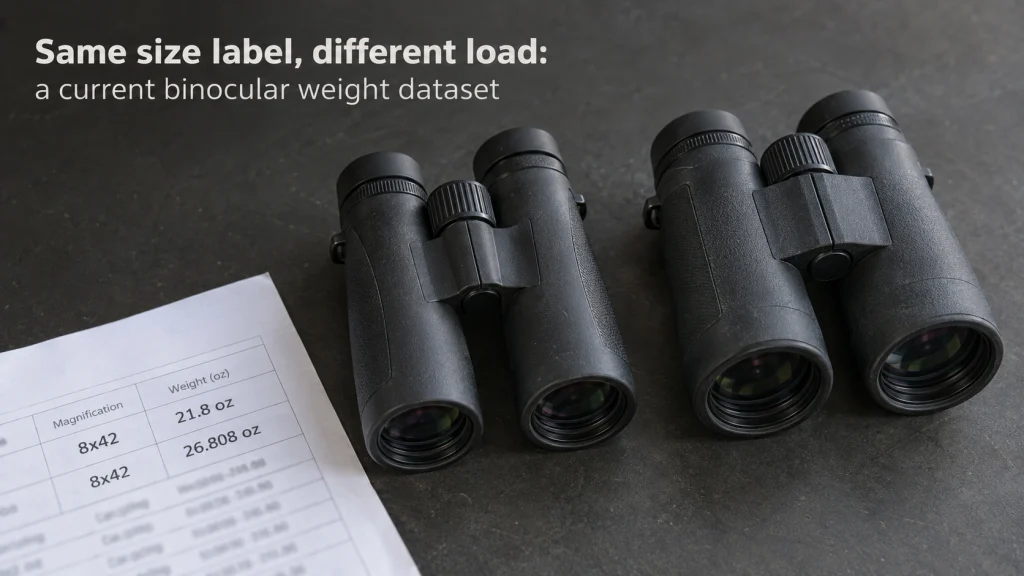
Same size label, different load: a current binocular weight dataset

Binocular Size And Weight Comparison

A binocular size and weight comparison becomes more useful when the configuration label is treated as a starting point, not a weight class. In this current official-spec sample, models with the same 8×42 or 10×42 label differ by several ounces, while selected 10×50 models overlap parts of the 42mm range. The dataset keeps manufacturer weight